




新闻中心

عرض: 40

وقت النشر:2026-11-09
Why COB LED Display Power Consumption Matters
When purchasing a COB LED display, buyers often focus on pixel pitch, brightness, resolution, and image quality. However, power consumption is another important factor that should not be overlooked.
Two COB LED displays with similar screen sizes may have different power requirements. This can affect electricity costs, power distribution, cooling requirements, and long-term operating budgets.
One common mistake is comparing products only by their maximum power consumption. In actual use, a display rarely operates at full brightness with a full-white image all day.
Before purchasing, buyers should understand the difference between maximum power consumption and typical power consumption. Both values are important, but they serve different purposes.
COB LED display manufacturers normally provide two main power figures.
Maximum Power Consumption (W/m²)
Maximum power consumption refers to the highest expected electrical demand under specified operating conditions. It is usually measured when the screen displays bright content, such as full-white images, at high brightness.
This value helps engineers determine:
Power supply capacity
Circuit breaker requirements
Cable specifications
Power distribution planning
Electrical safety margins
Typical Power Consumption (W/m²)
Typical power consumption represents the estimated power used during normal operation with regular video, images, and mixed-color content.
It is more useful for estimating daily electricity consumption and long-term operating costs.
For example, a COB LED display with an average power consumption of 150 W/m² does not necessarily use 150 W/m² at every moment. Actual consumption changes with brightness, image content, and operating settings.
Several factors affect the power consumption of a COB LED display.
1. Pixel Pitch and Screen Configuration
Different pixel pitches have different pixel densities and electrical configurations. A fine-pitch screen contains more pixels per square meter, so its power requirements must be evaluated according to its actual design.
2. Brightness Settings
Higher brightness generally requires more electrical power. A screen operating at 800 nits may consume less power than the same configuration operating at its maximum brightness.
3. Display Content
A full-white image usually creates a higher electrical load than dark video content. News broadcasts, presentations, and mixed-color images normally create changing power demands.
4. Driving System and Power Supply Efficiency
Driver ICs, power supplies, and circuit design also influence overall energy efficiency. A well-designed system can reduce unnecessary power loss while maintaining stable image performance.
5. Operating Environment
Temperature and ventilation conditions can affect power supply performance and cooling requirements. Poor ventilation may also increase the operating burden of cooling equipment.
Buyers should not use maximum power consumption alone to estimate their monthly electricity bills.
A practical calculation uses typical power consumption:
Daily Energy Consumption (kWh) =
Screen Area × Typical Power (W/m²) × Operating Hours ÷ 1,000
For example, consider an indoor COB LED display with the following configuration:
Screen area: 20 m²
Typical power consumption: 150 W/m²
Operating time: 10 hours per day
Electricity price: $0.15/kWh
The estimated daily energy consumption is:
20 × 150 × 10 ÷ 1,000 = 30 kWh
The estimated daily electricity cost is:
30 × $0.15 = $4.50
For 30 days, the estimated cost is $135.
This calculation provides a basic operating estimate. Actual electricity costs may be higher because of control systems, cooling equipment, and other connected devices.
Before confirming an order, buyers should request a detailed power consumption specification from the manufacturer.
The following checks are useful:
1. Request Both Power Values
Ask for maximum power consumption and typical power consumption separately. Do not accept a specification that only provides one unclear power figure.
2. Confirm the Test Conditions
Check the brightness level, displayed content, operating temperature, and measurement method used during testing.
3. Measure Real Operating Power
If possible, use a power meter to measure the complete display system during different operating conditions.
Test at least three scenarios:
Full-white content at high brightness
Mixed-color video at normal brightness
Dark content at reduced brightness
4. Check Power Distribution
Confirm the number of power supplies, power input connections, circuit capacity, and cable requirements.
The electrical system should be designed according to the maximum expected load, not only typical operating consumption.
5. Review Long-Term Stability
Run the display continuously under normal operating conditions and check whether power consumption remains stable. Abnormal fluctuations may indicate power supply problems or poor electrical connections.
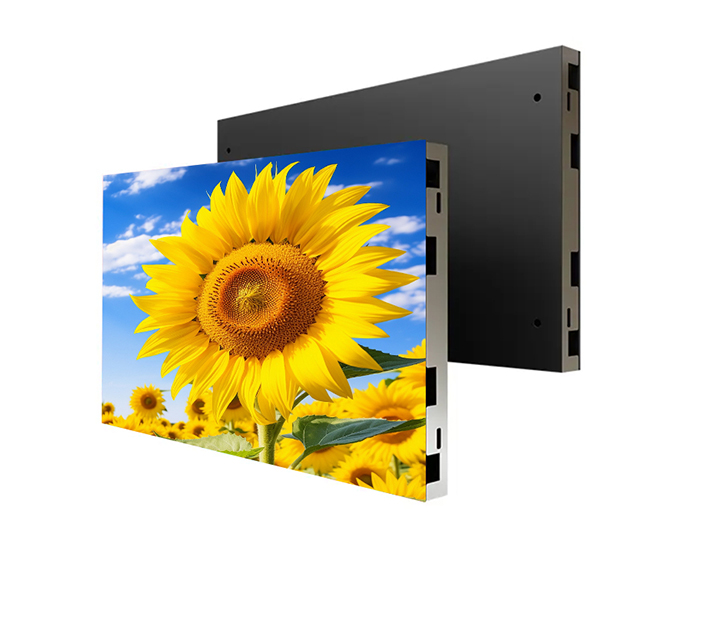
A COB LED display uses Chip-on-Board packaging technology, in which LED chips are directly mounted and encapsulated on a substrate.
This design creates a smooth display surface, improves surface protection, and supports high-resolution indoor applications.
TOOSEN COB LED displays offer multiple pixel pitch options, including P1.2, P1.5, P1.8, P1.9, P2, P2.5, P3, and P4.
The product range supports different cabinet configurations, front or rear maintenance options, and synchronous or asynchronous control systems.
For buyers comparing energy efficiency, the actual power consumption should always be checked against the selected pixel pitch, brightness, and display size.
For example, TOOSEN lists 150 W/m² power consumption for its standard COB LED display product information. Its flexible COB series also publishes typical power values around 140–150 W/m² and maximum values around 300–330 W/m², depending on configuration.
These figures should not be treated as universal values for every COB screen. Buyers should request the exact specification for their selected model.
Control rooms are a typical application for COB LED displays because operators need clear images, stable performance, and reliable long-term operation.
For example, a 15 m² COB LED video wall operating for 12 hours daily can use the following estimated calculation:
15 × 150 × 12 ÷ 1,000 = 27 kWh per day.
This estimate helps project managers prepare an electricity budget before installation.
However, the electrical distribution system should still consider the maximum power requirement. This ensures that the display can operate safely when brightness increases or high-power content is displayed.
TOOSEN provides LED display solutions for meeting rooms, control centers, exhibition halls, commercial spaces, and customized indoor projects.
Our product advantages include:
Factory-direct supply: In-house manufacturing and OEM/ODM customization help control product costs.
Multiple configurations: Different pixel pitches, cabinet sizes, and installation options are available.
Power efficiency: COB display solutions are designed to balance visual performance and energy consumption.
Global supply: Overseas warehouses and stock resources in the United States, Denmark, Germany, and South Korea support international customers.
Local service: Overseas offices, exhibition participation, and technical support help customers manage projects in different markets.
After-sales inspection: Annual free on-site inspection services are arranged for eligible projects in Europe and the United States, with February service visits available according to the annual schedule.
Whether you need a small COB screen for a conference room or a large fine-pitch LED video wall, TOOSEN can help evaluate the display configuration, power requirements, and installation plan.
Visit our official website: https://www.toosen.com/
Q1: What is the difference between maximum and typical power consumption?
Maximum power consumption indicates the highest expected electrical demand under specified conditions. Typical power consumption represents estimated energy use during normal operation.
Q2: Is lower typical power consumption always better?
Not necessarily. Buyers should also consider brightness, image quality, refresh rate, stability, and overall product performance.
Q3: How much power does a COB LED display consume per square meter?
The value depends on pixel pitch, brightness, and configuration. TOOSEN lists approximately 150 W/m² for its standard COB display product information. Always confirm the exact model specification.
Q4: Should I use maximum or typical power to calculate electricity costs?
Use typical power consumption for an initial operating-cost estimate. Use maximum power consumption when planning electrical capacity, cables, and circuit protection.
Q5: Can TOOSEN customize COB LED display power configurations?
Yes. TOOSEN provides OEM/ODM services and can evaluate suitable display configurations according to project size, brightness, installation conditions, and electrical requirements.
Q6: Where can I purchase TOOSEN COB LED displays?
TOOSEN supplies international customers, including projects in the United States, Denmark, Germany, and South Korea. Contact our team for product availability, technical specifications, and project quotations.
Final Recommendation
Before purchasing a COB LED display, always compare maximum power consumption and typical power consumption together. The right choice should balance electrical safety, daily energy costs, image quality, and long-term reliability. A detailed specification from the manufacturer will help you make a more informed purchasing decision.
 +86 18688923792
 andy@tosled.com


