






浏览: 368

发布时间:2026-01-16
LED video walls have become a core visual element for concerts, music festivals, churches, exhibitions, and corporate events. However, improper installation does more than affect image quality—it can shorten the screen’s lifespan and, more importantly, create serious safety risks. In extreme cases, unstable structures may collapse and cause accidents.
To avoid these issues, event organizers and AV professionals must follow strict installation standards. This guide explains the key considerations for safely installing a ground-supported truss LED video wall and ensuring long-term stability and performance.
Before you assemble any LED video wall, always inspect the venue. A proper site assessment reduces risks and prevents costly mistakes later.
First, confirm that the floor or stage can support the total weight of the LED screen system. This includes LED cabinets, truss structures, steel bases, and accessories. If the load capacity is limited, use load-spreading plates to distribute weight evenly and protect the surface.
Next, verify that the ground is level. Uneven floors prevent the bottom row of cabinets from aligning correctly. As a result, the entire structure may tilt, creating gaps between panels and weakening overall stability.
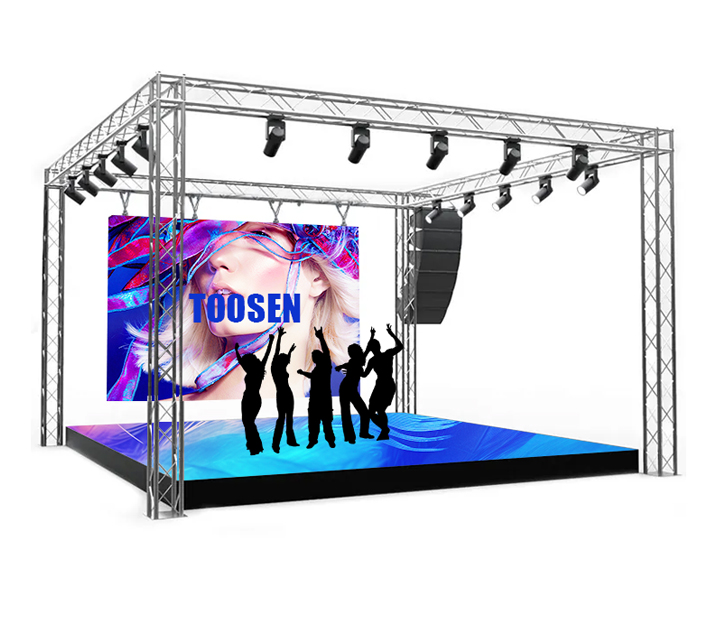
Ground-supported LED video walls typically use modular aluminum truss systems to form a freestanding structure. This setup offers fast installation, easy dismantling, and strong flexibility without damaging walls or floors. For this reason, it works well for temporary events and mobile applications.
However, many installers make a critical mistake: relying only on sandbags placed behind the truss. This approach is extremely dangerous. In reality, the center of gravity sits toward the front of the structure. Without proper countermeasures, the screen can easily tip forward.
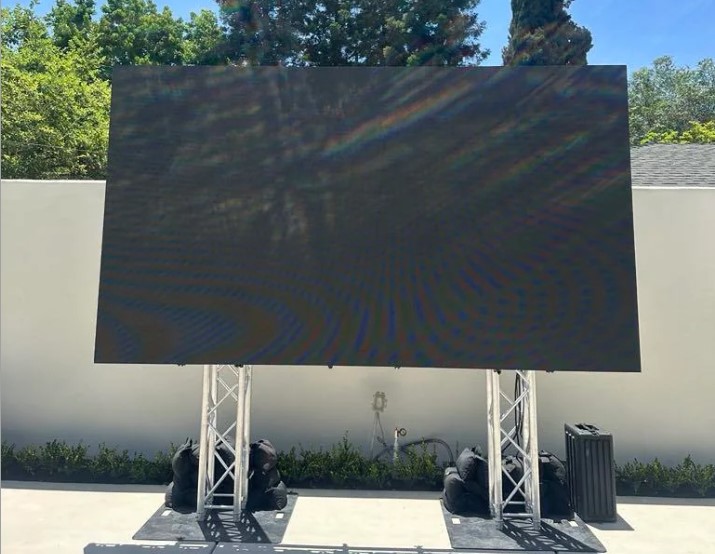
To minimize tipping risks, follow these best-practice recommendations:
Choose steel base plates measuring at least 30 × 30 inches. For larger screens, 40 × 40 inches provides even better stability and load distribution.
Each vertical support leg should use 250–500 pounds of sandbags. When regulations allow, 3-foot ground stakes offer a more secure alternative for outdoor events.
Instead of relying on isolated vertical columns, connect bases with horizontal truss sections. This creates a rigid rectangular frame and significantly increases resistance to forward or lateral movement.
Using professional-grade hardware further improves safety and durability.
Pipes: Select 2-inch Schedule-40 steel pipes. Compared to aluminum, steel provides higher weight and better resistance to bending.
Clamps: Use Cheeseborough clamps (swivel or right-angle clamps) for secure and flexible connections.
Connectors: Most LED panels include M8 or M10 threaded holes. Pair them with compatible single truss clamps for direct and stable mounting.
Leveling the bottom row takes the most time, but it determines the success of the entire installation. If the first row is even slightly misaligned, upper panels will develop visible gaps and become difficult to assemble.
Before installation begins, map out all power and signal cable routes. Clean cable management prevents accidental disconnections, reduces trip hazards, and improves airflow around the screen.
A safe LED video wall installation starts with careful planning and professional execution. By inspecting the venue, managing the center of gravity, reinforcing the truss structure, and using the right hardware, you significantly reduce safety risks while improving visual performance. Whether for concerts, corporate events, or worship spaces, a stable LED video wall protects both your audience and your investment.
1. Why is ground load capacity important for LED video walls?
Ground load capacity ensures the floor or stage can safely support the combined weight of the LED screen, truss, and accessories, preventing structural failure.
2. Can sandbags alone secure a freestanding LED video wall?
No. Sandbags alone are not sufficient. You must also use large base plates and structural reinforcement to prevent forward tipping.
3. What is the most critical step during installation?
Leveling the first row of LED cabinets is the most critical step, as it directly affects alignment, stability, and image quality.
 +86 18688923792
  andy@tosled.com


