



新闻中心
最真实的客户反馈,高高度信息丰富的技术支持视频和我们的最新更新!
最真实的客户反馈,高高度信息丰富的技术支持视频和我们的最新更新!

浏览: 47

发布时间:2026-09-11
When buyers compare LED displays, they often start with one simple rule: a smaller pixel pitch means a better screen.
For a flat LED video wall, that rule can sometimes work. For a bottle-shaped LED display, however, choosing the smallest available pixel pitch is not always the best decision.
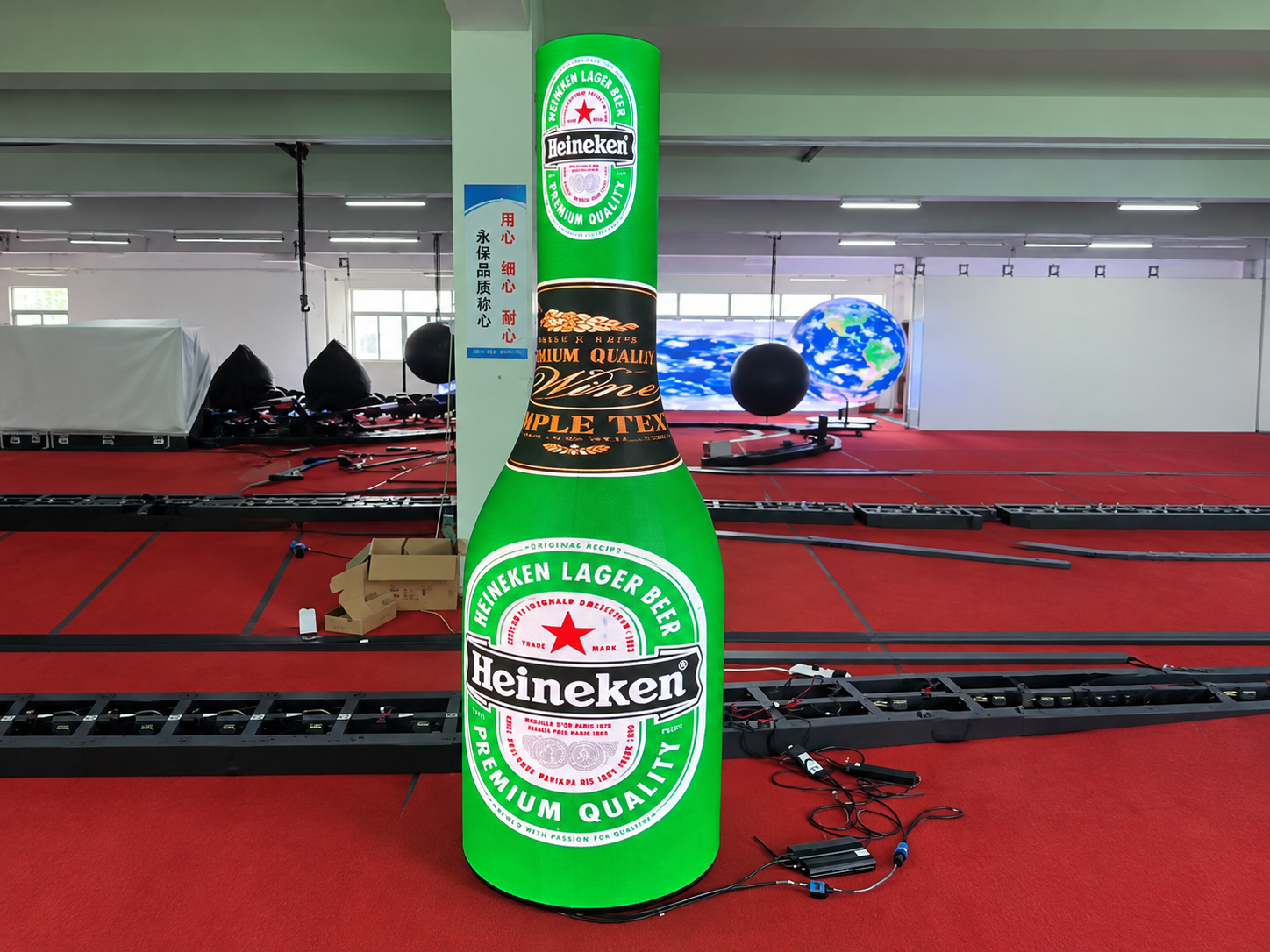
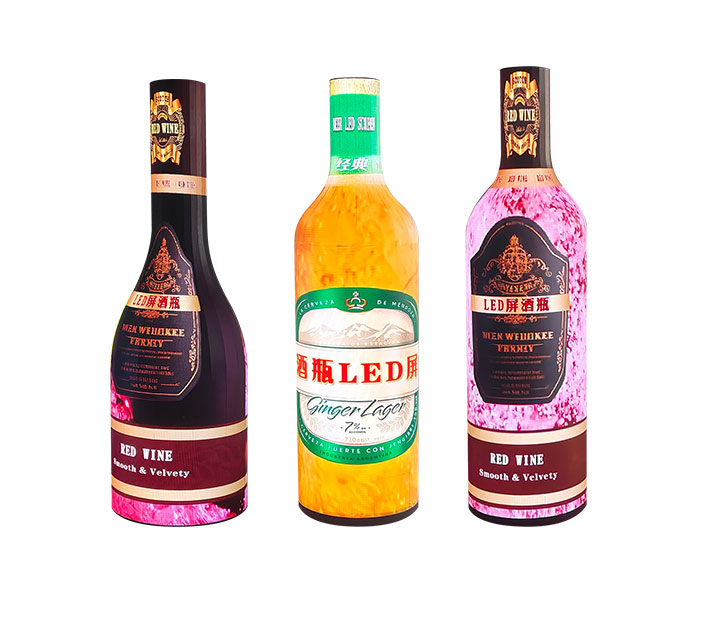
A bottle LED screen has curves, changing diameters, a narrow neck, a shoulder area, and sometimes a very small bending radius. These factors change how the LED modules must be designed and installed.
The real question should not be:
“What is the smallest pixel pitch available?”
It should be:
“What pixel pitch gives enough image quality without making the bottle structure unnecessarily difficult?”
Pixel pitch is the distance between the centers of two neighboring LED pixels. A P1.25 display has more pixels in the same area than a P2.5 display.
On paper, P1.25 therefore looks better.
But the audience does not look at specifications. They look at the actual screen from a certain distance.
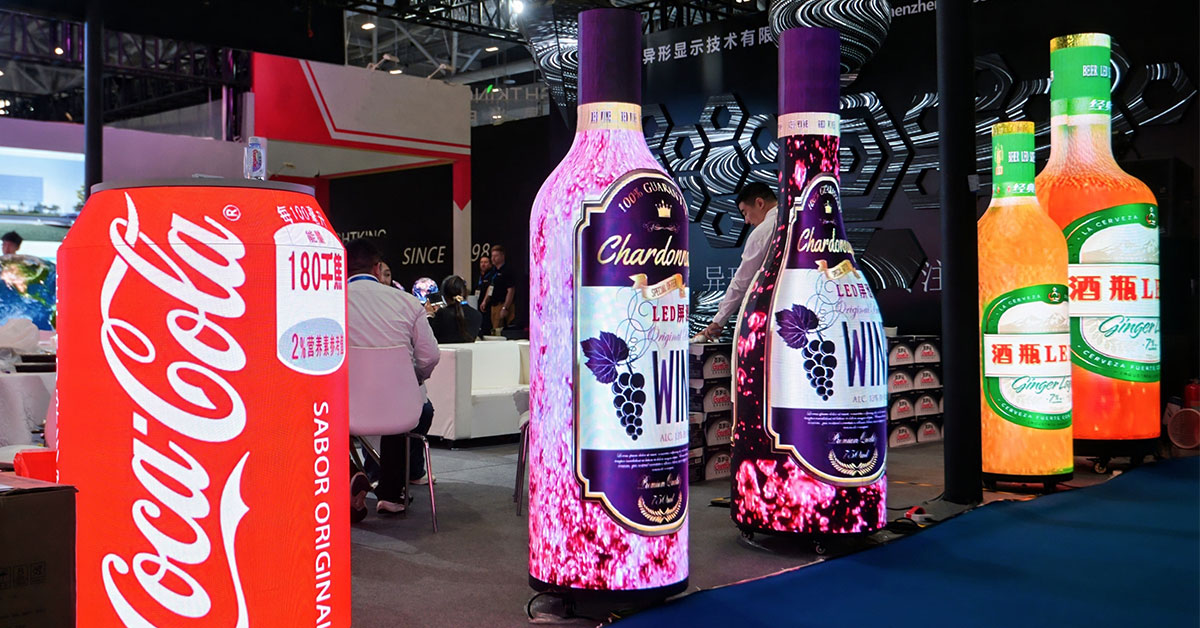
Imagine a large wine bottle LED screen installed inside a shopping mall. Most visitors watch it from three or four meters away. At that distance, changing from P2 to P1.25 may increase the theoretical resolution, but the visible improvement may be much smaller than expected.
This is especially true when the content mainly consists of:
large logos;
product animations;
short advertising messages;
color effects;
moving graphics.
If viewers cannot see the difference from the normal viewing position, the extra pixels provide little practical value.
A bottle-shaped screen is not simply a cylindrical LED display.
The main body may have a regular curve, but the diameter starts changing around the shoulder. The screen then becomes narrower toward the neck.
This is where pixel pitch selection becomes more complicated.
A very fine pitch usually means that more LEDs, circuits and components must fit into a smaller area. The flexible LED modules also need to follow the bottle structure without creating visible gaps or excessive mechanical stress.
For the straight bottle body, this may not be difficult.
For the shoulder and neck, however, the available surface area becomes smaller and the curvature changes faster.
In some projects, using P1.25 simply because it offers higher resolution can make module segmentation, PCB design and structural fitting more difficult than using P1.8, P2 or P2.5.
So the best pixel pitch is not determined by resolution alone.
A flexible LED screen can follow curved structures, but it still has physical limits.
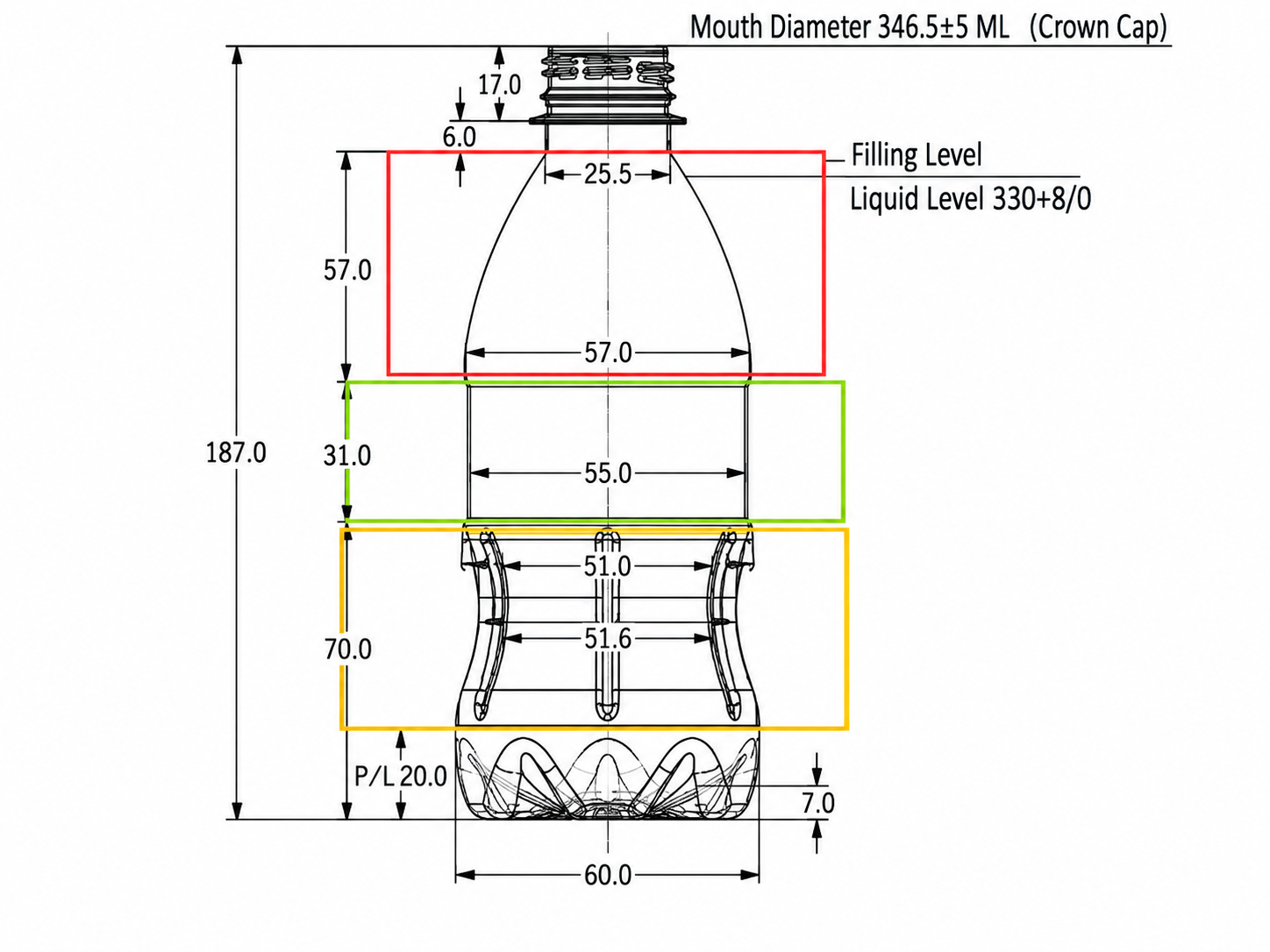
The tighter the bottle diameter becomes, the more carefully the LED module, PCB, magnets, frame and connection points must be arranged.
This becomes particularly important around:
the bottle neck;
rounded shoulders;
tapered transitions;
decorative curved edges.
If a fine-pitch module cannot follow the required radius comfortably, forcing it onto the structure can create uneven surfaces, module stress or difficult installation.
This is one reason why engineers should check the bottle geometry before confirming the pixel pitch.
The shape should help determine the LED specification—not the other way around.
Another factor is system complexity.
A smaller pixel pitch increases pixel density. On a complete 360-degree bottle display, that can create a much larger total resolution.
That may affect the amount of display data, receiving-card configuration, content resolution and system design.
The buyer may pay for considerably more pixels while still showing a simple beverage logo or looping animation.
For some close-view installations, the additional resolution is useful. For others, it becomes unnecessary engineering overhead.
Instead of asking for the highest possible resolution, calculate how much resolution the actual content needs.
A custom-shaped LED display must also remain serviceable after installation.
This point is often ignored during pixel pitch selection.
If the bottle uses highly customized small modules around the neck and shoulder, replacing a damaged section can be more difficult than servicing the larger modules on the main body.
Before final production, ask:
Can the module be removed easily?
Can the power and signal cables be reached?
Are replacement modules available?
Does the shoulder require a special PCB?
Can one damaged section be replaced without dismantling the entire bottle?
A technically impressive fine-pitch screen is not a good design if routine maintenance becomes unnecessarily difficult.
The safest way to select pixel pitch is to test the project as a complete system.
Do not compare specifications only.
First, prepare the real content that will run on the bottle-shaped LED display. Then compare several pixel pitches using the actual bottle dimensions and expected viewing distance.
For example, test the company logo, product label, text and animation at P1.5, P2 and P2.5.
Check them from the closest normal viewing position.
If P2 already displays the logo and animation clearly, moving to P1.5 may not create enough improvement to justify the additional complexity.
At the same time, examine whether the selected flexible LED module can smoothly follow the shoulder and neck.
This simple test connects image quality with real engineering conditions.
A small pixel pitch LED display is still a good choice when the application genuinely needs it.
For example, a bottle display inside a luxury retail store may be viewed from less than one meter away. Fine product labels, small text or detailed animations may require P1.2, P1.5 or P1.8.
A larger bottle used as a stage decoration or shopping mall landmark may be viewed from several meters away. In that case, P2.5 or another larger pitch may already provide a strong visual result.
There is no single correct pixel pitch for every bottle.
Diameter, height, viewing distance, content and surface geometry should be considered together.
No. P1.25 provides higher pixel density, but P2 may be more suitable when the viewing distance is longer or when the bottle has complicated shoulder and neck curves.
Check the bottle diameter, total height, minimum viewing distance, content type, bending radius, module dimensions and maintenance method.
Yes. A simple cylindrical bottle and a bottle with a narrow neck and strongly tapered shoulder may require very different module segmentation and structural designs.
Toosen provides customized wine bottle LED screens and can-shaped LED displays for different indoor and outdoor applications. Its current product range includes multiple pixel-pitch options, flexible LED structures, customized sizes and 360-degree curved display solutions. Instead of selecting pixel pitch only from a specification table, the screen can be designed around the required bottle shape, viewing distance and installation environment.
The smallest pixel pitch is not automatically the best pixel pitch.
For a bottle-shaped LED display, resolution is only one part of the decision. The bottle diameter, shoulder transition, neck size, bending radius, viewing distance, content and maintenance method can be equally important.
A good design finds the point where resolution, structure and real viewing experience work together.
Before choosing P1.25 simply because it has more pixels, compare it with P1.5, P1.8, P2 or P2.5 under real project conditions.
Sometimes, the slightly larger pixel pitch produces the more practical—and ultimately better—bottle LED display.
 +86 18688923792
  andy@tosled.com


