A flexible LED screen may wrap around a narrow column in one project but form a much wider curved wall in another. Even when the pixel pitch, display structure, and LED specifications are similar, the final curve can look completely different.

This often raises an important question:
If the flexible LED display is the same, why can the finished screen have different bending radii?
The answer is that a flexible LED screen does not usually have only one fixed installation radius. Instead, it has a safe bending range.
Within this range, the supporting structure plays a major role in determining the final shape of the LED display.
Simply put, the flexible LED screen provides the ability to bend, while the supporting frame determines how that curve is formed.
Minimum Bending Radius Is Different From the Final Screen Radius
One of the most common misunderstandings in curved LED display projects is treating the minimum bending radius as the required installation radius.
They are not the same thing.
For example, suppose a flexible LED screen has a minimum safe bending radius of R300 mm.
This does not mean the finished LED display must always be installed at R300.
Depending on the project design, the same type of flexible LED screen may be installed on:
an R400 supporting structure for a tighter curve;
an R800 structure for a medium curve;
an R1500 structure for a gentle curved wall;
or a much larger radius that appears almost flat.
The minimum bending radius simply tells engineers how far the display can safely bend without placing excessive mechanical stress on its internal structure.
The actual installation radius depends on the project geometry.
This is why the bending capability of a flexible LED display and the final radius of a curved LED screen should be considered as two different specifications.
The Supporting Frame Determines the Final Curve
A flexible LED screen needs an accurate supporting structure to maintain a stable architectural curve.
In many installations, a steel or aluminum frame is manufactured according to the required radius. The LED display surface is then fixed onto this structure, often using a magnetic front-service design.
Once the screen is installed, it follows the geometry of the structure behind it.
For example, if the supporting frame is designed at R500, the LED display follows an approximately R500 surface.
If the same type of flexible LED screen is installed on an R1200 frame, the curve becomes much gentler.
This principle makes flexible LED displays suitable for many creative applications, including:
Therefore, the supporting structure should be considered part of the LED display system from the beginning of the project.
It should not be treated as a simple metal frame that is added after the screen design has already been completed.
Support and Contact Points Affect Surface Accuracy
The frame radius alone does not guarantee a smooth LED surface.
How the flexible LED screen contacts the supporting structure is equally important.
If the screen is fixed evenly across the entire curved structure, the display surface can follow the designed arc more accurately.
However, if there are large spaces between supporting points, some areas of the LED screen may not follow the frame perfectly.
This may cause:
The location of magnetic fixing points, the spacing of the supporting structure, and the physical dimensions of the LED display all influence the final result.
For this reason, engineers should evaluate the complete contact surface rather than checking only the radius shown on the drawing.
A Large Curved Frame May Not Form a Perfect Arc

Large custom curved LED screens often require a steel structure made from several sections.
Instead of manufacturing one continuous curved piece, fabricators may divide the frame into multiple shorter sections and connect them together.
These sections gradually form the required curve.
The accuracy of this process directly affects the appearance of the LED screen.
Shorter and more accurately manufactured sections generally create a smoother curve.
If the structural sections are too long or are positioned inaccurately, parts of the finished LED display may appear slightly flat.
From a long viewing distance, the difference may be difficult to notice.
At close range, however, the curved LED screen may appear slightly polygonal rather than forming a smooth continuous arc.
This explains why two LED displays designed for the same nominal radius can still produce different visual results.
Why Two Screens Designed for R500 Can Still Look Different
Imagine two curved LED screen projects that are both designed with an R500 radius.
On paper, their geometry looks identical.
In the actual installation, however, the finished curves may still be slightly different.
Possible causes include:
Even a small deviation in the supporting structure can influence the surrounding LED surface.
For example, if one part of the steel structure is slightly higher than the designed position, the LED screen may not sit evenly against that area.
The result may appear as an irregular seam, a raised section, or a visible change in reflection.
Therefore, checking only the radius value in a CAD drawing is not enough.
How to Check the Curve Before Installing the Full LED Screen
A curved LED display should be tested before the entire screen is installed.
The inspection can begin with the engineering drawing, but the actual fabricated structure should also be measured.
For circular structures, engineers can use several measurement points to confirm whether the manufactured frame matches the required geometry.
Chord and sagitta measurements can also help verify the actual radius.
The structure should then be checked again after welding and assembly because heat and mechanical stress may cause small deformations.
After the frame passes the initial inspection, a small section of the actual flexible LED screen can be installed for testing.
Engineers should check:
whether the display contacts the supporting structure correctly;
whether adjacent screen sections remain level;
whether gaps are consistent;
whether the LED surface forms a continuous curve;
whether any area is raised or unusually flat.
Finding a small structural deviation during this stage is much easier than correcting it after the complete curved LED screen has been installed.
What Happens When the Required Radius Is Too Tight?
Flexible LED displays can bend, but their flexibility is not unlimited.
The supporting structure should never force the screen beyond its specified safe bending range.
Excessive bending may create unnecessary stress on the flexible PCB, soldering points, connectors, LED components, masks, and rear structure.
It may also cause the edges of the LED screen to lift away from the supporting frame.
This can affect both visual performance and long-term reliability.
Before production begins, engineers should therefore compare the required project radius with the bending capability of the selected flexible LED display.
If the requested curve is too tight, there are several possible solutions:
increase the designed radius;
select a flexible LED screen with a smaller safe bending radius;
modify the supporting structure;
divide the shape into different curved sections;
redesign the difficult part of the installation.
A tighter curve is not always better. The correct radius should balance design appearance, screen reliability, installation accuracy, and maintenance requirements.
One Flexible LED Screen, Multiple Curved Applications
The same flexible LED display technology can be used in very different projects.
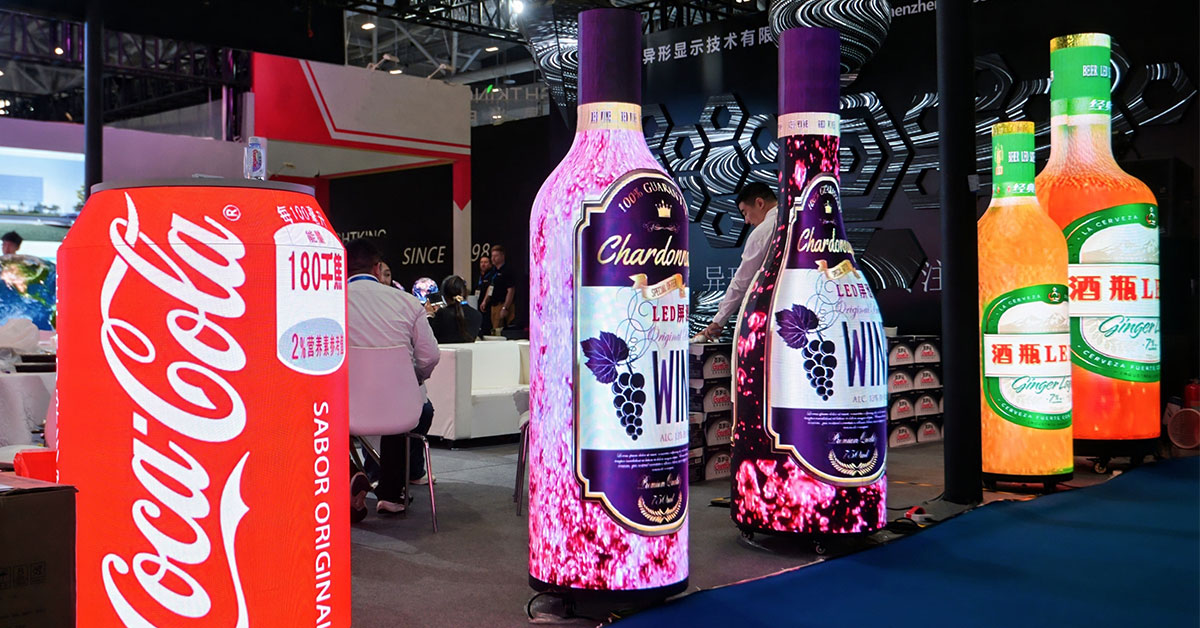
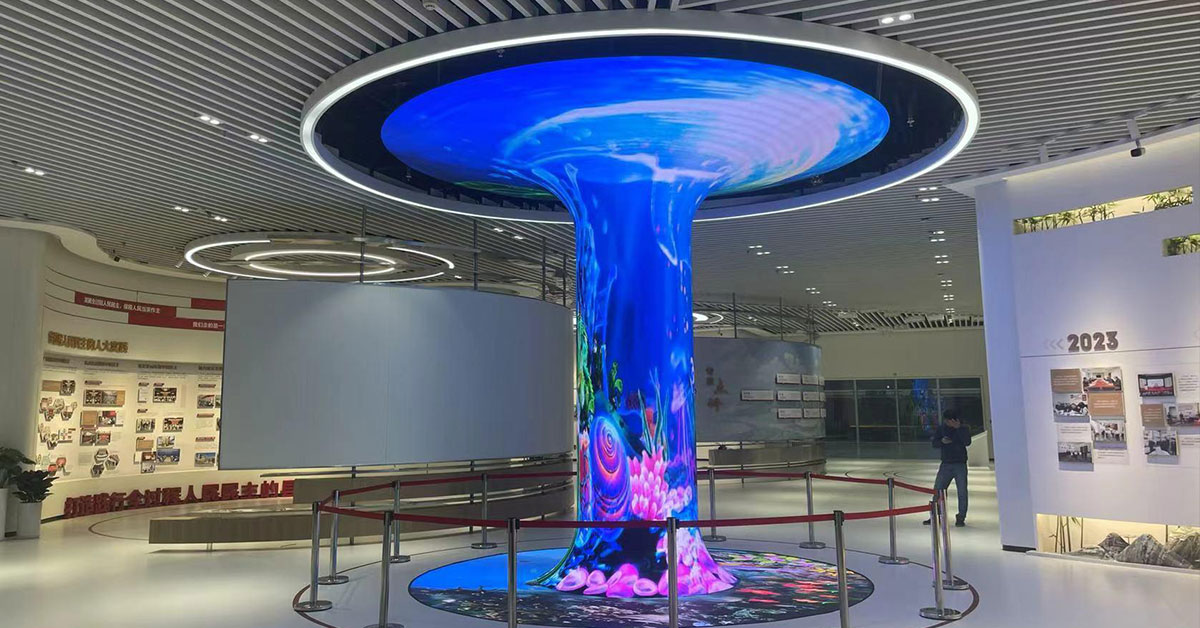
For example, a retail store may use a flexible LED screen around a narrow column, requiring a relatively tight curve.
At the entrance of the same building, another flexible LED display may follow a large architectural wall with a much wider radius.
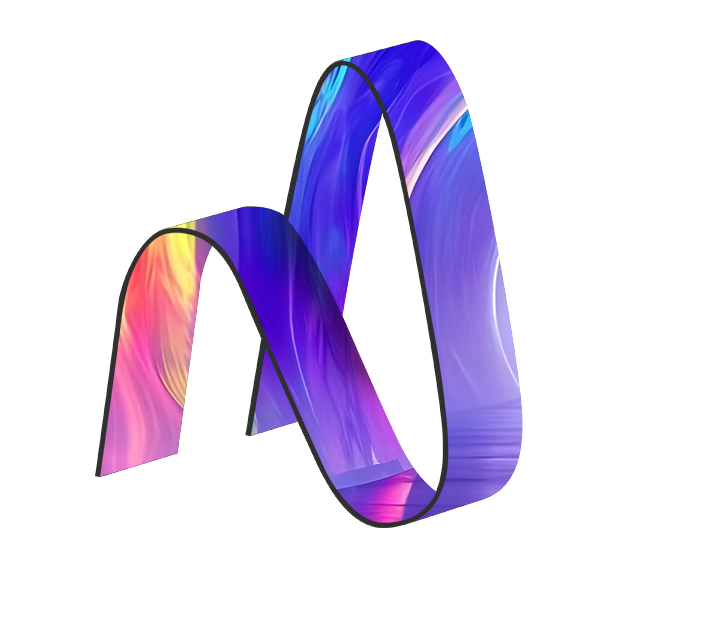
A third screen may use an S-shaped structure where the radius continuously changes from one section to another.
The LED display technology can remain similar.
What changes is mainly the geometry and supporting structure behind the screen.
This flexibility allows designers to create different curved surfaces without developing a completely different LED screen for every project.
The key requirement is that every part of the design remains within the safe bending capability of the selected display.
FAQ
Can the same flexible LED screen work with different diameters?
Yes. A flexible LED screen can normally be used with different curved structures as long as the required radius remains within its safe bending range. The supporting structure determines most of the final installed geometry.
Does pixel pitch determine the bending radius?
Not directly.
Pixel pitch mainly affects resolution, image detail, and viewing distance. The bending capability also depends on the flexible PCB design, component arrangement, mask structure, display dimensions, and mechanical construction.
Does the frame radius always equal the actual LED screen radius?
Not exactly.
The designed frame radius provides the target geometry, but fabrication tolerance, welding deformation, fixing accuracy, and installation conditions can create small differences in the final LED surface.
Should the curved structure be tested before full installation?
Yes.
Testing a small section of the flexible LED screen on the actual structure can help engineers identify surface irregularities, gaps, contact problems, and radius errors before the complete display is installed.
Conclusion
The final radius of a curved LED screen is not determined by the flexible LED display alone.
The LED screen provides the required flexibility and defines the safe bending range, while the supporting frame determines the actual installed geometry.
Frame accuracy, support spacing, magnetic fixing points, structural segmentation, fabrication tolerance, and installation quality all affect how closely the finished LED surface follows the intended curve.
This is why the same type of flexible LED screen can create very different curved shapes in different projects.
Toosen provides flexible and custom-shaped LED display solutions for curved walls, columns, cylinders, architectural installations, and other non-standard LED projects. Our engineering team can support customers in selecting the appropriate pixel pitch, bending range, structural design, and installation method according to the required screen shape and project environment.





 +86 18688923792
  andy@tosled.com


