

Company news


View: 6

Release time:2026-11-27
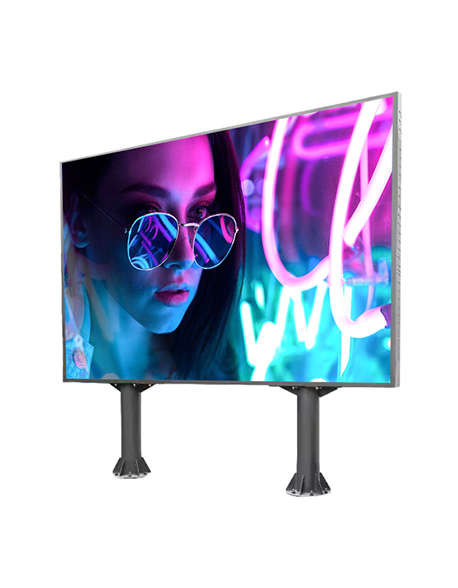
An outdoor LED display is often installed in a large open space, such as a shopping mall, stadium, highway billboard, or commercial building. Under direct sunlight, the screen must provide enough brightness to keep images clear and readable. However, high brightness does not always mean good display quality.
One common problem is brightness inconsistency across different areas of a large screen. Some sections may look brighter, while others appear darker, even when they show the same image.
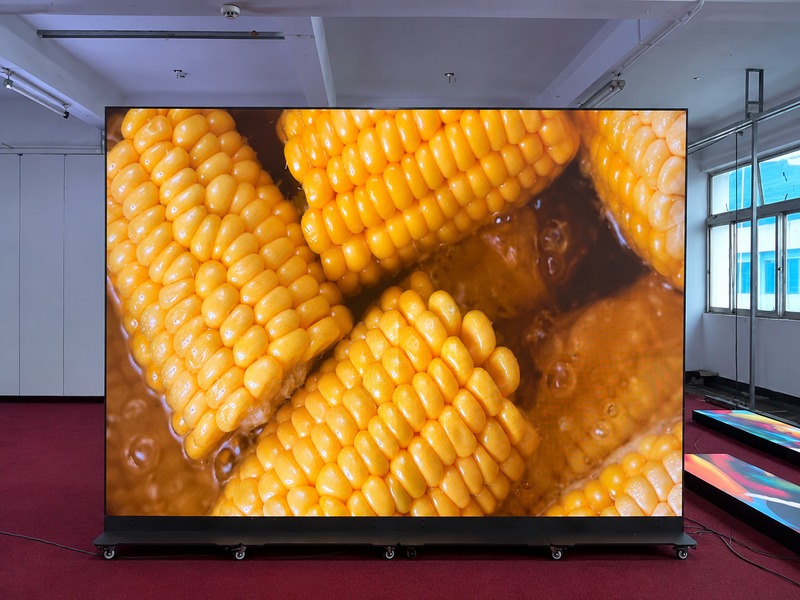
This difference becomes more noticeable when the screen displays a white background or a single-color image. For large outdoor projects, outdoor LED display brightness uniformity should be checked during production, installation, and regular maintenance.
Brightness uniformity refers to how consistently light is distributed across the entire LED display surface.
When uniformity is poor, viewers may notice visible bright and dark patches. These differences can affect advertising images, video content, and brand colors.
For example, a large outdoor advertising screen may look normal when displaying colorful videos. However, when a white advertisement appears, several cabinet areas may look slightly yellow or darker than the surrounding sections.
This problem is especially important for large screens installed on building facades and roadside billboards. People can easily notice uneven brightness when viewing the display from different distances and angles.
Poor brightness consistency may also reduce the overall viewing experience and create additional work for maintenance teams.
Brightness differences do not always come from defective LED lamps. Several technical factors can affect the final display result.
Different LED module batches
LED modules produced in different batches may have small differences in luminous output and color temperature. If these modules are installed together without proper calibration, visible brightness differences may appear.
Uneven power distribution
A large outdoor LED screen requires multiple power supplies and distribution circuits. If the voltage drops across long power cables, some sections may receive less stable power than others.
This can affect brightness, especially when the screen operates at high brightness levels.
Temperature differences
Outdoor LED displays are exposed to sunlight, rain, and changing temperatures. Some areas may become hotter because of their installation position or ventilation conditions.
Temperature changes can influence LED output and electronic component performance.
Inconsistent calibration settings
If different cabinets use different brightness correction values, the overall screen may not look consistent. Incorrect grayscale or color correction settings can make the problem more visible.
The first step is to identify where the brightness difference comes from. Increasing the overall brightness is not always the correct solution.
Here are several practical methods.
1. Use consistent LED modules
For large outdoor LED display projects, it is better to use modules from the same production batch whenever possible.
Before installation, check the module specifications and compare their brightness and color performance.
2. Check power distribution
Measure the voltage at different cabinet positions, especially at the beginning and end of long power supply lines.
Check cable connections, power supply capacity, and load distribution. If necessary, adjust the power supply layout to reduce voltage differences.
3. Apply cabinet and pixel-level calibration
Brightness calibration helps correct differences between individual modules and cabinets.
A professional control system can adjust brightness and color values to make the entire display look more consistent.
For large projects, calibration should be performed after all cabinets have been installed and connected.
4. Maintain proper ventilation
Check cooling fans, ventilation channels, and cabinet temperature. Remove dust or other materials that may block airflow.
A stable operating temperature helps reduce performance differences between screen sections.
Visual inspection alone is not enough for a large outdoor LED screen. A more systematic testing process can help identify hidden problems.
The following checks are useful:
White screen test: Display a full-white image and inspect the entire screen for bright and dark areas.
Grayscale test: Display several grayscale levels to identify differences in brightness and color reproduction.
Red, green, and blue tests: Check whether individual color channels show inconsistent output.
Brightness measurement: Use a calibrated luminance meter to measure selected positions across the screen.
Temperature inspection: Use a thermal camera to identify unusual temperature differences between cabinets.
Power measurement: Check voltage at different power distribution points under operating conditions.
For a more reliable result, measurements should be taken at consistent viewing angles and under controlled ambient lighting conditions.
A useful uniformity calculation is:
Brightness Uniformity (%) = Minimum Measured Brightness ÷ Maximum Measured Brightness × 100%
For example, if the maximum measured brightness is 6,000 nits and the minimum is 5,700 nits, the calculated uniformity is 95%.
The acceptance target should be agreed upon before production. The measurement method, test positions, and operating conditions should also remain consistent.
Several components work together to maintain stable brightness across an outdoor LED display.
LED lamp beads determine the basic light output and color performance. Driver ICs control current and grayscale levels. Power supplies provide stable electrical input, while receiving cards and control systems manage image data and correction settings.
The cabinet structure also matters. Good ventilation and reliable electrical connections help maintain consistent operating conditions.
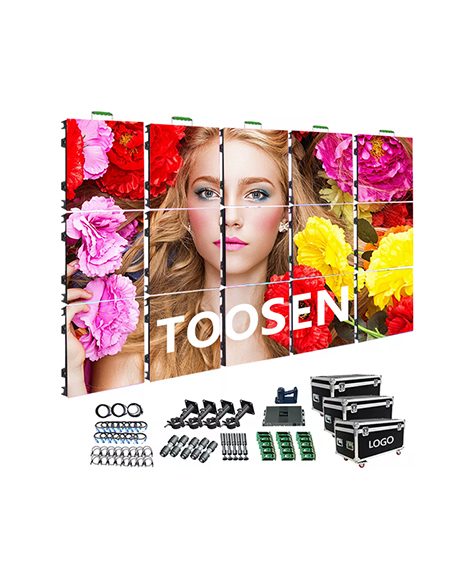
For outdoor applications, waterproof protection is equally important. TOOSEN outdoor LED displays offer IP65 front protection, with different pixel pitches and cabinet configurations available for different project requirements.
When purchasing a large outdoor LED display, buyers should not focus only on maximum brightness.
It is also important to check:
Whether brightness and color consistency are tested before delivery.
Whether modules can be matched across different production batches.
Whether the control system supports brightness correction.
Whether replacement modules can match the original display.
Whether the manufacturer provides installation and calibration guidance.
For example, TOOSEN outdoor LED display solutions cover pixel pitches from P2.5 to P10, with product specifications offering brightness up to 7,000 cd/m² and refresh rates from 3,840 Hz to 7,680 Hz.
The appropriate configuration depends on screen size, viewing distance, installation environment, and project requirements.
Brightness uniformity is particularly important in large outdoor advertising projects.
On building facades, uneven brightness can make a brand advertisement look inconsistent across the entire structure.
In stadiums, brightness differences may affect the viewing experience during live broadcasts and sports events.
For roadside billboards and shopping mall displays, consistent brightness helps maintain clear images under changing outdoor lighting conditions.
In these applications, proper module matching, power distribution, and final calibration should all be included in the project acceptance process.
Q1: What is brightness uniformity in an outdoor LED display?
It refers to how evenly brightness is distributed across the entire screen. Good uniformity helps prevent visible bright and dark areas.
Q2: Why does my outdoor LED screen have different brightness levels?
Common reasons include LED module batch differences, unstable power distribution, temperature changes, and incorrect calibration settings.
Q3: Can brightness calibration fix uneven LED display brightness?
Yes. Calibration can correct many differences between modules and cabinets. However, hardware problems such as damaged LED lamps or unstable power supplies should be fixed first.
Q4: How often should outdoor LED display brightness be checked?
Brightness should be checked during factory testing, installation acceptance, and routine maintenance. Additional inspections are recommended when visible differences appear.
Q5: Is higher brightness always better for outdoor LED displays?
No. Brightness should match the installation environment. Excessive brightness increases power consumption and may create glare, especially at night.
TOOSEN is a professional LED display manufacturer based in Shenzhen, China, providing OEM and ODM solutions for indoor, outdoor, and customized LED display projects.
Our outdoor LED display solutions support different pixel pitches, cabinet sizes, brightness configurations, and installation requirements.
From product selection and manufacturing to technical support and installation guidance, we help customers evaluate display performance and project requirements.
For large outdoor LED display projects, brightness uniformity is not simply a product specification. It requires proper module matching, reliable power distribution, accurate calibration, and careful testing.
By checking these factors before delivery and installation, buyers can reduce visible brightness differences and achieve a more consistent display across the entire screen.
Visit TOOSEN Official Website to learn more about our LED display solutions.
 +86 18688923792
 andy@tosled.com