
News
Most genuine customer feedback, highly informative technical support videos, and our latest updates!
Most genuine customer feedback, highly informative technical support videos, and our latest updates!

View: 13

Release time:2026-09-28
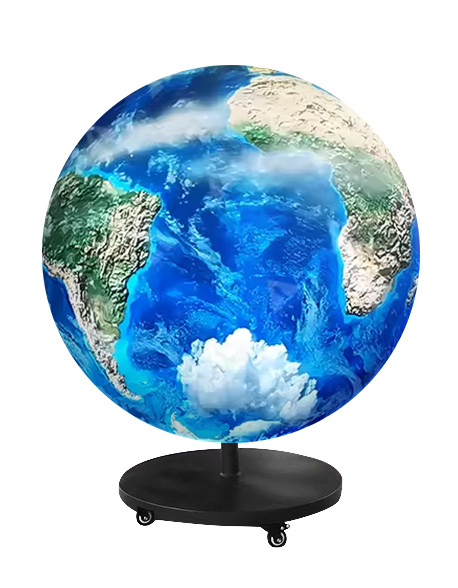
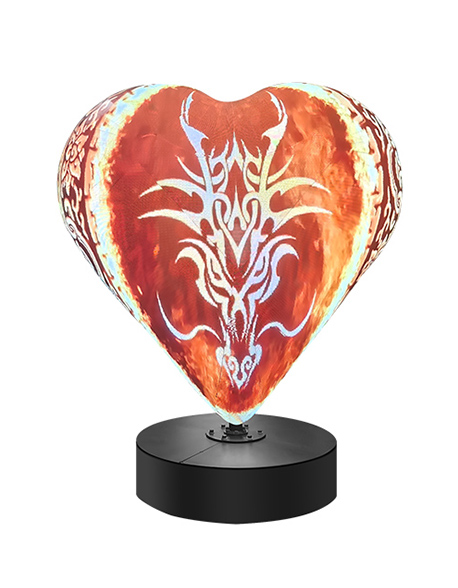
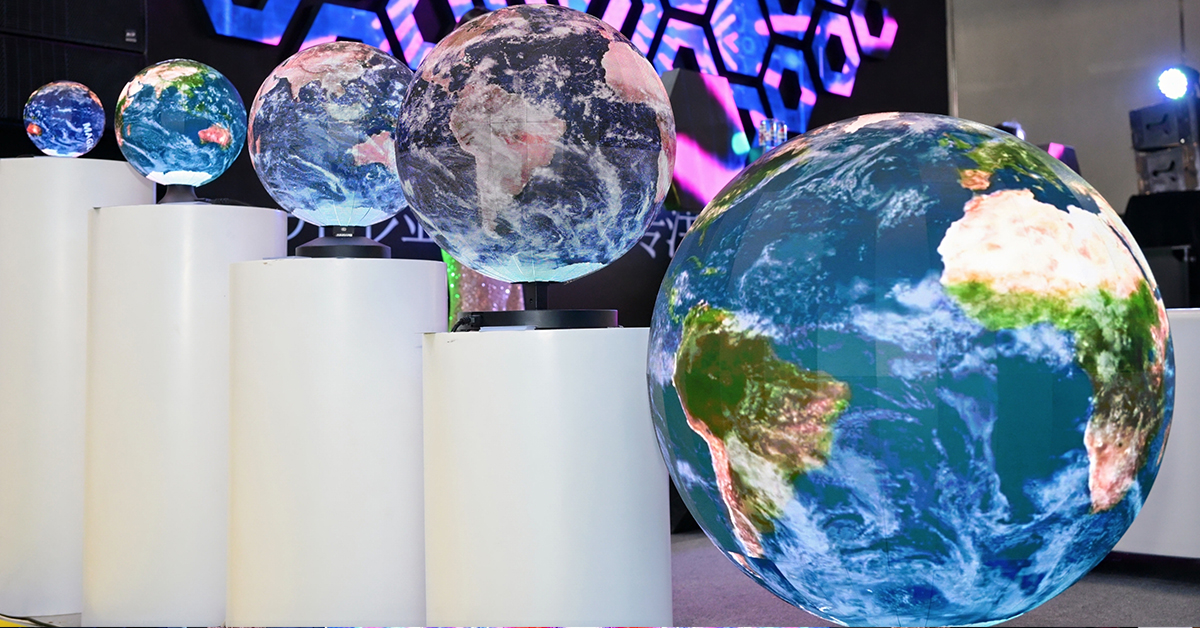
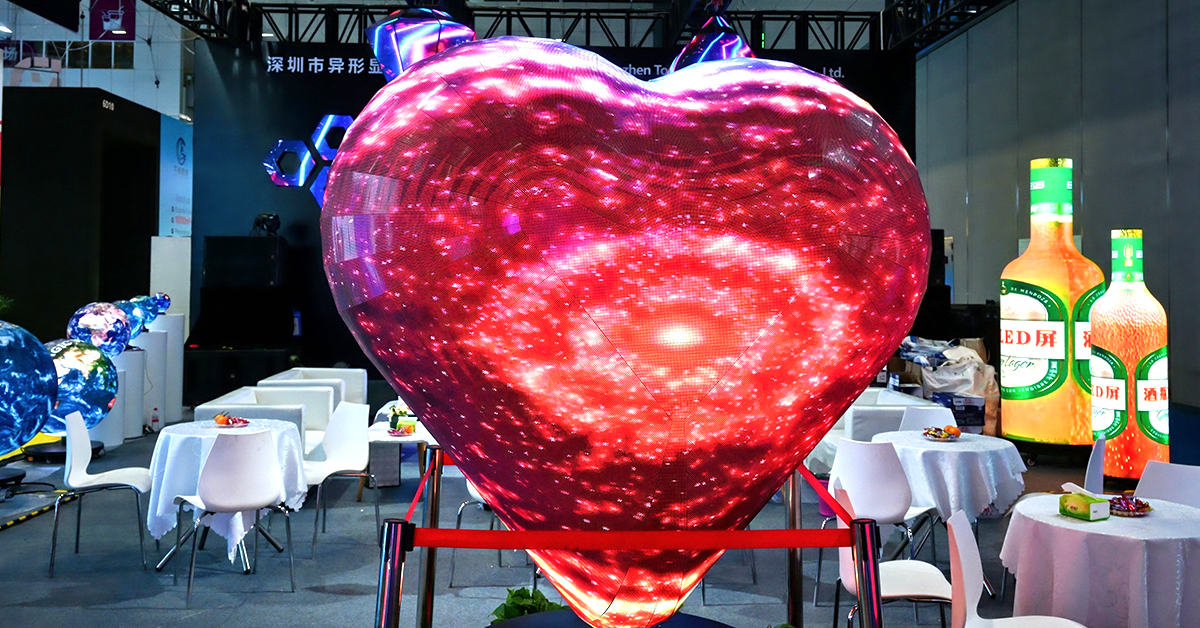
A spherical LED display is often installed because it looks different from a normal flat screen. In a shopping mall, museum, exhibition hall, airport, retail store, or event space, people can see the content from many directions.
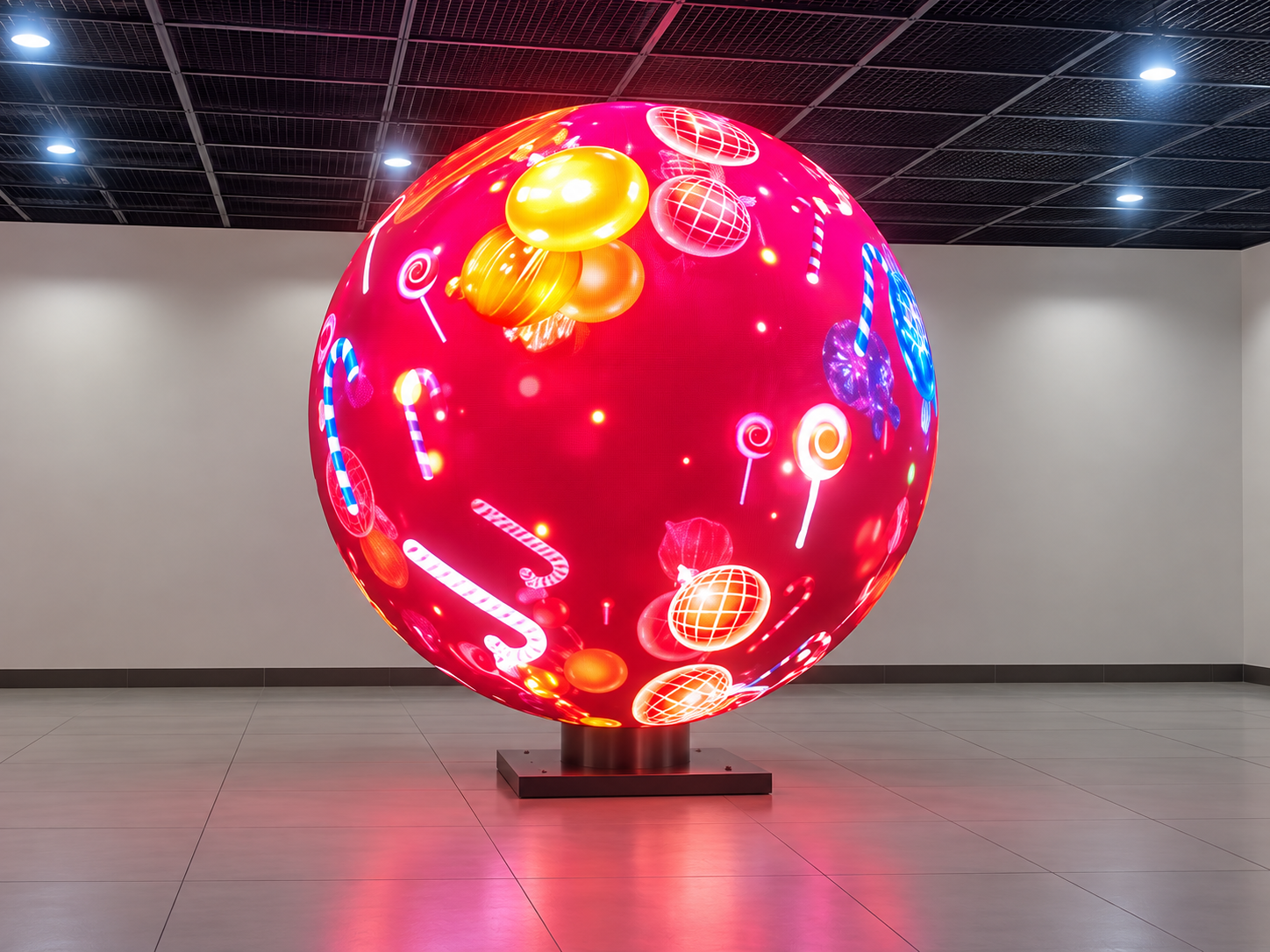
But these locations also create a problem: people can get very close to the screen.
Visitors may touch the LED surface, children may lean against the supporting structure, luggage may hit the base, and cleaning equipment may pass close to the display every day. If protection is added without careful planning, however, a thick fence or oversized base can destroy the floating and seamless appearance that made the spherical LED display attractive in the first place.
The goal is therefore not simply to “protect the screen.” The protection system should become part of the installation design.
A spherical LED screen has no obvious front and back. People naturally walk around it to view the content from different angles.
This means the screen often has a larger interaction zone than a conventional wall-mounted LED display.
Several risks are common:
Visitors touching or pressing LED modules
Shopping carts, suitcases, or equipment hitting the lower part of the sphere
Children pulling exposed cables
Cleaning machines contacting the support base
Maintenance doors being blocked by surrounding furniture
People standing directly below a suspended sphere
Temporary decorations being placed too close to ventilation areas
A small impact may not break the complete display, but it can damage LEDs, loosen modules, change the local curvature, or create a visible seam.
Protection should therefore be considered before the final support structure is manufactured.
One of the simplest solutions is to define a clear buffer zone around the spherical LED display.
This does not always require a traditional metal barrier.
For a floor-standing sphere, the support platform itself can create separation between visitors and the LED surface. A slightly wider circular base can prevent luggage or cleaning equipment from reaching the modules directly.
For example, if the sphere extends close to floor level, do not make the pedestal exactly the same width as the supporting column. Increasing the lower footprint can create an impact zone while keeping the visual structure clean.
The exact distance should depend on:
Sphere diameter
Installation height
Pedestrian flow
Nearby carts or luggage
Viewing distance
Whether visitors are expected to interact with the display
The important point is to measure the real traffic path instead of choosing the barrier size only from a drawing.
For many indoor projects, changing the installation height is cleaner than adding physical guards.
A hanging spherical LED display can keep the LED surface away from accidental contact while maintaining a full 360-degree viewing effect.
The lowest point of the sphere should be checked against actual site conditions, including pedestrian movement, nearby signs, escalators, temporary exhibition structures, and maintenance equipment.
For smaller spheres installed at eye level, a wall-mounted or recessed structure may also reduce direct contact.
The best solution depends on whether the main purpose is close viewing, advertising, decoration, or interactive content.
Protection should never make the display difficult to see.
If a physical guard is necessary, it does not have to look like industrial safety equipment.
Several methods can reduce its visual impact.
A circular platform can hide a low protective ring. A dark support frame can blend with the environment. Transparent panels can sometimes separate visitors from vulnerable areas while keeping the sphere visible. Decorative structures around the installation can also create a natural walking boundary.
The protection should follow the geometry of the spherical LED screen instead of fighting against it.
For example, a square barrier placed around a round LED sphere often looks disconnected from the display. A circular protection zone normally follows the viewing experience more naturally.
In high-traffic areas, exposed cables may become a bigger problem than the screen itself.
Power and signal cables should not cross pedestrian routes or remain accessible near the bottom of the structure.
Whenever possible, route cables:
Through the suspension structure
Inside the supporting column
Below the raised platform
Through protected floor channels
Inside dedicated cable conduits
Cable outlets should also avoid the main viewing direction.
Inside the sphere, organized wiring helps protect power supplies, receiving cards, and signal connections while also making maintenance easier. A well-planned internal structure is especially important when technicians need to service the display in a public location.
Protection sometimes creates another problem: the LED screen becomes safe for visitors but impossible for technicians to repair.
Before building a barrier, wall enclosure, decorative platform, or support frame, confirm the position of the maintenance opening.
Technicians need enough room to:
Open the service access.
Remove modules or internal components.
Disconnect power and signal cables.
Use tools safely.
Replace the part without moving the entire sphere.
For large installations, maintenance clearance should be marked directly on the site drawing.
Never allow furniture, decorative panels, railings, or architectural finishes to occupy this area after installation.
For a floor-standing spherical LED display, the bottom section usually faces the highest physical risk.
During factory testing and site acceptance, inspect this area separately.
A practical check can include:
Pressing modules gently to confirm they remain firmly fixed
Checking whether seams move under light external force
Inspecting masks and LED surfaces for scratches
Checking support fasteners
Confirming the base cannot rotate unexpectedly
Testing cable strain relief
Running the display after the mechanical inspection
After installation, repeat the inspection following the first period of public operation.
This can reveal problems that are difficult to reproduce in the factory.
A useful acceptance test is simple: walk through the installation area as a visitor would.
Do not inspect the spherical LED display only from the front.
Approach it from entrances, elevators, escalators, corridors, shops, and seating areas. If luggage is common at the location, include its approximate width in the test. If cleaning machines are used, confirm their normal route with the facility team.
Then check four things:
Can a person accidentally touch the LED surface?
Can equipment strike the base?
Can someone reach exposed cables?
Can technicians still reach the maintenance opening?
This traffic-route test often finds risks that are missing from CAD drawings.
Consider a floor-standing spherical LED display installed near the intersection of two shopping mall corridors.
Placing a large metal fence around the sphere would protect the screen, but it would also reduce the 360-degree viewing effect.
A better design could use a slightly raised circular platform around the support structure. The power and signal cables can enter through the floor and remain completely hidden inside the base.
The platform creates distance between passing visitors and the lowest LED modules without visually separating the screen from the space.
The maintenance opening can then face a lower-traffic direction, giving technicians easier access without affecting the main viewing side.
This type of solution combines protection, appearance, cable management, and maintenance planning in one structure.
No. Hanging installations and spheres positioned outside normal touching height may not require a visible barrier. Protection should be selected according to the actual traffic and installation conditions.
It is better to avoid unnecessary touching unless the system is specifically designed for physical interaction. Repeated contact can damage LEDs, masks, coatings, or module positioning.
It can greatly reduce accidental contact, but the suspension structure, load capacity, installation height, and maintenance access must still be properly designed.
Ideally, it should face an accessible but relatively low-traffic direction. Enough clearance should remain for module and component replacement.
Confirm pedestrian routes, sphere height, support stability, maintenance clearance, cable routing, collision risks, viewing directions, and nearby equipment.
A good protection system should not look like something added after the project is finished.
It should be designed together with the sphere diameter, supporting structure, installation height, cable route, maintenance opening, and surrounding architecture.
TOOSEN provides customized spherical LED display solutions for indoor and outdoor applications, with different diameters, pixel pitches, supporting structures, and installation methods.
For projects in shopping malls, museums, exhibition halls, airports, retail spaces, and other high-traffic locations, the installation structure can be planned according to both the visual design and the real movement of people around the display.
Before production, provide the installation environment, required sphere diameter, viewing distance, installation method, site drawings, and expected visitor flow. These details make it easier to design a spherical LED display that remains visually clean while being safer and easier to maintain.
 +86 18688923792
  andy@tosled.com