
Industry news


View: 606

Release time:2026-01-15
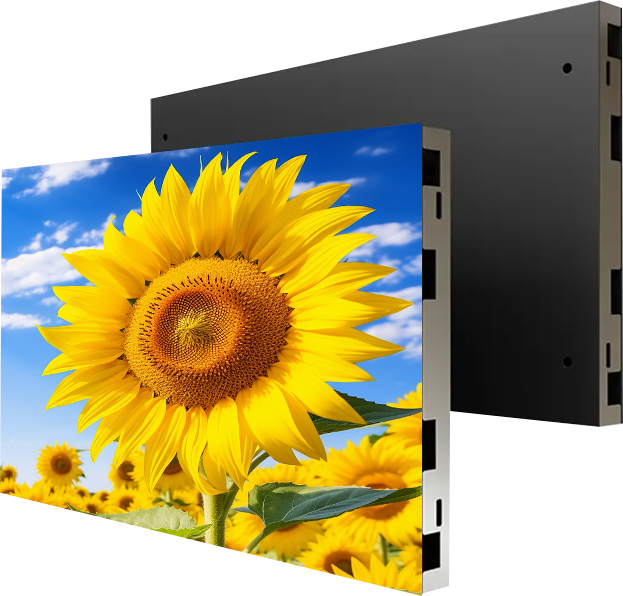
In control rooms, broadcast studios, and high-end conference spaces, many users now choose small pixel pitch LED screens instead of traditional LCD video walls. This shift is not accidental. Small pixel pitch LED screens deliver ultra-high pixel density, smooth images, and excellent clarity even at close viewing distances.
However, buyers often ask critical questions before making the switch. Are small pixel pitch LED displays reliable over time? Will color uniformity drift after long-term use? And how well do they handle heat? Based on extensive project experience, this article answers these questions and helps you decide whether a small pixel pitch LED display is the right choice for your application
Toosen is an experienced LED display manufacturer with over a decade of industry expertise. Over the years, the company has delivered customized LED display solutions to thousands of clients worldwide, covering installation, system integration, and long-term operation.
Through real-world projects, Toosen has installed COB small pixel pitch LED screens with pixel pitches such as P1.2 and P0.9. Client feedback confirms clear improvements compared with earlier generations. Heat generation has dropped by 40%–60%, system stability has increased, and screen temperatures remain evenly distributed across the entire display. After months of continuous operation, these systems show no performance or uniformity issues.
COB (Chip on Board) technology mounts bare LED chips directly onto the PCB and seals them with a protective resin layer. This structure creates several advantages for small pixel pitch LED screens.
First, COB modules dissipate heat more efficiently. Because the PCB acts as a direct heat path, the display requires less power and runs at lower temperatures. As a result, the LEDs age more slowly and maintain better color consistency.
Second, COB displays are far more durable than traditional SMD (surface-mounted device) screens. During installation, pixel damage and LED loss are extremely rare. The solid surface also resists impact and makes cleaning much easier.
Finally, COB modules deliver excellent uniformity. The smooth surface and consistent encapsulation reduce visual noise and enhance image quality, which is essential for close-viewing environments such as command centers and studios.
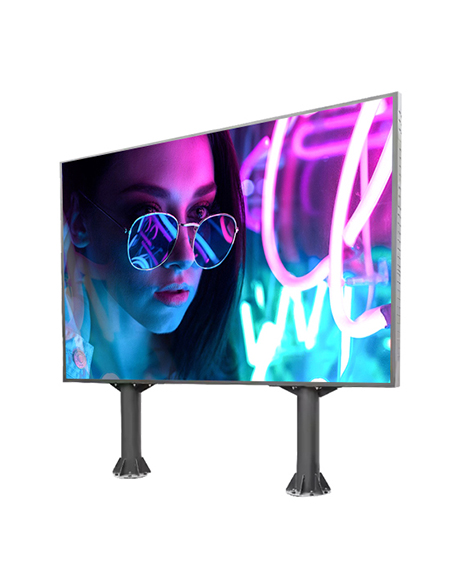
Small pixel pitch LED displays are not limited to indoor use. In one project, Toosen installed a 12 × 3 meter P1.5 LED display for digital outdoor advertising. To date, the system has reported no operational issues, demonstrating that fine-pitch LED screens can also perform reliably in demanding outdoor conditions when properly designed.
In addition, Toosen uses Novastar processors to manage seam calibration and brightness consistency. These processors simplify installation and ensure seamless image alignment, even for large-scale fine-pitch LED walls.
Although modern small pixel pitch LED displays generate less heat, proper thermal management remains essential. Based on field experience, consider the following best practices.
When wall-mounting an LED screen, avoid placing it too close to the wall. Insufficient airflow can create a heat island effect. Always leave enough space behind the cabinet for ventilation.
Pure white images consume the most power and generate the most heat. Limiting long-term full-white playback helps reduce thermal stress on the LEDs.
LEDs naturally age over time, and heat accelerates this process. Calibration systems measure brightness and color changes and then apply compensation. For example, if red LEDs lose 5% brightness at 40°C, the system adjusts the driving current to restore balance. Regular calibration helps maintain uniformity and color accuracy.
In studio environments, allow the LED display to run at about 50% brightness for 20–30 minutes before recording or calibration. This process brings the screen to thermal equilibrium and ensures stable performance.
Modern small pixel pitch LED displays, especially those using COB technology, offer excellent reliability, lower heat output, and superior image quality. With proper installation, calibration, and thermal management, these displays perform consistently over long periods in both indoor and outdoor environments. For applications that demand precision, stability, and close-range viewing, small pixel pitch LED screens represent a highly dependable solution.
1. Are small pixel pitch LED displays suitable for long-term use?
Yes. With improved COB technology and proper heat control, modern small pixel pitch LED displays operate reliably for extended periods.
2. What is the main advantage of COB LED displays over SMD?
COB displays offer better heat dissipation, higher durability, fewer pixel failures, and improved surface uniformity.
3. How can I reduce heat buildup in a fine-pitch LED video wall?
Ensure proper ventilation, avoid long-term white content, perform regular calibration, and allow the screen to reach thermal balance before critical use.
 +86 18688923792
  andy@tosled.com