




Company news


View: 12

Release time:2026-10-06
When buyers compare a COB LED display, brightness is often one of the first specifications they check. One supplier may list 800 nits, another may show 1,200 nits, while a third supplier may advertise a peak brightness of 1,500 nits.
At first glance, the screen with the highest number may look better.
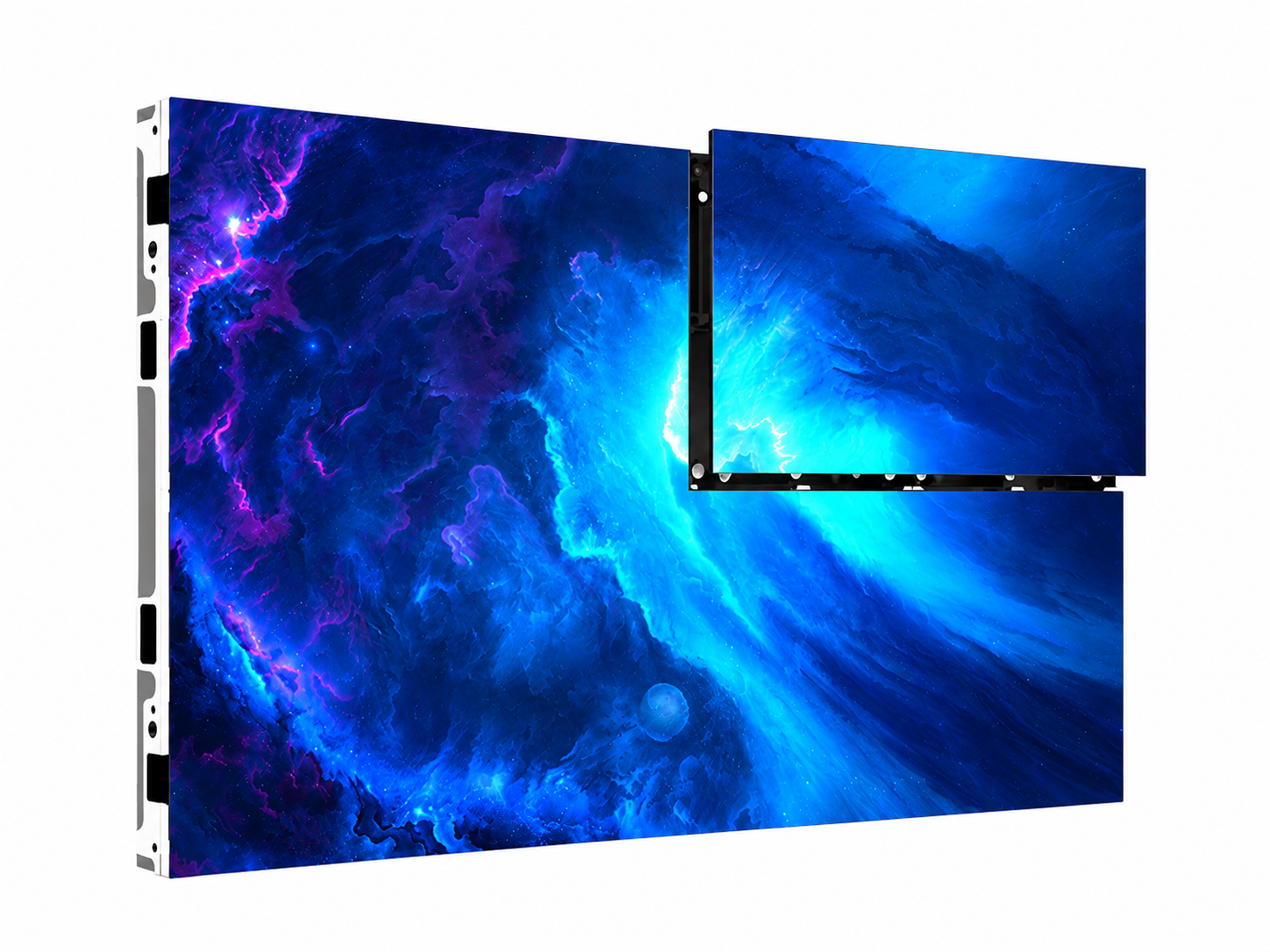
But brightness specifications are not always measured in the same way.
A peak brightness value, a typical operating brightness, and a calibrated brightness value can describe very different screen conditions. If buyers compare these numbers directly without understanding the test method, they may choose the wrong COB LED display for the project.
LED display brightness is normally measured in nits, also called cd/m².
For indoor COB LED displays, brightness may range from several hundred nits to more than 1,000 nits depending on the application, LED configuration, driver settings, power design, and calibration target.
The problem is that a single brightness number does not tell you how the display was operating when the value was measured.
For example, 1,200 nits may represent:
maximum output under full drive;
a short-term laboratory reading;
brightness before white-balance calibration;
or the normal brightness available after calibration.
These are not equivalent specifications.
For buyers, the most important question is therefore not:
“How many nits does this COB LED display have?”
A better question is:
“Under what conditions was this brightness measured?”
Peak brightness refers to the highest brightness that the display can produce under specific settings.
It can be useful because it shows the maximum output capability of the LED panel. However, peak brightness does not necessarily represent normal daily operation.
Running a COB LED display continuously near maximum brightness may increase:
power consumption;
internal temperature;
LED stress;
power supply load;
and visual fatigue in indoor environments.
A display capable of reaching 1,500 nits may only need to operate at 600–800 nits in a conference room, control center, showroom, or retail space.
Therefore, peak brightness should be treated as a capacity limit, not automatically as the real operating brightness.
Typical brightness usually describes the brightness range used during normal operation.
This value is often more useful for project planning.
For example, an indoor COB LED display installed in a meeting room may not need extremely high brightness. If the screen is too bright compared with the surrounding light, white backgrounds can become uncomfortable to watch.
Typical operating brightness depends on several factors:
room lighting;
viewing distance;
content type;
screen size;
ambient reflections;
and installation location.
For many indoor applications, image comfort is more important than maximum brightness.
This is why buyers should ask suppliers for both the maximum brightness capability and the recommended operating brightness range.
For fine-pitch COB LED displays, calibrated brightness is often the most meaningful value.
Calibration adjusts LED output so that modules and cabinets have consistent brightness and color.
Before calibration, some LEDs or modules may naturally appear slightly brighter than others. The display may achieve a higher measured brightness, but visual uniformity may not be acceptable.
After brightness and color calibration, the final brightness can be slightly lower.
This is normal.
For example, a screen may reach 1,000 nits before calibration but operate at around 850 nits after uniformity correction.
In many professional projects, the 850-nit calibrated result is more valuable than the 1,000-nit uncalibrated result because the complete screen looks more consistent.
When comparing suppliers, buyers should therefore ask:
Is the quoted brightness measured before or after calibration?
Incorrect brightness comparison can affect both purchasing decisions and project performance.
A buyer may select a display based on a high peak brightness number, only to find that the recommended calibrated operating brightness is much lower.
This can create problems such as:
Higher LED output normally requires more electrical power.
More brightness means more electrical energy is converted into both light and heat.
If brightness is pushed too high without proper calibration, differences between modules may become easier to see.
An excessively bright indoor display can create glare, especially when viewers sit close to the screen.
Two suppliers may actually provide similar display performance even if their datasheets show very different brightness numbers.
Brightness should ideally be tested after the screen has reached stable operating conditions.
A practical inspection process can include several steps.
First, allow the display to run long enough for its temperature to stabilize.
Second, display a standard white test image.
Third, measure brightness from the normal viewing direction using a luminance meter.
Testing only the center of the display is not enough.
Measurements should be taken from multiple positions, such as:
center;
upper area;
lower area;
left side;
right side.
This helps identify brightness differences between cabinets or modules.
The test should also record the display settings, including brightness percentage, color temperature, grayscale settings, and calibration status.
Without these conditions, a brightness number alone has limited value.
Brightness is only one part of COB LED display performance.
Buyers should also check:
pixel pitch;
contrast ratio;
grayscale performance;
refresh rate;
brightness uniformity;
color temperature;
power consumption;
viewing angle;
heat dissipation;
and low-brightness image quality.
This is especially important for fine-pitch COB screens.
A screen that maintains stable grayscale and color performance at lower brightness may provide a better indoor viewing experience than a screen designed mainly to achieve a high maximum nit value.
The surface characteristics of COB technology can also help improve perceived contrast because the LED chips are directly packaged and protected on the board.
For this reason, perceived image quality should not be judged by brightness alone.
Consider a fine-pitch COB LED wall installed in a corporate showroom.
Supplier A advertises a peak brightness of 1,200 nits.
Supplier B specifies 900 nits after calibration.
If the showroom normally operates around 500–700 nits because of controlled indoor lighting, Supplier B's lower specification does not automatically mean poorer performance.
If the calibrated screen provides better brightness consistency, color accuracy, low-gray performance, and thermal stability, it may actually be the more suitable choice.
The correct decision depends on usable brightness, not simply the largest number on the datasheet.
No. The required brightness depends on ambient light and viewing conditions. Excessive brightness indoors can reduce viewing comfort and increase power consumption.
Peak brightness shows the maximum possible output. Calibrated brightness shows the output after brightness and color consistency adjustments.
Calibration reduces differences between LEDs and modules. Some pixels may need to be adjusted downward to create better screen uniformity.
Ask for peak brightness, calibrated brightness, recommended operating brightness, and the measurement conditions.
Yes. Measuring brightness and uniformity before shipment helps confirm that the delivered screen matches the agreed specification.
At Toosen, COB LED display brightness is evaluated as part of overall image performance rather than as an isolated maximum number.
For different projects, our team considers installation environment, ambient lighting, pixel pitch, viewing distance, calibration requirements, heat management, and expected operating brightness.
Before delivery, COB LED display systems can be checked for brightness consistency, color uniformity, grayscale performance, power operation, and complete-screen image quality.
For buyers comparing COB LED displays, the best specification is not always the highest nit value.
The more useful comparison is whether the screen can provide stable, calibrated, and comfortable brightness under real operating conditions.
For more information about COB LED display solutions and customized LED display projects, visit Toosen at https://www.toosen.com/.
 +86 18688923792
  andy@tosled.com