
Company news


View: 10

Release time:2026-10-28
1. Why Installation Tolerance Matters
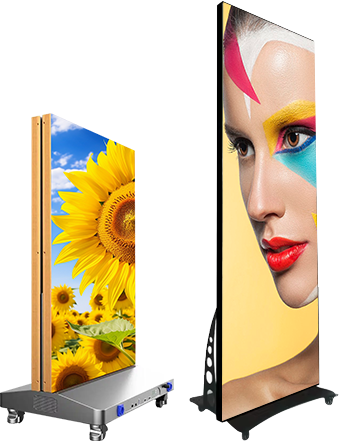
A folded poster LED screen is designed for convenient transportation, quick setup, and repeated use. However, a screen that looks correct when folded may not be perfectly aligned after it is opened and placed on the floor.
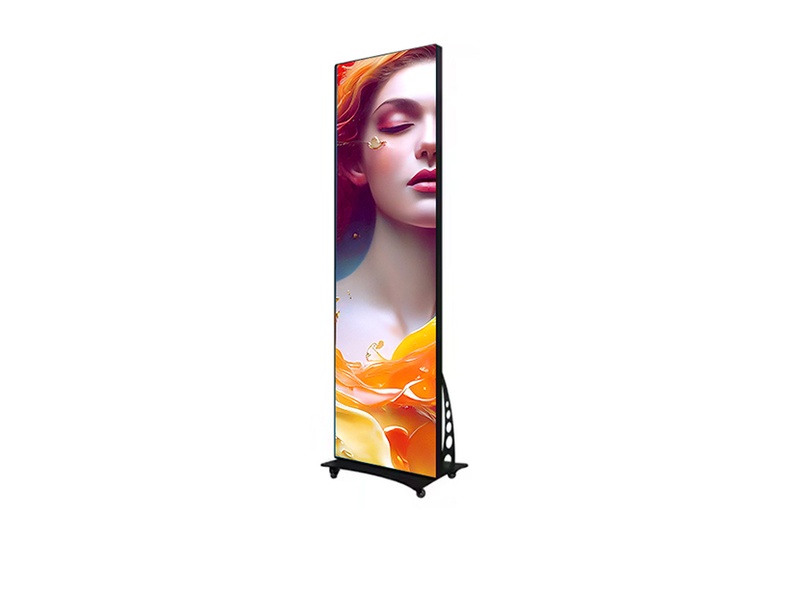
Small gaps between adjacent screens, uneven display edges, or a slightly tilted cabinet can affect the overall appearance. These problems become more noticeable when several poster LED displays are connected to form a larger advertising wall.
Before handover, installers should check more than whether the screen turns on. They need to confirm that the cabinets are stable, the folding mechanism works correctly, and the display surface remains visually consistent.
The goal of checking folded poster LED screen installation tolerance is to identify mechanical and visual problems before the customer starts using the equipment.
Poor alignment can create several problems during daily operation.
First, uneven gaps may interrupt images, text, and moving graphics across connected screens. A straight line in an advertisement may appear broken when it crosses a cabinet boundary.
Second, an uneven base can make the screen lean or create an unstable connection between adjacent units. This is especially important in retail stores, exhibition booths, and temporary event spaces where equipment may be moved frequently.
Third, repeated folding and unfolding can make existing mechanical problems easier to notice. A hinge that does not return to its intended position may cause the cabinet edges to sit differently after each setup.
Finally, if the installation is accepted without proper inspection, the installer may need to return to the site to adjust the screen. This adds labor costs and can delay the customer's opening schedule.
Several factors can affect the installation accuracy of a folded poster LED screen.
Uneven flooring: A small difference in floor height can make two adjacent displays sit at different levels.
Incorrect cabinet positioning: If the first unit is not positioned correctly, the alignment error may continue across the entire display wall.
Folding mechanism problems: Hinges, locking parts, or connecting structures may not return to the expected position after transportation.
Loose connections: Mechanical connectors that are not fully secured can allow slight movement between adjacent units.
Transportation damage: Impact during loading or unloading may affect the cabinet frame, connection points, or protective components.
Incorrect setup sequence: Opening, positioning, and connecting the units in the wrong order may make alignment more difficult.
Understanding these causes helps installers determine whether the problem comes from the floor, the cabinet, the folding structure, or the installation method.
A practical inspection should follow a fixed sequence instead of relying only on visual judgment.
Place the folded poster LED screen on the intended installation surface. Use a suitable level to check whether the floor and the display base are level.
If several units will be connected, check the floor along the full installation line. Do not assume that a level first unit means every subsequent unit will be aligned.
Correct any positioning problems before connecting the complete display.
Open each screen according to the manufacturer's instructions and place it in its operating position.
Inspect the top, bottom, and side edges. Adjacent cabinets should sit in the intended positions without visible steps, unexpected gaps, or forced contact.
Use a straightedge to check whether the front surfaces are aligned. A feeler gauge or suitable gap gauge can help measure spacing where the design allows access.
Record the measurements at the top, middle, and bottom of each connection. This makes it easier to identify whether a gap is uniform or gradually becomes wider.
Fold and unfold the display according to the manufacturer's recommended procedure.
Observe whether the hinges move smoothly and whether the locking components engage correctly. Check for unusual resistance, loose parts, scraping, or movement that prevents the cabinet from returning to its intended position.
After reopening the screen, repeat the alignment inspection. Compare the results with the measurements taken before folding.
Do not force a hinge or connector into position to hide an alignment problem.
When several poster LED screens are connected, inspect the complete installation rather than checking each cabinet separately.
Look at the display from the front and from normal viewing distances. Confirm that the top edges form a consistent line and that vertical boundaries remain straight.
A useful test is to display a grid pattern with horizontal and vertical lines crossing the cabinet boundaries. Broken lines, sudden offsets, or inconsistent spacing can reveal problems that are difficult to identify when the screen displays ordinary videos.
There is no single installation tolerance that applies to every folded poster LED screen. The acceptable gap and alignment limits depend on the cabinet design, connection method, and project requirements.
Before installation, confirm the following items with the supplier:
The permitted gap between adjacent cabinets.
The allowable difference in front-surface height.
The required cabinet positioning and leveling method.
The correct operation of hinges and locking mechanisms.
The inspection method for repeated folding and unfolding.
The visual requirements for images crossing cabinet boundaries.
Use the approved technical drawings and manufacturer's specifications as the acceptance reference. Do not create an arbitrary millimeter limit after installation has started.
For a project with strict visual requirements, record the measured values and obtain approval for any deviation before signing the handover document.
Mechanical alignment alone does not confirm that the screen is ready for use. The final inspection should also include a display test.
Start with solid colors such as white, red, green, blue, and black. Check for abnormal brightness differences, dead pixels, and visible defects near cabinet edges.
Next, play a grid pattern, a continuous horizontal line, and a moving image across the connected screens. Confirm that the content appears correctly positioned and that no obvious discontinuity is caused by incorrect cabinet alignment.
Check the control system, signal connections, power connections, and brightness settings. If the project uses synchronized playback across several units, verify that the content starts and plays consistently.
Finally, document the inspection results with photographs, gap measurements, and a checklist. This provides a clear record for both the installation team and the customer.
When selecting a folded poster LED screen, buyers should consider more than pixel pitch and brightness. Cabinet dimensions, folding design, connection accuracy, transport protection, and maintenance access can all affect installation quality.
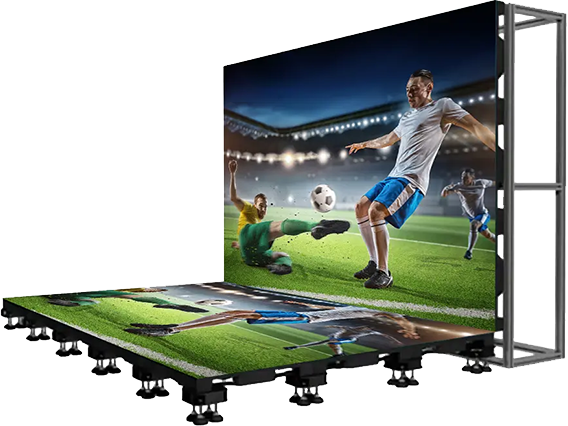
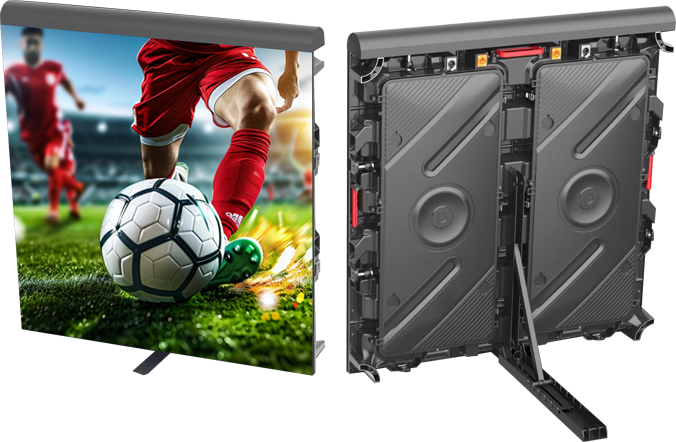
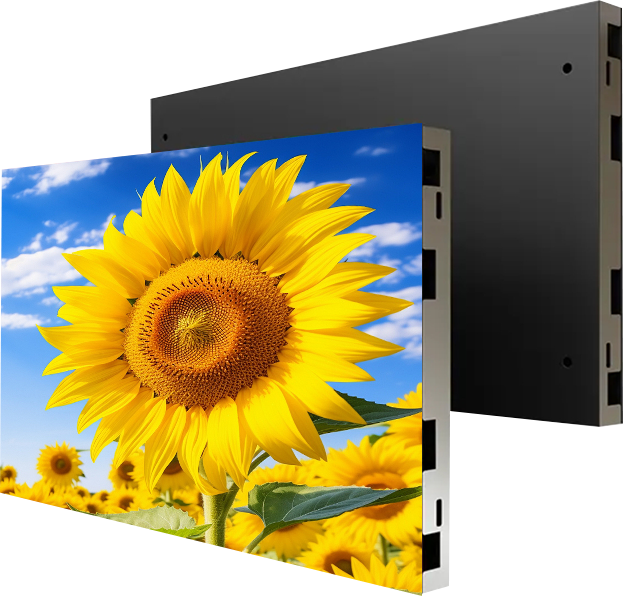
TOOSEN offers poster LED displays with folding functionality, including models designed for portable advertising, retail environments, exhibitions, and commercial presentations. The product range includes different pixel pitches and supports synchronous or asynchronous control, depending on the selected configuration.
View the TOOSEN Foldable Poster LED Display for product details.
For projects requiring multiple connected screens, confirm the cabinet dimensions, joining method, and installation tolerances before placing an order. A pre-shipment assembly test can also help identify mechanical alignment problems before the equipment arrives at the installation site.
Installation tolerance refers to the permitted variation in cabinet gaps, surface alignment, leveling, and positioning. The exact limits should follow the approved drawings and manufacturer's specifications.
Use a suitable gap gauge or feeler gauge where accessible. Measure the top, middle, and bottom of each connection, then compare the results with the approved installation requirements.
The folding mechanism and connection points may not return to exactly the same position after transportation or repeated use. Rechecking helps identify changes before handover.
Software can correct certain content-mapping errors, but it cannot repair a physical gap, uneven cabinet surface, or loose mechanical connection. Mechanical issues should be corrected first.
Include cabinet alignment, measured gaps, folding mechanism operation, locking components, display performance, signal and power connections, photographs, and any approved deviations.
Yes. A trial assembly can reveal cabinet alignment problems, connection difficulties, and content discontinuities before shipment, reducing the risk of unexpected adjustments on site.
A reliable handover depends on clear technical requirements, careful installation, and documented testing. Checking cabinet gaps, front-surface alignment, and folding performance before delivery helps reduce avoidable problems during installation and daily operation.
For your next project, share the intended installation environment, number of screens, display arrangement, and expected usage frequency with the supplier. These details help determine the appropriate cabinet configuration and inspection requirements.
Visit TOOSEN to discuss your folded poster LED screen requirements and request a solution for your project.
 +86 18688923792
 andy@tosled.com