
Company news


View: 7

Release time:2026-10-24
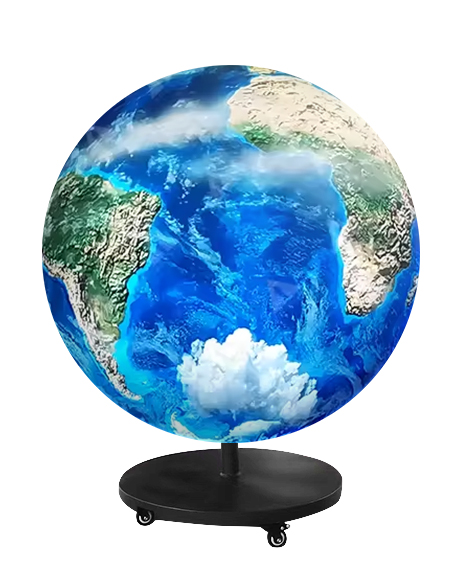
Shipping an LED sphere screen requires more care than shipping a standard flat LED display. Its curved surface, specially shaped modules, and internal support structure need protection during transportation.
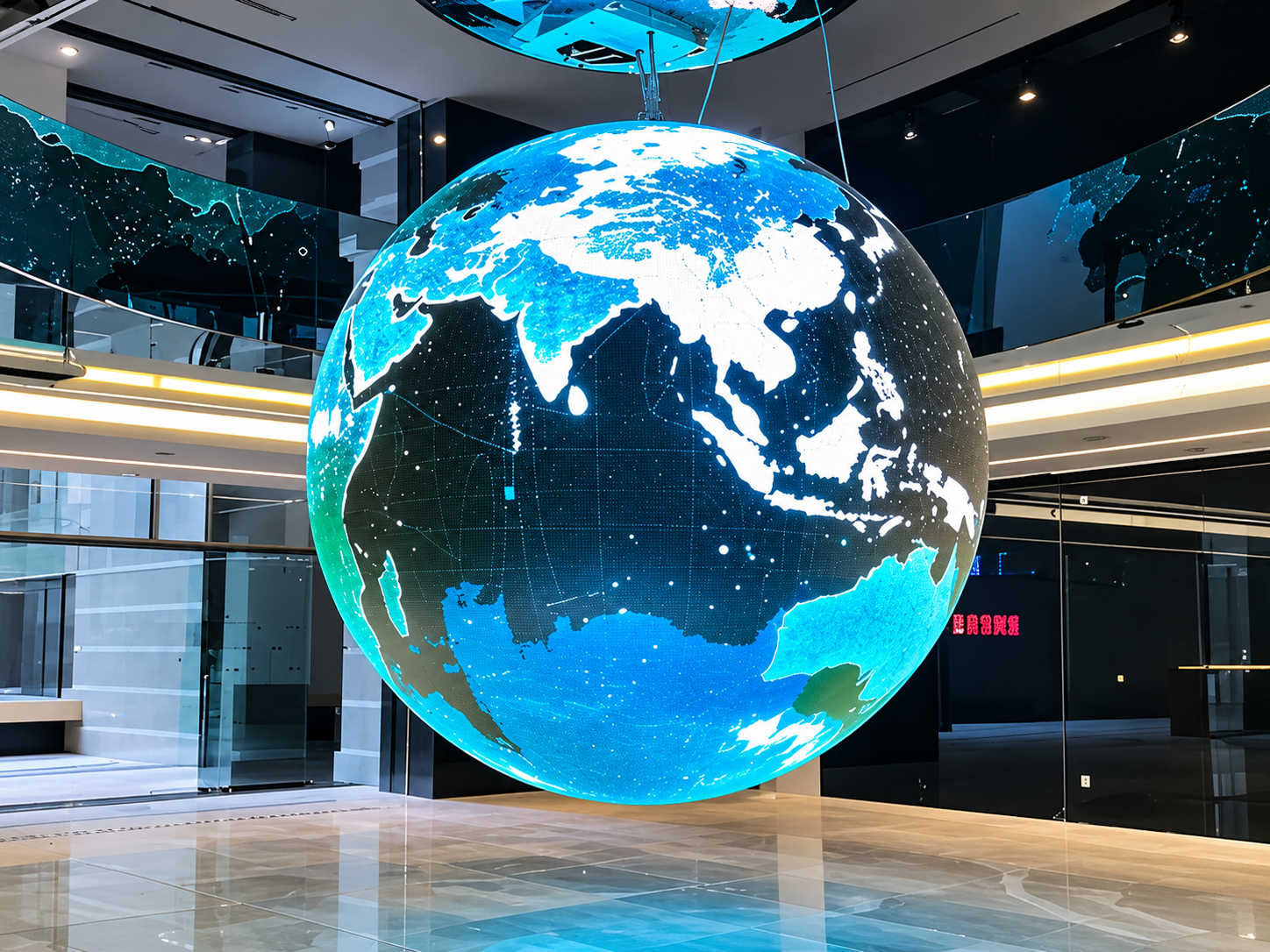
Even a small impact can damage LED lamps, loosen connectors, or affect the alignment of the modules. Some problems may not appear until the screen is installed and powered on.
For buyers, contractors, and installation teams, a clear shipping checklist helps reduce damage, avoid missing parts, and prevent installation delays.
This guide explains how to pack a spherical LED display, protect its modules, and inspect the equipment after delivery.
Unlike flat LED panels, an LED sphere display uses curved or specially designed modules fitted around a round frame. Each module must sit in the correct position to create a smooth display surface.
During shipping, several problems may occur:
Broken LED lamps caused by pressure or impact
Scratched or cracked module surfaces
Bent brackets or damaged support frames
Loose power cables and signal connectors
Missing screws, brackets, or installation accessories
These problems can increase repair costs and delay installation.
A damaged module may also create dark spots, abnormal colors, or visible gaps on the screen. For large spherical displays, replacing a module after installation can take extra time.
Most shipping risks come from poor packaging, unexpected movement inside the crate, incorrect stacking, or rough handling during loading and unloading.
Good packaging starts with understanding the screen's size, weight, and structure.
A small LED sphere screen may be transported as a complete unit if its design allows it. Larger screens are usually easier to protect when the modules, frame sections, and accessories are packed separately.
1. Choose a suitable shipping case
Use a strong wooden crate or protective flight case based on the shipment size and transportation method.
The case should have enough internal space for protective materials without allowing the components to move freely.
2. Protect the LED module surfaces
Use soft foam, anti-static bags, or suitable protective covers to protect sensitive electronic parts.
Avoid placing hard packaging materials directly against LED lamps. Uneven pressure can damage individual pixels.
3. Secure the internal structure
Metal frames and support brackets should be fixed securely inside the package.
Heavy structural parts should not press against LED modules during transportation.
4. Pack accessories separately
Power supplies, receiving cards, cables, screws, and mounting accessories should be placed in labeled bags or boxes.
A packing list makes it easier to confirm that all components have arrived.
5. Add clear shipping labels
Mark packages with handling instructions such as "Fragile," "Keep Dry," and "This Side Up" where appropriate.
For international shipments, confirm packaging and wooden-crate requirements with the freight forwarder.
LED modules are among the most sensitive parts of a spherical LED screen.
Because the modules follow a curved surface, they may have different shapes and installation positions. They should not be packed randomly or stacked directly on top of each other.
Each module should have its own protected space or separated compartment.
For larger projects, label the modules according to their installation positions. This helps the installation team identify each part without repeatedly moving or handling it.
It is also important to keep the packages dry. Moisture can affect electronic components, especially when equipment moves between environments with different temperatures.
For long-distance shipping, consider moisture-resistant packaging and suitable desiccants.
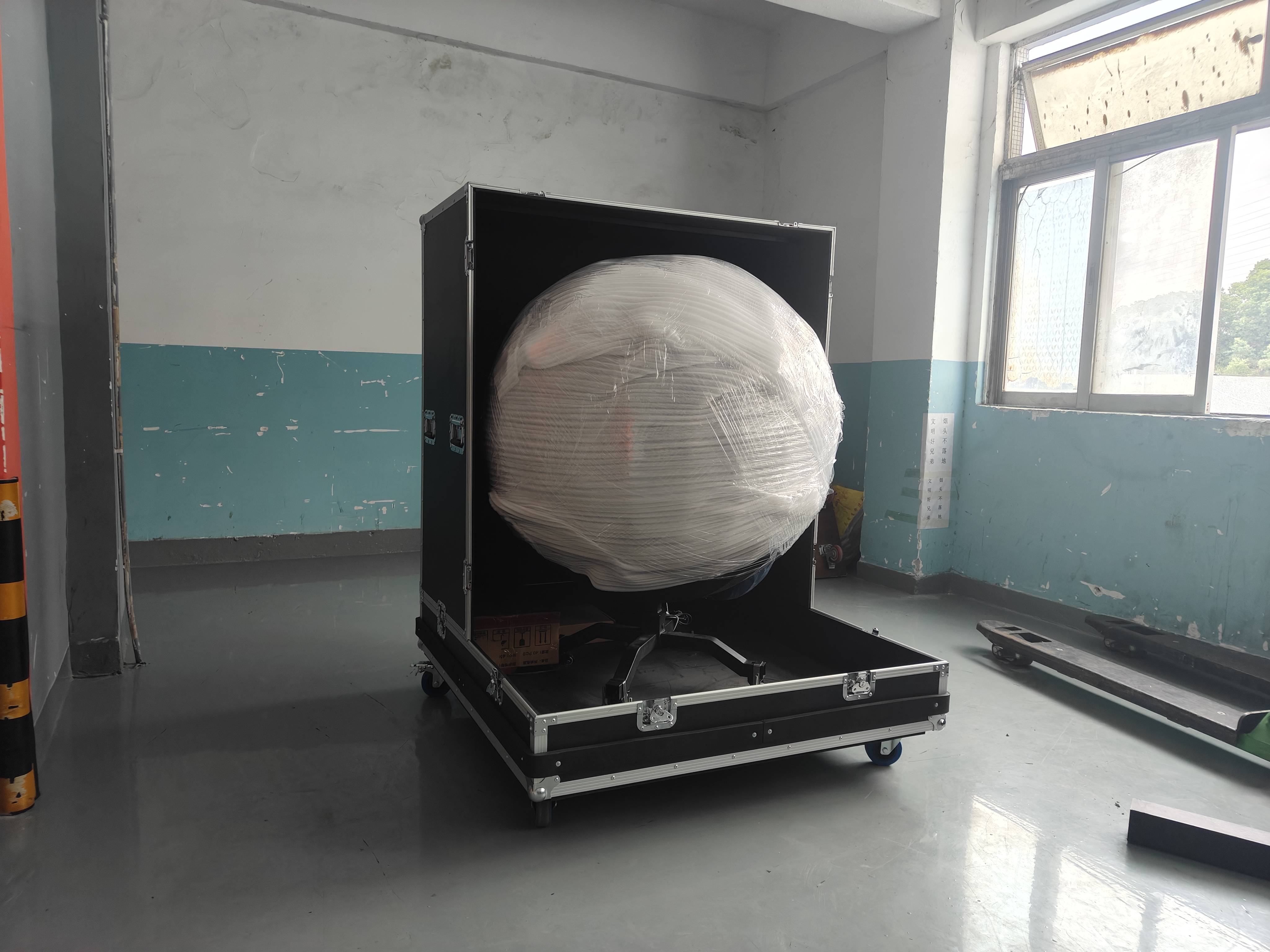
Before an LED sphere display leaves the factory, its working condition should be recorded.
A useful pre-shipment inspection includes:
Checking the display for dead pixels and abnormal colors
Testing red, green, blue, white, and video content
Confirming that power and signal connections work correctly
Inspecting module alignment and mounting points
Recording the condition of frames and accessories
Taking photos or videos before packaging
A complete display test is especially useful because some electronic problems are difficult to identify through visual inspection alone.
For large projects, the supplier and buyer should agree on the inspection requirements before shipment.
Once the shipment reaches the installation site, inspect it before starting assembly.
Step 1: Check the outer packaging
Look for broken wooden panels, dents, water marks, or signs that the crate has been dropped.
Take photos of any visible damage before opening the package.
Step 2: Check the packing list
Confirm the quantity of LED modules, frame sections, power supplies, cables, and mounting accessories.
Report missing or damaged parts to the supplier promptly.
Step 3: Inspect the LED modules
Check for cracked surfaces, missing LED lamps, bent connectors, or damaged circuit boards.
Do not install a visibly damaged module before its condition has been assessed.
Step 4: Check the frame and mounting structure
Make sure the brackets, connection points, and support sections are not bent or loose.
Step 5: Perform a power-on test
After the equipment has reached suitable operating conditions and all connections have been checked, test the screen using the supplier's instructions.
Display test images and video content to identify possible pixel, color, or signal problems.
Can an LED sphere screen be shipped fully assembled?
Small models may be shipped as complete units, depending on their construction. Larger models often require separate packaging for safer transportation.
What should I do if an LED module arrives damaged?
Take clear photographs, record its module number, and contact the supplier before installation. Keep the original packaging until the issue is resolved.
Should spare LED modules be included?
Spare modules can be useful for large installations or projects with limited maintenance access. Confirm the required quantity when placing the order.
TOOSEN supplies customized indoor and outdoor spherical LED displays for shopping malls, exhibitions, commercial spaces, and other applications.
Its product range includes different sphere diameters and pixel pitches, with options for project-specific requirements.
Before shipping, buyers should confirm the packing method, module protection, accessory list, and inspection documents with the supplier.
A well-planned shipping process helps ensure that your LED sphere screen arrives safely and is ready for efficient installation.
Explore TOOSEN LED sphere screen solutions or contact the team to discuss your project requirements.
 +86 18688923792
 andy@tosled.com