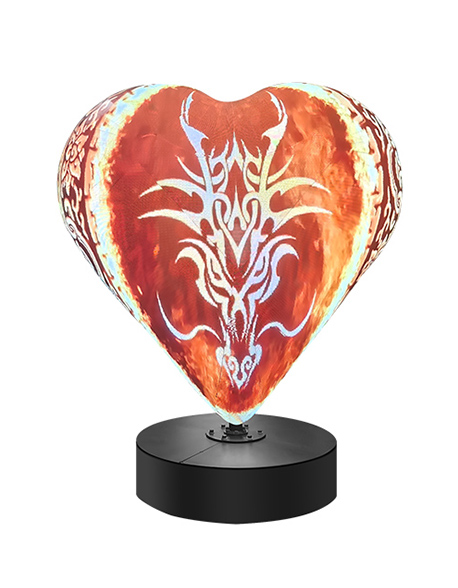
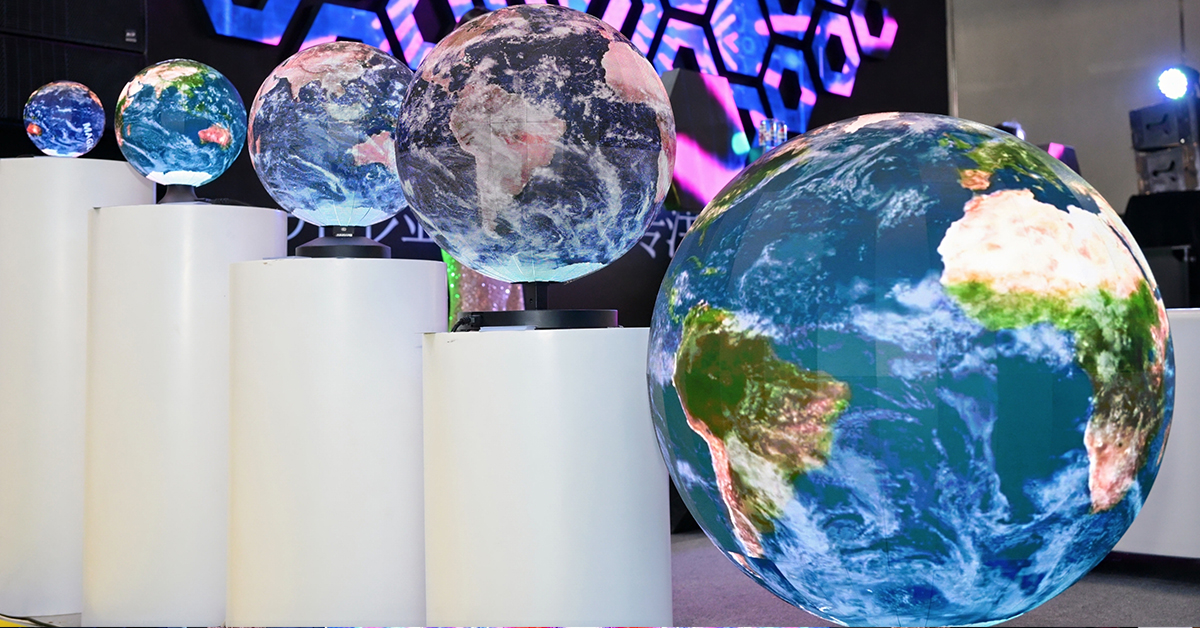
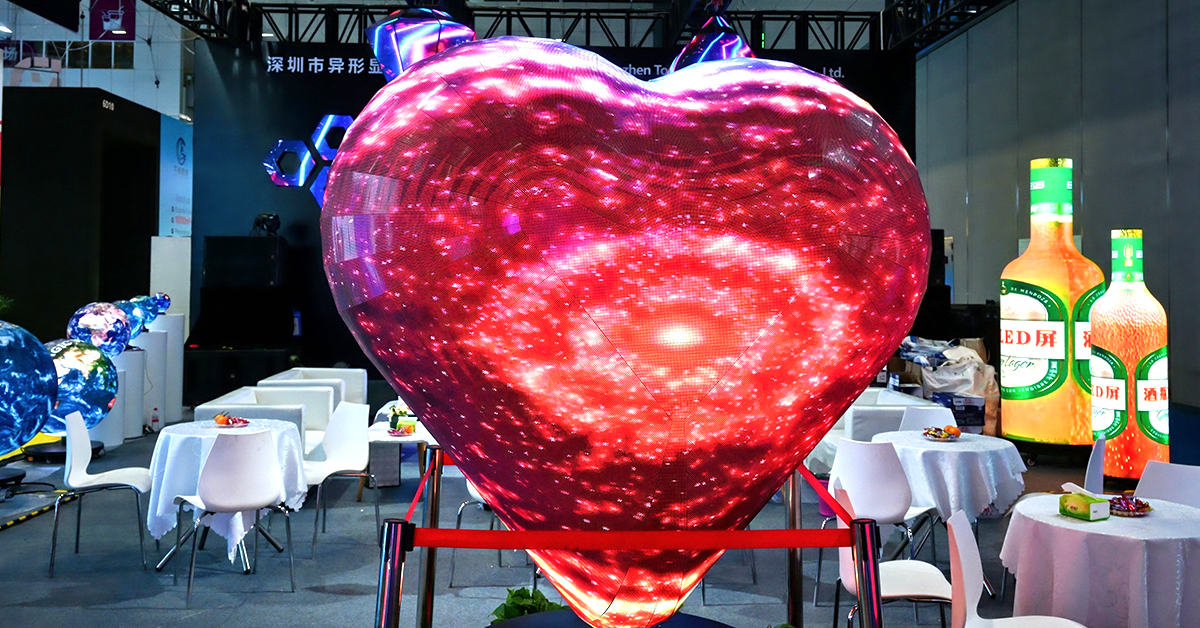
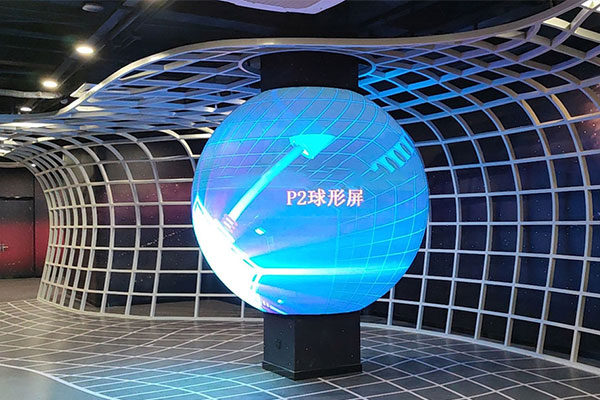
Spherical LED displays have emerged as a cutting-edge visual solution, revolutionizing spaces ranging from exhibition halls and stadiums to commercial lobbies and digital art installations with their unique three-dimensional form and immersive presentation. Unlike traditional flat-panel displays, their curved, spherical structure breaks the limitations of two-dimensional viewing, delivering a 360-degree panoramic experience that captivates audiences from every angle. This innovative display technology combines advanced engineering with high-performance visual capabilities, making it a preferred choice for scenarios requiring impactful visual communication.
One of the most prominent features of spherical LED displays is their seamless visual performance. Constructed with specialized curved LED modules, these displays eliminate visible splicing gaps, ensuring a smooth, continuous image that wraps around the entire spherical surface. This seamless integration is achieved through precision manufacturing, where each module is tailored to match the curvature of the sphere, maintaining consistent pixel density and color uniformity across the entire display. Additionally, spherical LED displays boast exceptional viewing angles—whether viewed from the front, side, or even above, the image remains clear and vibrant without color distortion or brightness loss, a key advantage over flat displays that often suffer from limited viewing ranges. In terms of performance, they typically offer high refresh rates (above 3840Hz) and high contrast ratios, ensuring sharp, flicker-free images even when displaying fast-moving content such as videos or dynamic graphics. Energy efficiency is another notable feature; modern spherical LED displays utilize high-brightness, low-power LED chips, reducing energy consumption while delivering intense brightness that adapts to both indoor and outdoor environments. Their durability is also impressive, with weatherproof designs for outdoor models (equipped with IP65 or higher protection) and shock-resistant modules that withstand long-term use in high-traffic areas. Moreover, these displays support flexible customization, allowing for adjustments in diameter, pixel pitch, and even surface effects (such as matte or glossy finishes) to meet specific project requirements.
When selecting the size of a spherical LED display, several critical factors must be considered to balance visual impact, practicality, and cost. The primary consideration is the application scenario: indoor spaces such as shopping malls or conference rooms typically require smaller diameters (3 to 5 meters) to fit within limited areas, while outdoor venues like stadiums, theme parks, or architectural facades may demand larger sizes (8 to 15 meters or more) to ensure visibility from long distances. Viewing distance is another key determinant—industry guidelines suggest that the optimal viewing distance should be 1.5 to 3 times the display’s diameter, with pixel pitch also playing a role: smaller pixel pitches (2mm to 4mm) are suitable for close-range viewing in indoor settings, while larger pixel pitches (6mm to 16mm) work better for outdoor displays where viewers are farther away. Installation space constraints, including ceiling height, floor load-bearing capacity, and surrounding structures, must also be evaluated to ensure the display can be safely installed without compromising the space’s functionality. Budget considerations are equally important, as larger displays with smaller pixel pitches require more LED modules and higher structural support, increasing overall costs. It is essential to conduct a thorough site survey to determine the maximum feasible diameter based on space dimensions and then adjust based on viewing needs and budget limitations.
The installation of a spherical LED display is a specialized process that requires careful planning and precision execution to ensure safety and performance. The process begins with pre-installation preparation, including detailed site Survey to assess structural conditions (such as ceiling or floor load capacity) and electrical infrastructure (power supply capacity and wiring routes). A custom structural frame is then designed—typically using lightweight yet sturdy materials like aluminum alloy or steel—to match the sphere’s curvature and support the weight of the LED modules. The frame must be engineered to distribute weight evenly and withstand external forces (such as wind for outdoor installations) to prevent deformation. Next, the LED modules are mounted onto the frame, starting from the bottom and working upward to ensure alignment with the spherical curve; each module is calibrated to maintain consistent pixel spacing and eliminate gaps. Wiring work follows, with separate routes for power cables and signal cables to avoid interference—power cables must be rated for the display’s total power consumption, while signal cables (often HDMI or Ethernet) are arranged to ensure stable data transmission to all modules. After physical installation, the display undergoes rigorous debugging: technicians test each module to check for dead pixels, adjust color uniformity across the entire sphere, and verify signal stability. For outdoor installations, additional steps include waterproofing checks (sealing cable connections and module edges) and wind load testing to ensure the structure can withstand harsh weather conditions. Finally, a comprehensive performance test is conducted, including displaying various content types to confirm image quality, viewing angles, and system stability before the display is put into official use.
In conclusion, spherical LED displays stand out for their seamless visual performance, versatile adaptability, and immersive viewing experience, making them a powerful tool for modern visual communication. Selecting the right size requires a holistic assessment of application Scene,viewing needs, space constraints, and budget, while proper installation demands meticulous planning and professional execution to ensure safety and optimal performance. As technology advances, these displays continue to evolve, offering even higher performance and greater customization, further expanding their application in diverse industries.








 +86 18688923792
  andy@tosled.com