




Industry news


View: 429

Release time:2026-04-13
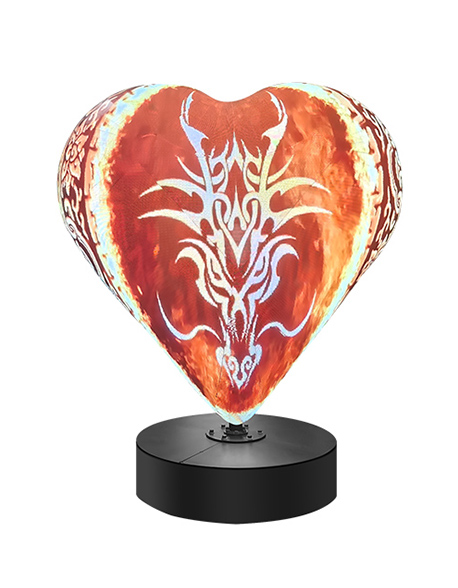
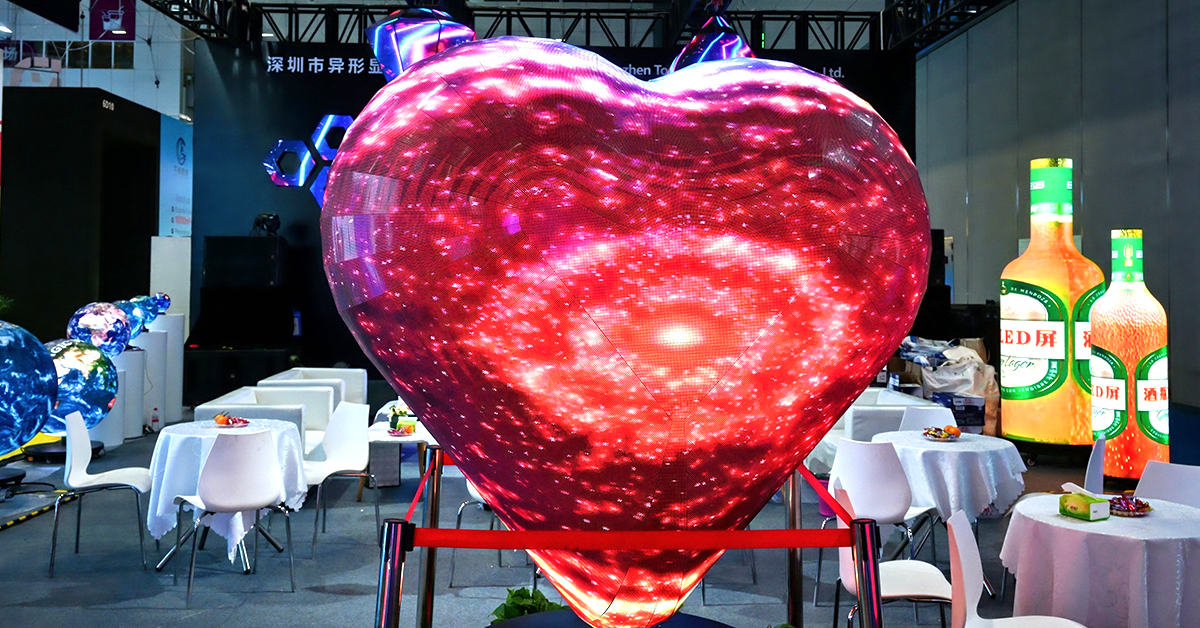
A heart-shaped LED screen is not formed by bending a single display panel. Instead, engineers construct it by assembling multiple custom LED modules into a precise geometric structure.
First, designers create a digital heart-shaped model. Then, they break this outline into many small, irregular segments. Finally, each segment becomes a specifically shaped LED module that fits exactly into its designated position.
As a result, the final structure forms a smooth and visually continuous heart shape.
To achieve accurate shaping, the process starts entirely in software.
Engineers first design a precise 3D heart outline using CAD modeling tools. After that, they divide the shape into multiple modular sections based on curvature, viewing angle, and structural constraints.
Next, they manufacture LED modules in two possible ways:
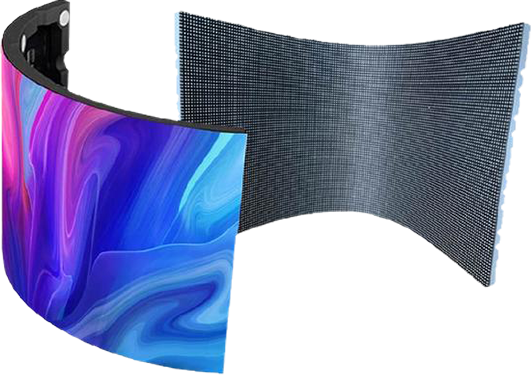
Flexible LED modules, which can bend naturally along curved edges
Rigid modules with curved aluminum or steel housings, which maintain fixed geometry
Each module is customized to match its exact position on the heart structure. For example:
The bottom “tip” of the heart uses narrower modules
The upper “lobes” use wider, symmetrical modules
Left and right sides are mirrored for perfect balance
By following this segmentation strategy, engineers ensure the final assembled display accurately reproduces the heart silhouette.
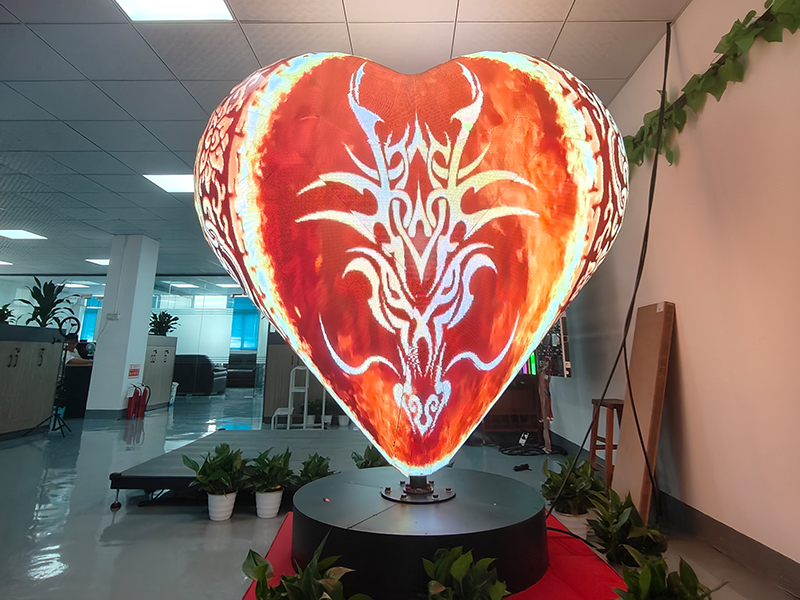
The installation process follows a clear and structured workflow:
First, technicians construct a metal support frame according to the exact heart-shaped dimensions.
They weld or assemble the frame so that every curve and angle matches the digital model precisely.
This step is critical because the frame defines the final geometry of the entire display.
Next, installers mount LED modules one by one onto the frame.
Each module is pre-designed to match a specific area of the heart shape:
Narrow modules at the lower tip
Wider modules at the upper curves
Symmetrical modules on both sides for balance
Because every piece is pre-numbered and pre-positioned, installers simply follow the layout map and place each module in its correct location.
As a result, the full heart shape gradually emerges during installation.
After installation, engineers fine-tune the alignment between modules.
They carefully control the gaps, typically keeping seams within about 1 mm. At normal viewing distances, these gaps become visually invisible, making the screen appear as a single continuous surface rather than multiple pieces.
The precision of a heart-shaped LED screen comes from a fully digitalized workflow:
First, engineers create an exact 3D model, ensuring no deviation in geometry.
Then, each LED module is manufactured according to that model, either through custom cutting or mold design.
During installation, technicians follow a strict numbering system to ensure every module goes into the correct position.
Finally, the control system adjusts and maps the video content to the heart-shaped geometry. This prevents distortion and ensures the displayed image aligns perfectly with the irregular screen shape.
A heart-shaped LED display achieves its precision through a combination of digital modeling, customized module design, and structured on-site assembly.
By integrating engineering accuracy with flexible LED technology, manufacturers transform a complex geometric form into a seamless, visually unified display that delivers strong emotional and visual impact.
 +86 18688923792
  andy@tosled.com