
Industry news


View: 509

Release time:2026-06-04
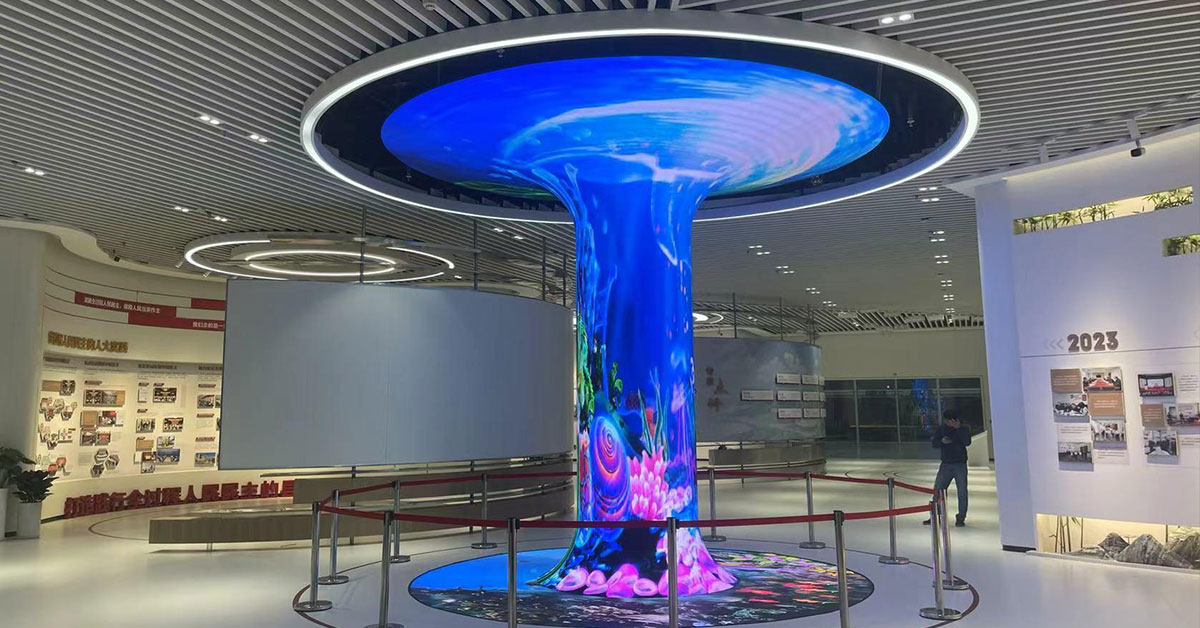
Walk into a luxury hotel lobby, a high-end shopping mall, or a modern exhibition center, and you may find yourself looking up at a stunning suspended ring-shaped LED display. Multiple concentric LED rings of different sizes appear to float in the air, delivering vibrant visuals that can be viewed from every angle.
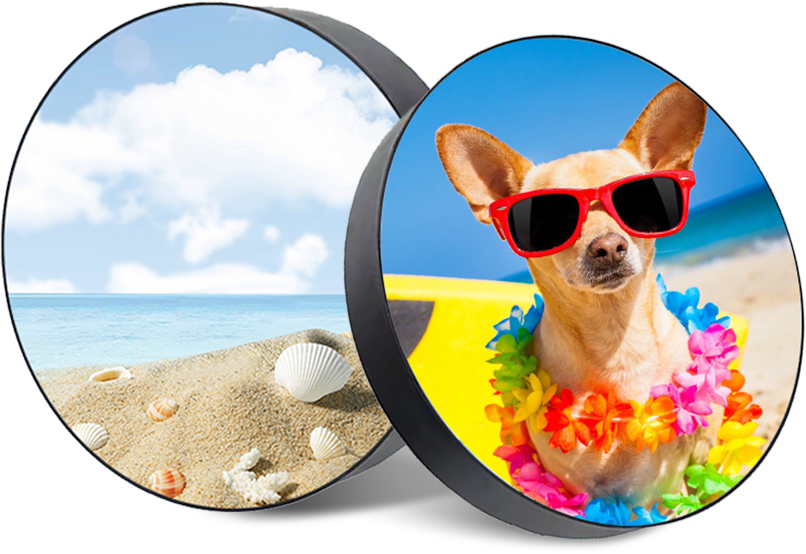
Known in the industry as ring LED displays, circular LED screens, or custom-shaped LED displays, these installations break away from the limitations of traditional flat screens. Instead of simply displaying content, they become part of the architectural space itself, blending digital media with spatial design.
Unlike conventional LED video walls, ring-shaped LED displays rely on flexible LED modules, custom steel structures, and professional suspension systems to achieve their seamless curved appearance.
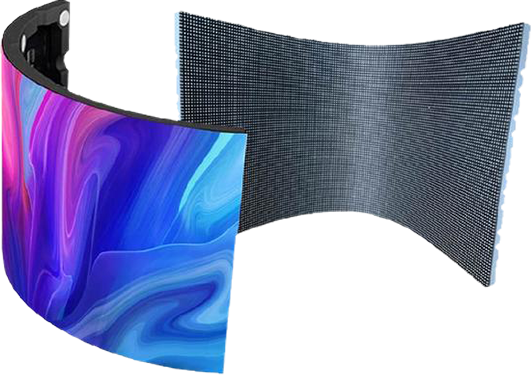
Traditional LED screens use rigid PCB boards that cannot bend. Ring-shaped LED displays, however, are built using flexible LED modules, which allow the screen to conform to curved and circular structures.
Feature | Description |
Substrate Material | Flexible circuit board (FPC) instead of rigid PCB |
Bendability | Adapts to various diameters and curved surfaces |
Installation Method | Built-in magnets allow direct attachment to steel structures |
Maintenance | Supports front service and quick module replacement |
Common Module Sizes | 320mm × 160mm, 240mm × 120mm, etc. |
Typical Pixel Pitches | P1.86, P2, P2.5 for indoor applications |
The quality of the flexible module directly affects display performance, reliability, and service life. Therefore, manufacturers should carefully evaluate LED chip brands, driver IC performance, and long-term bending durability during the design stage.
Because every project is custom-built, manufacturers typically follow six major stages from concept to installation.
Every successful project starts with a detailed site inspection.
Engineers typically evaluate:
Available installation height
Maximum and minimum ring diameters
Structural load-bearing capacity
Viewing distance and sightlines
Power and signal access points
Based on the collected data, designers create a 3D model to determine:
Number of rings
Diameter of each ring
Overall installation height
Pixel resolution
Structural configuration
These calculations establish the foundation for the entire project.
The steel frame serves as the skeleton of the ring LED display.
Manufacturers typically:
Weld high-strength steel into circular support rings
Calculate each ring diameter according to the desired visual effect
Create multi-layer concentric structures when required
Polish mounting surfaces to ensure installation accuracy
Add suspension brackets and rigging connection points
In many projects, larger rings occupy the upper section while smaller rings appear below, creating a dramatic layered effect.
Because the steel structure supports the entire display, precision manufacturing is essential for both safety and visual consistency.
Before installation, technicians prepare and test the flexible LED modules.
This stage includes:
Calculating the required bending radius for each ring
Carefully shaping modules to match the curvature
Inspecting LEDs and circuits for damage
Performing ground-level trial assembly
Verifying module quantities and alignment
Marking signal routes and installation positions
Pre-assembly significantly reduces installation time and minimizes costly adjustments at height.
This stage transforms individual components into a complete display.
Technicians:
Attach the curved flexible modules to the steel frame
Use the built-in magnetic backing to secure each module
Align modules precisely to create a smooth curved surface
Keep visible seams below 0.5 mm whenever possible
Route power and signal cables inside the structure
Because no screws are required for most module installations, technicians can replace individual modules quickly during future maintenance.
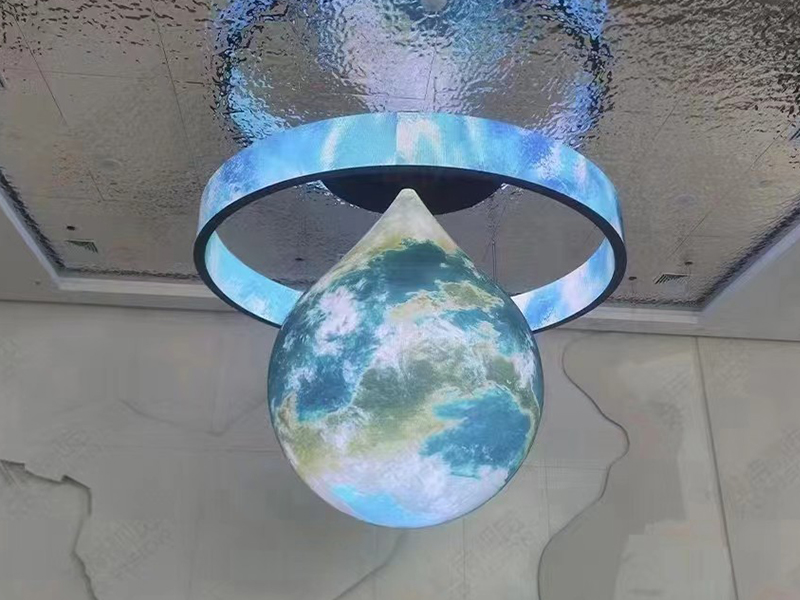
Most ring-shaped LED displays hang from the ceiling, making structural safety a top priority.
Professional installers:
Connect suspension rods or steel cables to the structural frame
Anchor the system directly to building beams or engineered load-bearing points
Avoid attaching the display to decorative ceiling materials
Calculate the total load, including the display, steel structure, power supplies, and cabling
Maintain a safety factor of at least three times the actual weight
For large installations, many venues also incorporate motorized lifting systems to simplify maintenance and servicing.
After installation, engineers conduct static load tests and stability tests to verify long-term safety.
Ring-shaped LED displays require more advanced configuration than standard flat screens.
Because pixels are distributed along a circular surface, technicians must create custom display mapping and configure irregular resolutions within the control system.
Without correction, flat video content may appear stretched or distorted on curved surfaces.
Professional LED control software applies real-time geometric correction, ensuring content displays naturally across the ring structure.
Engineers perform pixel-level calibration to achieve:
Uniform brightness
Consistent color reproduction
Seamless transitions between modules
Finally, technicians test:
Video playback
Static images
Text content
Dynamic animations
This process verifies that the entire display performs as intended.
Although flexible modules can bend, visible gaps may still appear between adjacent modules.
Manufacturers overcome this issue by:
Using high-precision flexible modules
Maintaining strict tolerances during steel frame fabrication
Standard rectangular video content often appears distorted when displayed on a circular surface.
Advanced LED controllers solve this problem through custom geometric mapping and real-time image transformation.
Multi-layer ring structures create partially enclosed spaces where heat can accumulate.
To maintain stable performance, designers often:
Incorporate ventilation channels
Add hidden cooling pathways
Install low-noise cooling fans when necessary
Because ring displays typically hang overhead, structural engineering becomes critical.
Every project should include:
Professional load calculations
Certified rigging hardware
Safety inspections
Compliance with local building regulations
 +86 18688923792
  andy@tosled.com