



Industry news


View: 518

Release time:2026-06-04
Cube-shaped LED displays combine the visual impact of a digital screen with the physical presence of a three-dimensional structure. Unlike traditional flat LED screens, a cube LED display can present content on multiple faces simultaneously, creating immersive viewing experiences from every angle.
From retail environments to public art installations, cube LED screens offer endless creative possibilities. Here are some of the most popular application scenarios.
Large commercial spaces often need to communicate information to visitors coming from multiple directions. A suspended or column-mounted cube LED display solves this challenge while creating a striking visual centerpiece.
Each face of the cube can display different content at the same time, such as:
Floor directories
Promotional campaigns
Event schedules
Weather updates
Digital clocks
As a result, a single installation can serve multiple traffic flows simultaneously.
Designers often suspend cube screens using steel cables or transparent supports. When combined with mirrored floors or reflective surfaces, the display appears to float in midair, creating a futuristic atmosphere.
During holidays and special events, the cube can transform into themed digital decorations. For example:
Christmas gift boxes
Giant dice
Snowflake-inspired installations
New Year countdown cubes
This flexibility allows venues to refresh their visual identity throughout the year.
For technology brands, automotive manufacturers, jewelry retailers, and luxury brands, cube LED displays provide an innovative platform for product storytelling.
Each side of the cube can showcase a different aspect of a product:
Exterior design
Internal technology
Technical specifications
User scenarios
Brand heritage
Customer benefits
When mounted on a rotating platform, the display guides customers through a complete product journey.
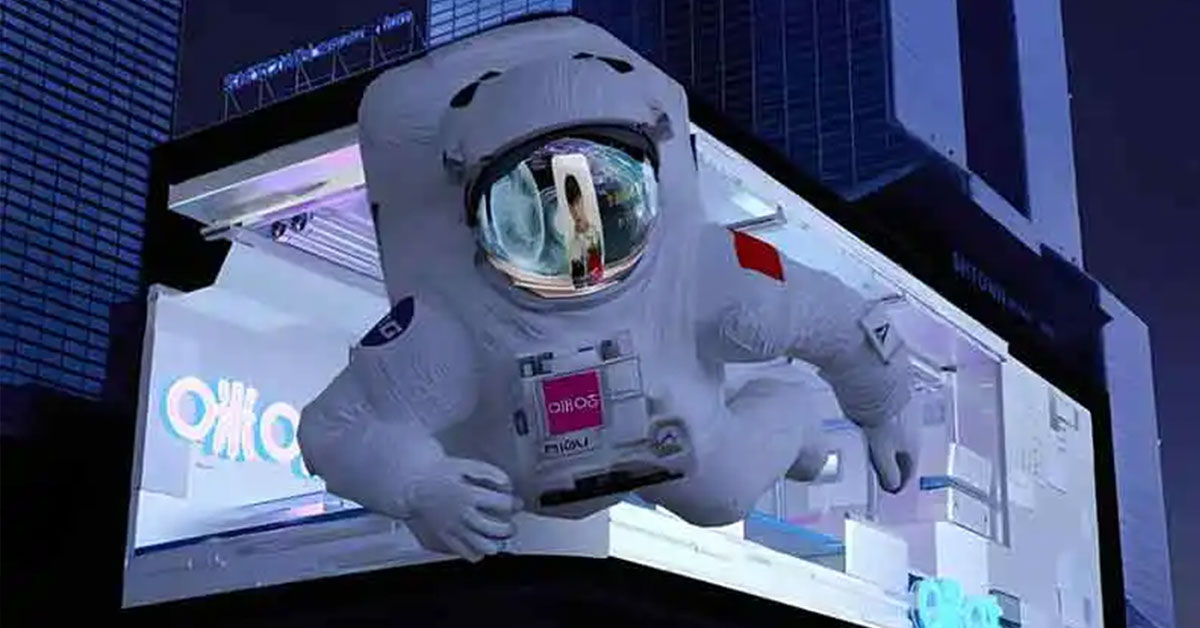
The natural edges and corners of a cube create ideal surfaces for anamorphic 3D content. Designers can make products appear to burst out of the cube, dramatically increasing engagement and social media appeal.
Cube-shaped displays naturally evoke curiosity and exploration, making them ideal for educational environments.
Museums can transform the cube into a digital model of:
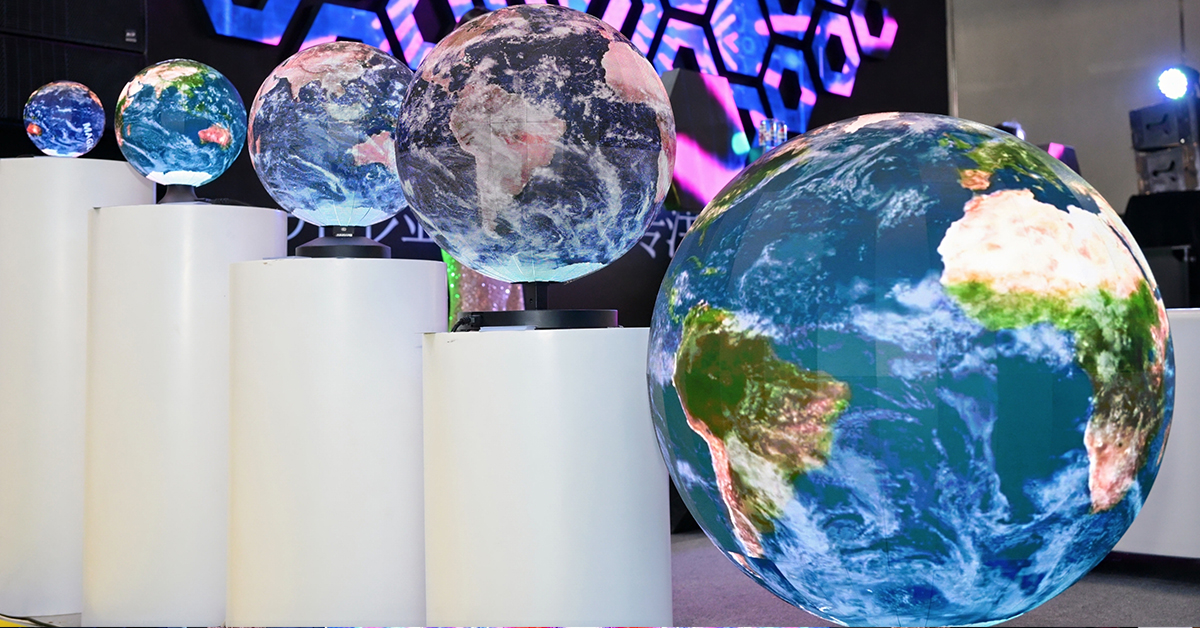
The Earth’s layers
Human anatomy
Cell structures
Planetary systems
Visitors can interact with specific faces and explore deeper levels of information.
Cube LED displays can visualize:
Fractal geometry
Hypercube projections
Optical illusions
Three-dimensional interpretations of artworks inspired by M. C. Escher
These applications make complex concepts easier to understand and more engaging to experience.
Cities, research centers, and museums can use cube screens to display live data, including:
Energy consumption
Traffic flow
Environmental monitoring
Carbon emissions
Each face can represent a separate dataset while collectively forming a dynamic "data universe."
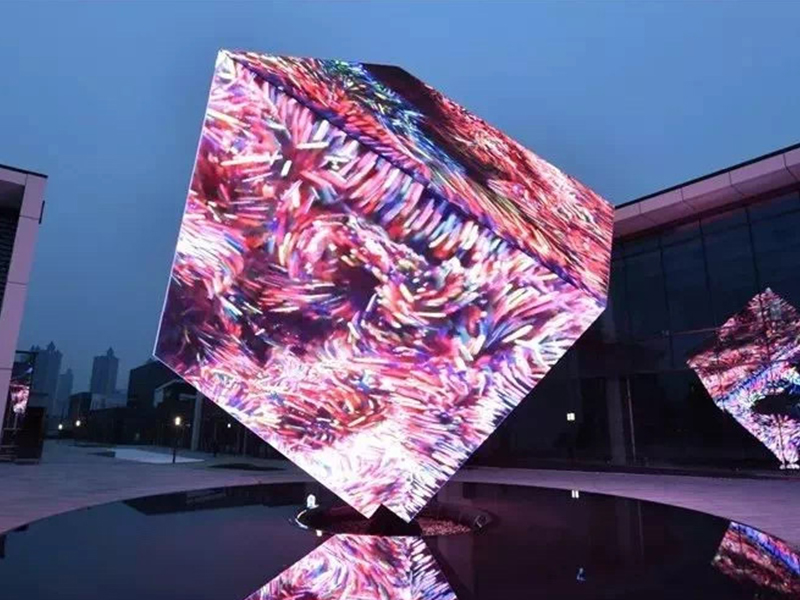
Entertainment venues use cube LED displays to create immersive environments that synchronize light, motion, and sound.
Suspended cubes can rotate, flash, and display synchronized visual effects that react to music in real time.
Combined with:
Lasers
Fog machines
Moving lights
they help create cyberpunk-inspired and highly immersive atmospheres.
Cube displays can become part of the gameplay experience.
Players may need to:
Match colors on multiple faces
Align symbols correctly
Solve visual puzzles
Completing these challenges can unlock new stages or trigger storyline events.
Theme parks can use overhead cube displays to entertain visitors while they wait.
Different sides of the cube can show:
Character animations
Interactive games
Countdown timers
Storytelling content
As a result, guests remain engaged throughout the queue experience.
Cube LED displays can function as digital sculptures that combine architecture, media art, and public communication.
Cities frequently use cube screens for:
New Year celebrations
Sports tournaments
Festival countdowns
Cultural events
Animated transitions across multiple faces create a stronger visual impact than traditional flat displays.
Architects often install cube screens at building corners or facade intersections.
This approach:
Breaks up flat architectural surfaces
Adds visual depth
Creates a recognizable landmark
Enhances nighttime cityscapes
As a result, the display becomes an integral part of the building rather than a separate advertising screen.
Exhibition spaces demand maximum visibility within limited floor areas. Cube LED displays help exhibitors stand out from surrounding booths.
A central cube installation can simultaneously display:
Corporate videos
Product highlights
Customer success stories
Interactive QR codes
Visitors can engage with content regardless of which direction they approach from.
Event organizers can combine multiple smaller cubes into one large structure.
At key moments during a product launch, the cubes can separate mechanically to reveal:
New vehicles
Consumer electronics
Luxury products
Concept prototypes
This dramatic effect often becomes the highlight of the entire event.
Challenge | Recommended Solution |
Viewing Blind Spots | Install the cube above eye level or add a rotation mechanism to maximize visibility. |
Heat Dissipation | Design internal airflow channels or use low-power COB LED technology to reduce heat buildup. |
Complex Content Production | Use professional multi-surface content mapping software to ensure seamless playback across all faces. |
Structural Load Requirements | Calculate wind loads for outdoor installations and verify ceiling or floor load capacity for suspended indoor displays. |
Cube-shaped LED displays offer far more than traditional digital signage. Their multi-sided structure enables immersive storytelling, interactive experiences, and landmark-level visual impact. Whether installed in a shopping mall, museum, entertainment venue, trade show, or public square, a cube LED screen transforms ordinary content into a memorable three-dimensional experience.
 +86 18688923792
  andy@tosled.com