






Industry news


View: 753

Release time:2026-05-18
Redundancy control in an LED display system refers to a fault-tolerant design approach where critical components or signal paths are duplicated. When a primary system fails, a backup system automatically takes over to ensure continuous display output.
In essence, it is a “dual insurance mechanism” for LED video systems, designed to prevent black screens, signal loss, or visible interruptions.
The fundamental idea behind redundancy control is simple:
Keep a standby system running in parallel, and switch instantly when the main system fails.
In high-end LED systems, both primary and backup systems may run in real time, continuously synchronized, so switching becomes seamless and nearly imperceptible.
Redundancy Layer | Implementation | Function |
Signal Redundancy | Dual input paths (Main + Backup) | Prevents video source or transmission failure |
Control Card Redundancy | Primary + backup sending/control card | Ensures system continuity if controller fails |
Power Redundancy | N+1 power supply modules | Prevents black screen due to power failure |
Network Redundancy | Dual Ethernet ports / ring network | Maintains communication if one link fails |
Video Source → Primary Controller → LED Screen
                      ↓ (Fault detection)
 Video Source → Backup Controller → LED Screen
             (Automatic switchover, typically<1s or="" real-time="">
Modern high-end systems use hot standby architecture, where both controllers stay synchronized continuously.
The backup system runs simultaneously with the main system, ensuring zero-delay switching when failure occurs.
The system continuously monitors:
Heartbeat signals
Voltage stability
Temperature conditions
Signal integrity
Once an anomaly is detected, the system switches to the backup path within milliseconds to seconds depending on architecture.
The goal is to ensure:
No visible flicker
No frame loss
No perceptible interruption to viewers
Redundancy is essential in environments where downtime is unacceptable:
Stage performances and live concerts
Broadcast and television production
Command and control centers
Security and surveillance systems
High-end commercial advertising displays
In these scenarios, even a few seconds of black screen can cause financial loss or operational risk.
Redundancy control in LED systems is essentially:
Building a backup “brain, signal path, and power system” so the display never stops working, even when something fails.
White balance refers to the relative brightness ratio of red, green, and blue (RGB) LEDs when the display outputs pure white.
In an ideal condition, when:
R = G = B (in correct proportion)
the display produces a neutral white point, typically calibrated to:
6500K (standard white)
9300K (cool white for some applications)
If this balance shifts, the entire image color reproduction will drift.
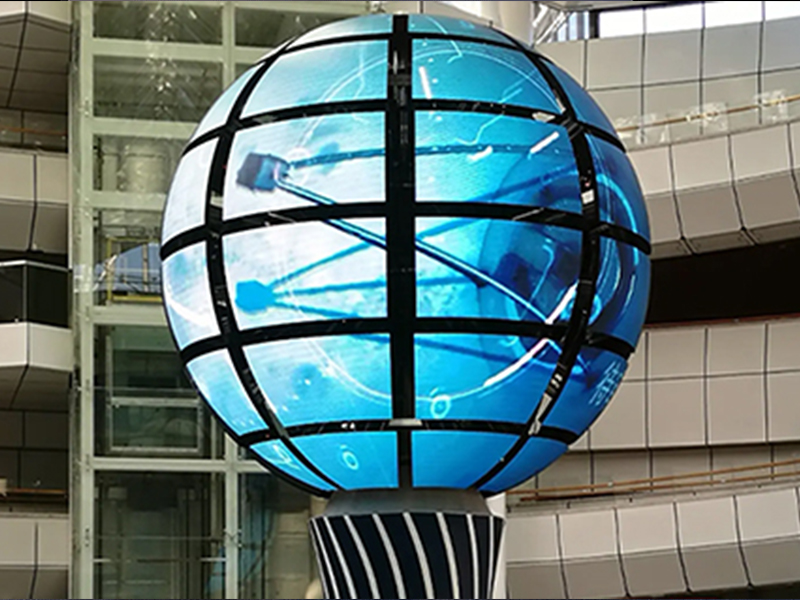
White balance defines the reference point for all colors.
When it is incorrect:
Skin tones shift (reddish or greenish)
Blue skies become purple or cyan
White backgrounds appear tinted
In short, any white balance error propagates across the entire color system.
Even LEDs from the same batch have variations in:
Brightness
Wavelength
Electrical characteristics
White balance testing exposes:
Mixed LED batches
Inconsistent driving currents
Uneven aging across modules
A well-calibrated white balance ensures smooth grayscale transitions.
When it is off, you may see:
Color shifts in dark scenes
Banding in gradients
Uneven low-gray performance
Visible color patches or stripes
This is especially critical in broadcast and studio environments.
Poor white balance forces the system to compensate by reducing stronger RGB channels.
This leads to:
Lower overall brightness efficiency
Uneven color aging
Reduced display lifespan in certain channels
Test Item | Method | Acceptance Criteria |
Pure Color Test | Display full white / red / green / blue | No tint, no spots, uniform brightness |
Grayscale Test | 16-level or 256-level grayscale | Smooth and distinguishable transitions |
Color Temperature Test | Measured with colorimeter | Within ±5% of target value |
Viewing Angle Test | Observe from multiple angles | No noticeable color shift |
Blue LEDs typically degrade faster than red and green LEDs, causing gradual white balance drift over time.
LED color output shifts with temperature changes, requiring compensation algorithms in professional systems.
Different production batches may not match perfectly. After repair or module replacement, “mismatch patches” can appear if calibration is not properly performed.
White balance and redundancy control represent two different but equally critical dimensions of LED display engineering:
Redundancy control ensures system reliability (no downtime).
White balance ensures image quality (no color distortion).
Together, they define whether an LED display is merely functional—or truly professional-grade.
 +86 18688923792
  andy@tosled.com