
News
Most genuine customer feedback, highly informative technical support videos, and our latest updates!
Most genuine customer feedback, highly informative technical support videos, and our latest updates!

View: 135

Release time:2026-09-03
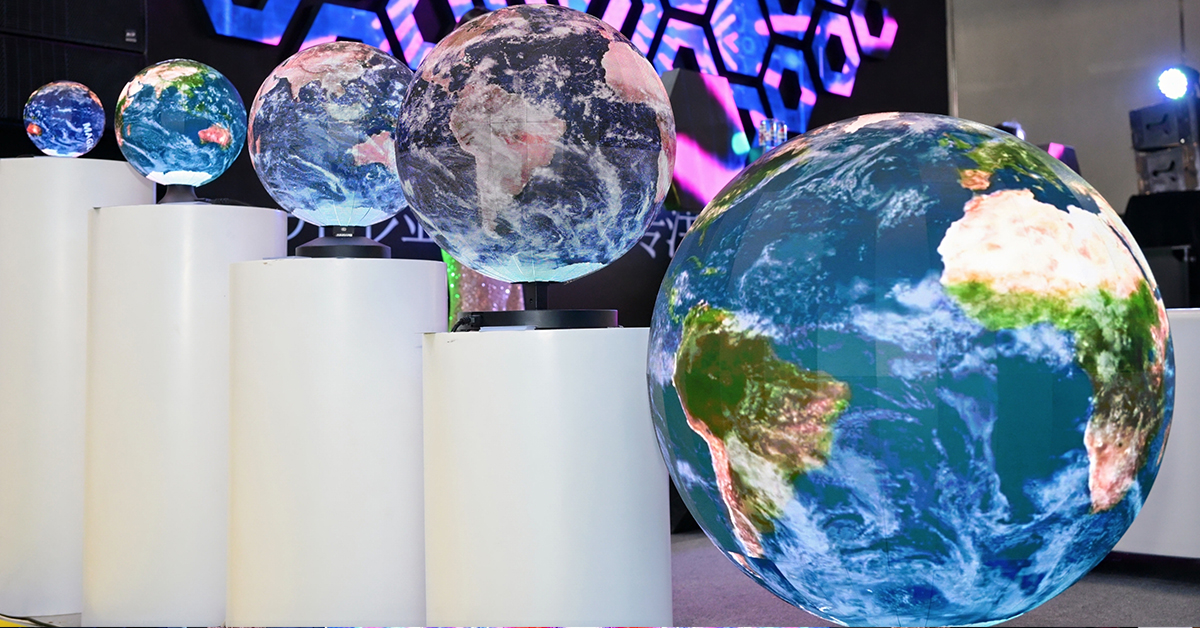
An LED ball display can be installed in different ways depending on the space and purpose of the project. Two of the most common options are ceiling-hung installation and floor-mounted installation.
At first, the choice may look simple. A ceiling-hung LED ball display saves floor space, while a floor-mounted LED sphere is easier to reach. However, a real project involves more than appearance. Screen diameter, total weight, ceiling structure, viewing height, cable routing, and future maintenance can all affect the final decision.
Before choosing an installation method for a spherical LED display, it is important to look at the whole installation environment.
The mounting method should not be decided only from a rendering.
Before manufacturing begins, the LED display supplier should understand the installation site. Important information includes:
Ceiling height
Available floor space
Building structure
LED sphere diameter
Installation height
Viewing distance
Power and signal cable locations
Maintenance access
For example, a shopping mall may want a large LED sphere suspended above an atrium. A museum may prefer a smaller sphere installed on a base where visitors can see it at eye level.
The same LED sphere display can therefore require a completely different structure depending on where it is installed.
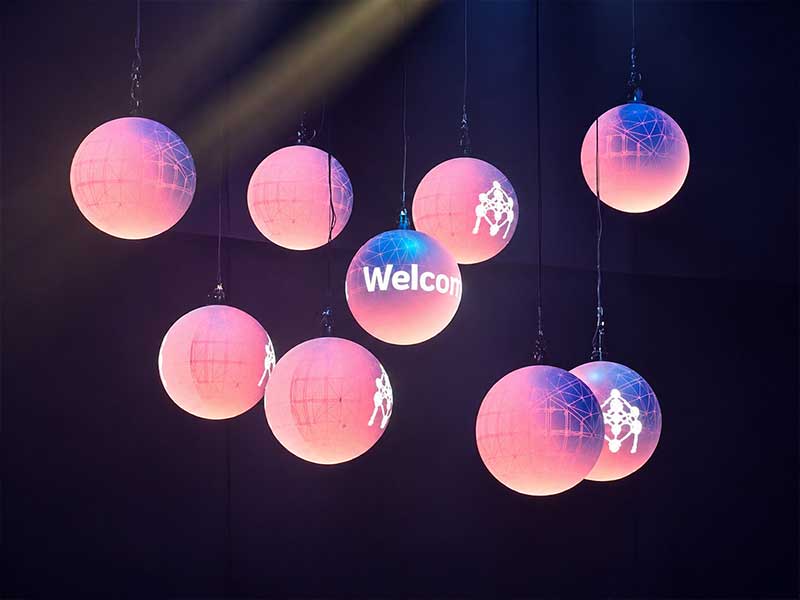
A ceiling-hung LED ball display is suspended from a ceiling beam, truss, or other supporting structure.
One of its biggest advantages is space efficiency. Because the sphere does not occupy valuable floor space, people can walk underneath it. This makes suspended LED spheres especially useful in shopping mall atriums, airports, exhibition halls, museums, event spaces, and large commercial buildings.
Hanging also improves long-distance visibility. When the LED ball is positioned above the crowd, content can often be seen from several directions and even from different floors of a building.
There is also a strong visual advantage. A sphere floating in an open space can become part of the architecture instead of looking like a conventional digital sign.
However, the ceiling structure must be checked before installation.
This is one of the most important questions in a hanging installation.
Do not calculate only the weight of the LED modules. The complete suspended system may include:
LED modules + internal steel structure + power supplies + receiving cards + cables + lifting hardware.
As the diameter of the LED ball screen increases, structural requirements usually become more important.
The supporting beam, truss, lifting points, and connection hardware must be suitable for the finished installation. For large suspended displays, structural confirmation should be completed before production rather than after the LED sphere arrives at the site.
This is why accurate installation drawings are useful at the beginning of a custom spherical LED project.
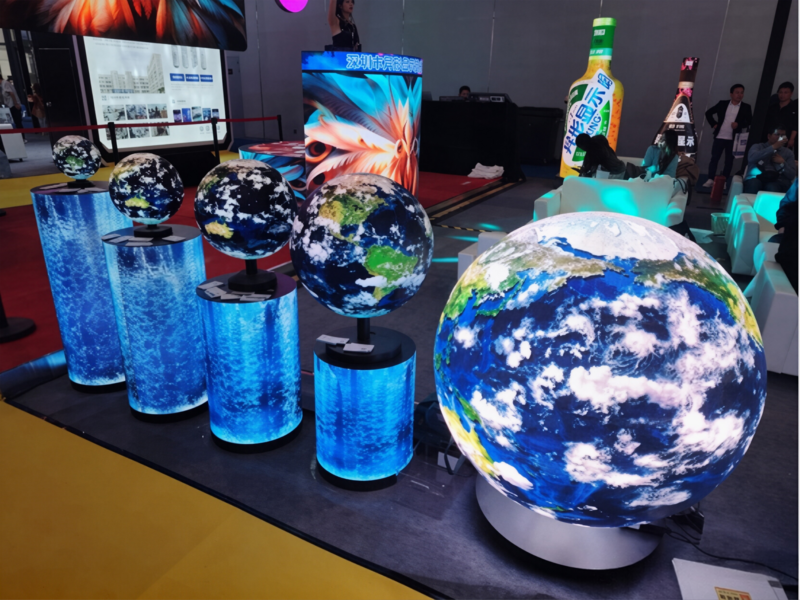
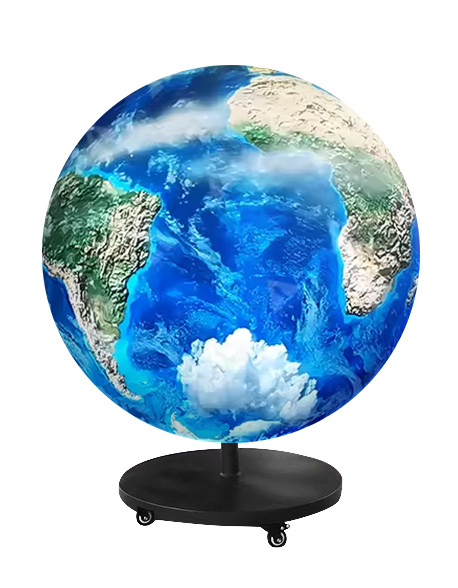
A floor-mounted LED ball display uses a base, supporting column, or custom steel structure to hold the sphere above the floor.
This installation is common in showrooms, museums, science centers, retail stores, exhibitions, brand experience centers, and corporate lobbies.
One important advantage is accessibility.
If the LED sphere is positioned near eye level, technicians can usually inspect and service it more easily. Depending on the design, maintenance may not require a lift or other working-at-height equipment.
Floor-mounted installation is also useful when the ceiling cannot carry the required load or when the building owner does not allow structural modifications.
For interactive applications, floor mounting can be especially practical because visitors can stand close to the display.
The main limitation is floor space. The supporting base needs a certain footprint, and the structure must remain stable during operation.
Maintenance is often ignored when people compare hanging and floor-mounted LED displays.
Imagine two identical spherical LED displays.
One is installed 1.5 meters above the floor. The other is suspended 8 meters above an atrium.
The display technology may be the same, but the maintenance process is very different.
A technician may be able to reach a floor-mounted screen directly. A high ceiling-hung screen may require a lift, scaffold, or other access equipment.
Before choosing the installation method, ask:
How will technicians reach the screen after installation?
This question becomes even more important for permanent installations. A beautiful installation that is difficult to service can create unnecessary maintenance costs later.
Every LED sphere display installation needs power and signal connections.
For a ceiling-hung LED sphere, cables can often enter from the top:
Ceiling → power and signal cables → suspension structure → LED sphere.
This can create a clean floating appearance because much of the wiring remains above the display.
For a floor-mounted sphere, cables can often pass through the supporting column or base:
LED sphere → support column → base → floor cable route.
The exact solution depends on the building and screen structure.
Cable routing should be confirmed before manufacturing so that power cables, signal cables, control equipment, and structural parts do not interfere with one another.
Yes.
A small indoor LED ball display gives designers more flexibility. It can often be suspended, placed on a base, or integrated into another structure.
As the diameter increases, however, weight, transportation, assembly, structural strength, and maintenance become more important.
For example, a large ceiling-hung LED sphere may require stronger lifting points and professional lifting equipment. A large floor-mounted sphere needs a stable base with enough strength to support the display safely.
Therefore, do not choose the mounting method first and calculate the structure later.
The better process is:
Diameter → Weight → Installation Environment → Supporting Structure → Mounting Method.
| Factor | Ceiling-Hung | Floor-Mounted |
|---|---|---|
| Floor space | Saves floor space | Requires a base area |
| Visibility | Excellent from a distance | Excellent at eye level |
| 360° visual effect | Very strong | Base may cover a small bottom area |
| Installation | Requires overhead support | Requires stable floor support |
| Maintenance | More difficult at high positions | Usually easier |
| Cable routing | Often from ceiling | Often through base or floor |
| Interaction | Less suitable for close interaction | Good for interactive applications |
| Typical applications | Malls, atriums, airports, exhibitions | Museums, showrooms, retail, lobbies |
There is no single installation method that is best for every LED ball display project.
Choose a ceiling-hung LED sphere display when floor space is limited, long-distance visibility is important, or the sphere needs to become a floating visual centerpiece.
Choose a floor-mounted LED ball display when easy maintenance, eye-level viewing, interaction, or installation flexibility is more important.
For large or highly customized projects, the decision should be made together with the screen manufacturer and the project's structural or installation team.
TOOSENprovides customized spherical LED displays for indoor and outdoor applications. Different diameters, pixel pitches, structures, and installation methods can be designed according to the project.
Depending on the site, an LED sphere can be designed for hanging installation, floor-mounted installation, or other customized structures.
For projects involving unusual architecture or limited installation space, it is better to provide basic information such as the required diameter, pixel pitch, installation height, viewing distance, and site drawings before production.
 +86 18688923792
  andy@tosled.com