
News
Most genuine customer feedback, highly informative technical support videos, and our latest updates!
Most genuine customer feedback, highly informative technical support videos, and our latest updates!

View: 23

Release time:2026-09-14
A custom-shaped LED display often starts with a drawing, a 3D model, or a creative idea. On a computer, the design may look perfect. The module dimensions are correct, the steel structure fits, and the pixel layout appears reasonable.
But a digital model cannot show every problem that may appear on the real screen.
For some projects, a small sample or partial structure is enough. For others, producing a full-size prototype before mass production can prevent expensive changes later.
The key is knowing when a full prototype is actually necessary.
A conventional rectangular LED display uses repeated cabinets and standard connection methods. Once the cabinet design has been tested, producing more units usually creates limited structural risk.
A custom-shaped LED display is different.
Its final appearance may depend on several elements working together:
irregular module angles;
custom metal structures;
curved transitions;
special PCB layouts;
non-standard cable routes;
unusual maintenance access;
custom installation points.
A small dimensional error in one area can continue across the whole structure.
For example, a 2 mm alignment difference may seem unimportant on one module. After dozens of modules are installed around a circular or irregular structure, that small difference can become a visible seam or prevent the final sections from closing correctly.
This is one reason some projects should be tested at their real dimensions.
Not every custom LED project needs one. However, several conditions make full-scale testing much more valuable.
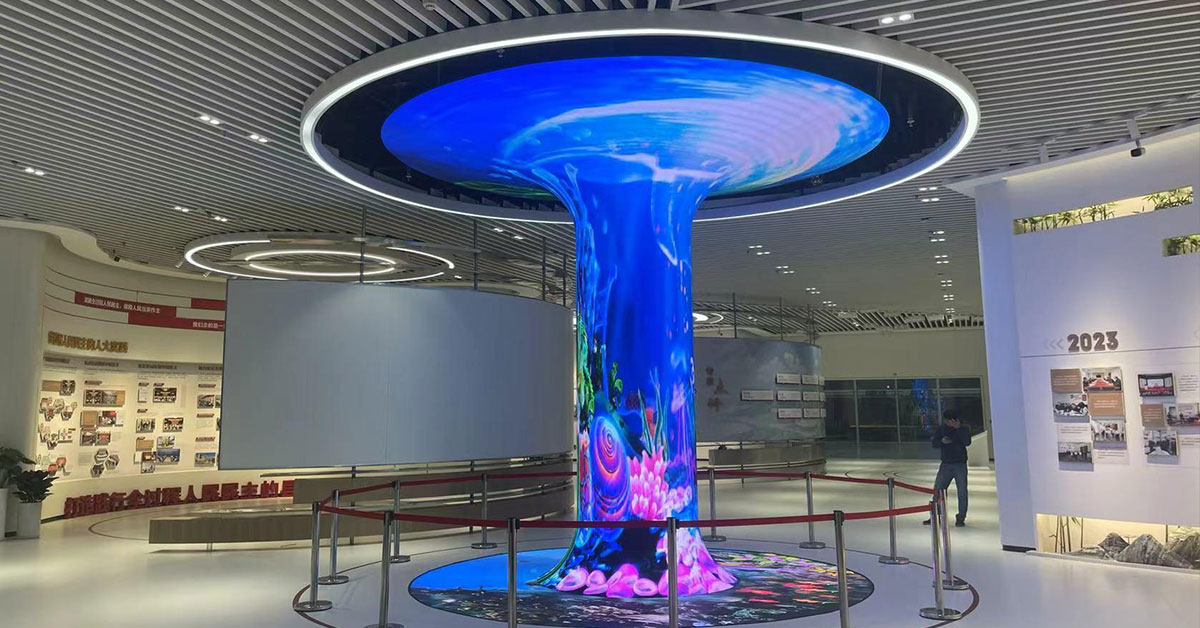
A simple cylinder has one main radius. Its structure is relatively predictable.
A display with changing curves, narrow transitions, shoulders, corners, or multiple radii is more difficult.
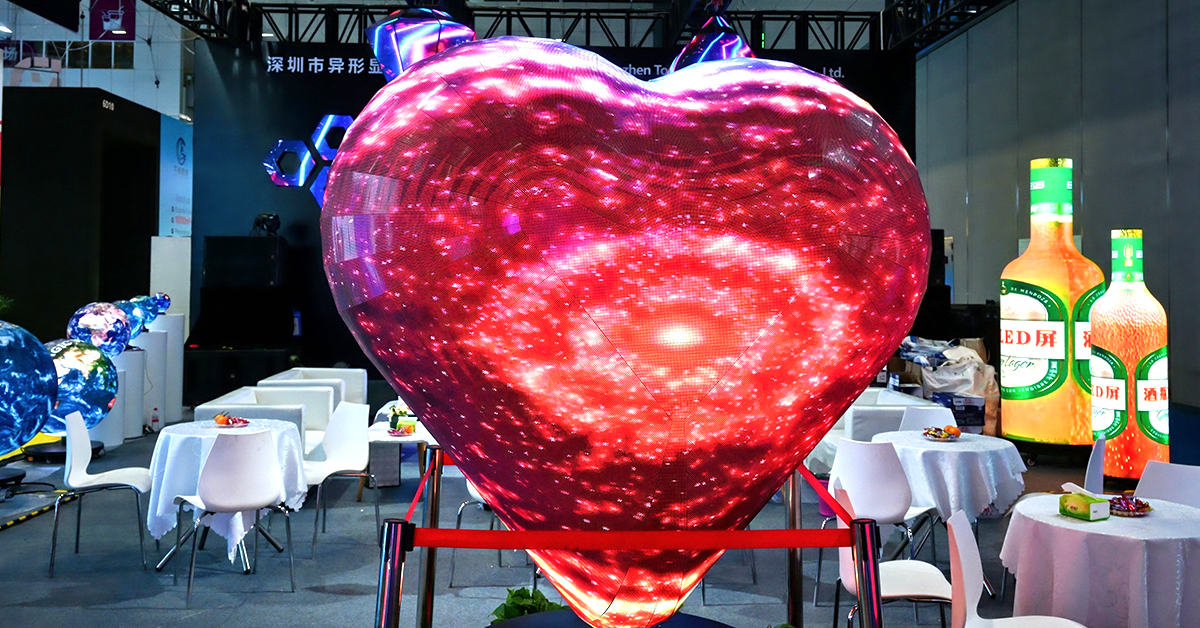
This can happen with bottles, sculptures, animals, logos, architectural decorations, and other creative forms.
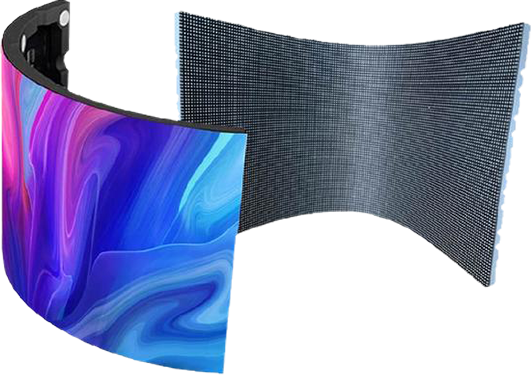
A flexible LED screen can adapt to curved surfaces, but the supporting structure still determines the final shape. A full-size prototype allows engineers to see whether the modules follow the structure smoothly without creating pressure points or visible gaps.
Some LED displays are designed to reproduce a real product at a much larger scale.
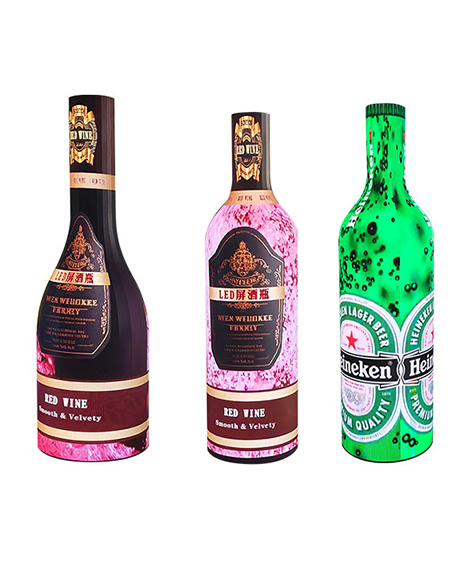
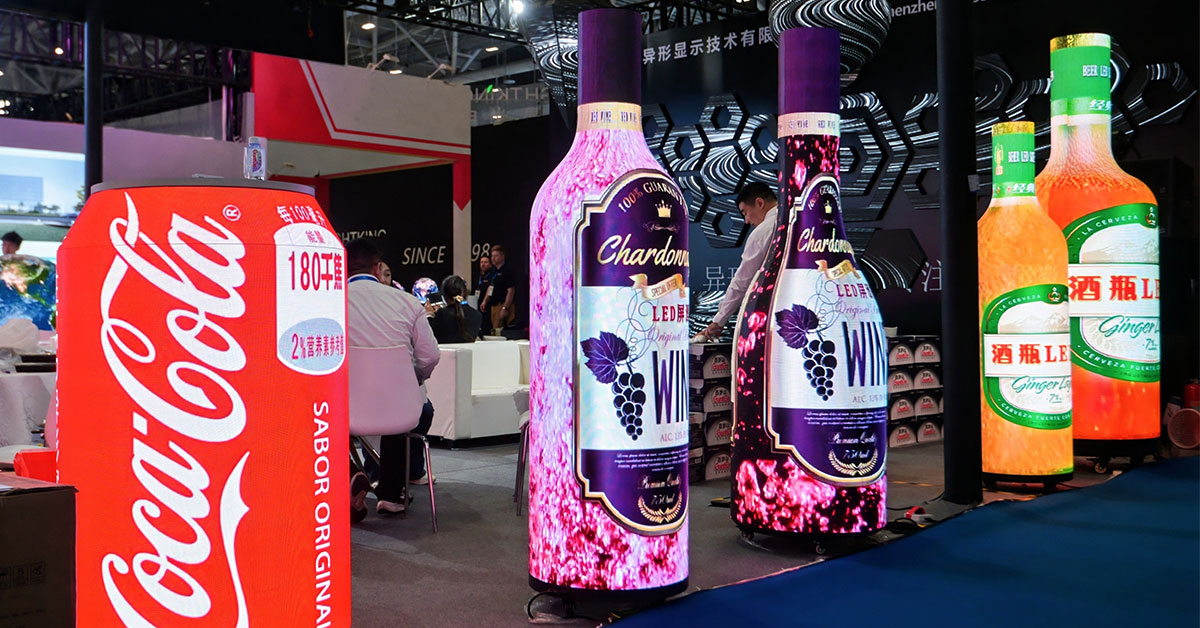
A bottle-shaped display is a good example.
The body, shoulder, neck, and top may all use different dimensions. Even when a 3D model is accurate, the finished LED surface can look slightly different because LED modules have their own thickness, bending limits, and connection requirements.
For these projects, visual proportion matters almost as much as structural strength.
A full-size prototype helps the customer check the actual silhouette before the design enters mass production.
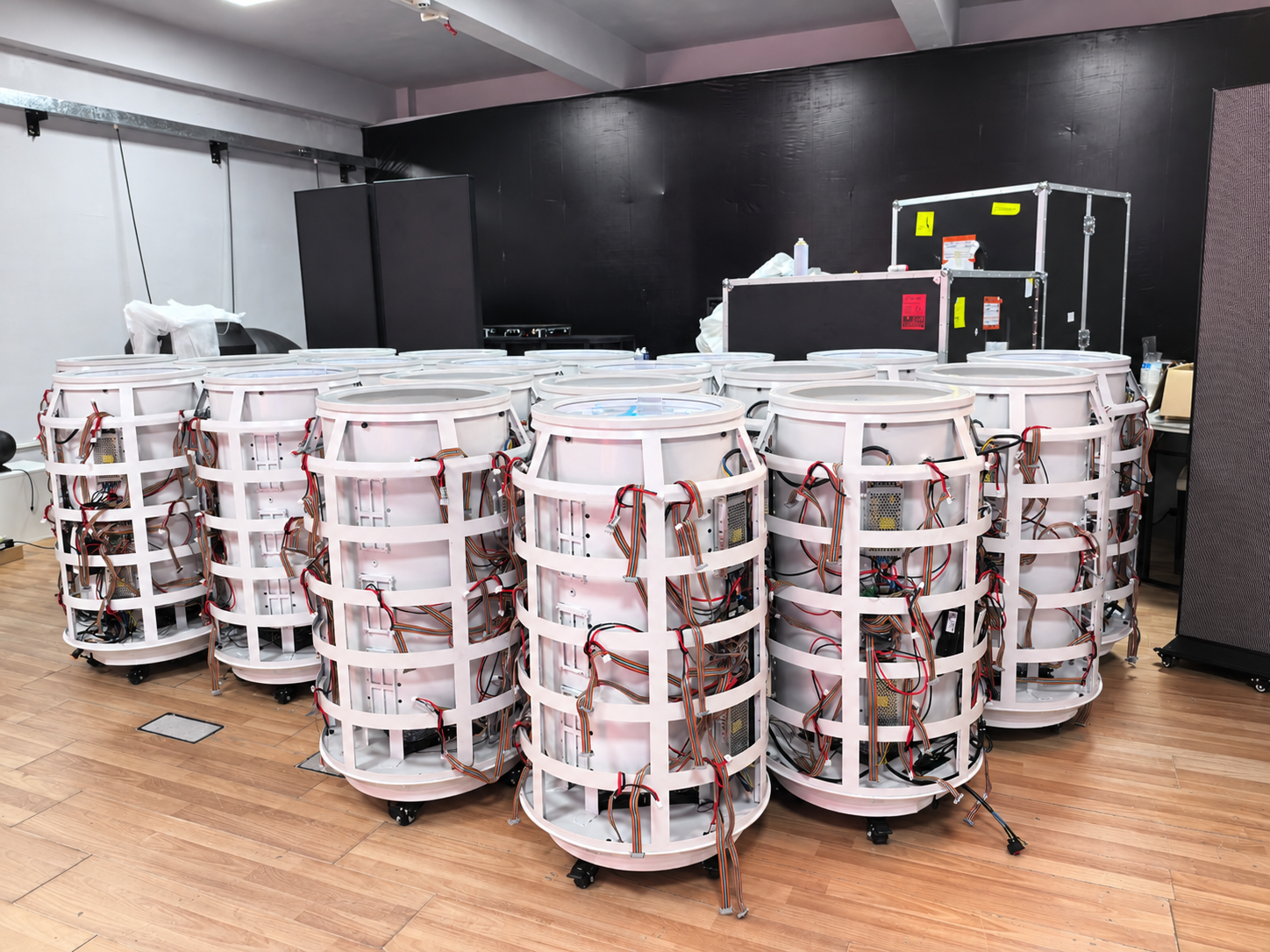
Prototype cost becomes more reasonable when the project requires many identical units.
Imagine a retail campaign requiring 30 custom LED structures.
If a design problem is discovered after all 30 frames have already been fabricated, correcting the batch can become much more expensive than building one complete prototype first.
In this situation, the prototype acts as a production reference.
Once the customer approves the shape, module arrangement, structure, wiring and visual performance, the factory can use the approved unit as the standard for the remaining production.
A full-size prototype should not only be used to check whether the LEDs light up.
It should reproduce the important conditions of the final product.
Engineers should inspect the display from the main viewing directions.
Look for:
uneven curves;
unexpected flat areas;
large seams;
incorrect proportions;
visible structural edges.
This is especially important for 360-degree displays where viewers can walk around the entire product.
Flexible modules should sit naturally against the frame.
If installers must strongly push, stretch, or twist a module to make it fit, the structural dimensions may need adjustment.
Excessive mechanical stress can create problems after long-term operation.
A structurally correct display can still produce poor visual results if the content does not match the physical geometry.
Before mass production, engineers should run:
moving lines;
grids;
logos;
text;
solid colors;
rotating animations.
These patterns make distortion and mapping errors easier to find.
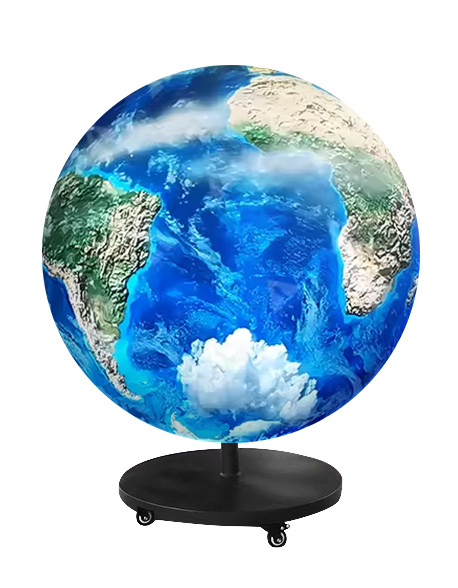
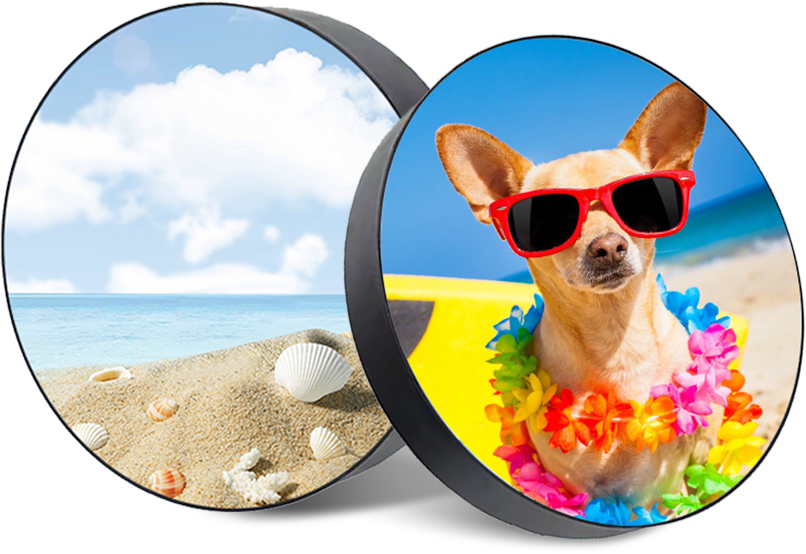
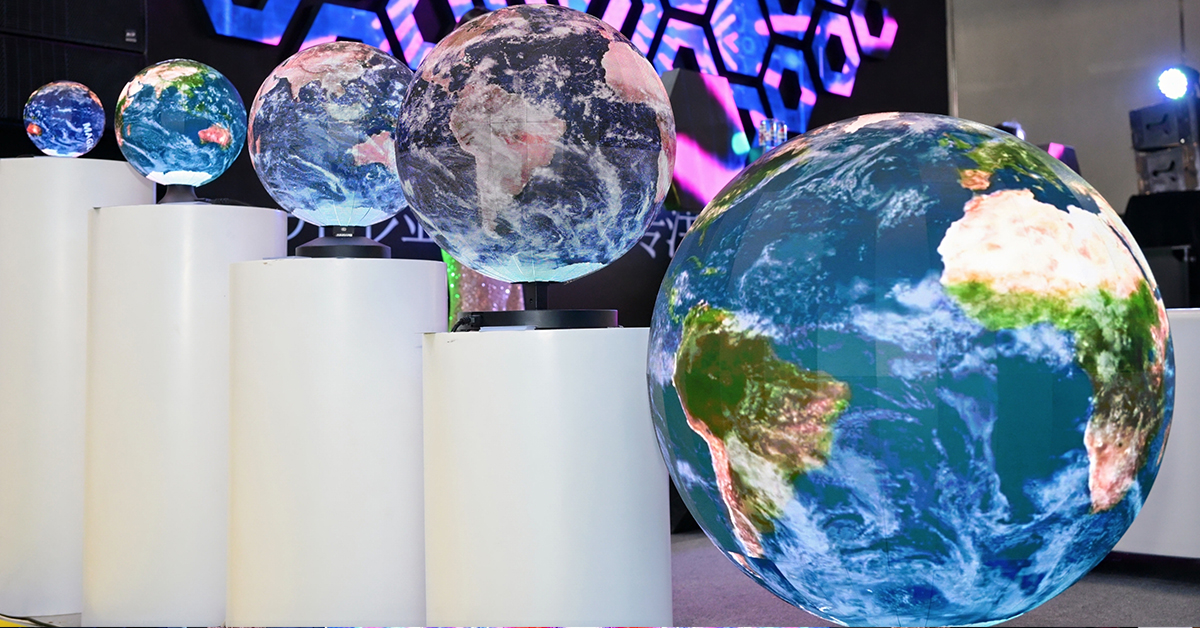
For a spherical LED screen, this stage is particularly important because content wraps around a 360-degree surface rather than remaining on one flat plane. Toosen's spherical range supports multiple diameters and pixel pitches for different viewing and installation requirements.
A prototype should also answer practical questions that CAD drawings cannot fully solve.
Can technicians reach the receiving cards?
Can a damaged module be removed without disassembling a large part of the structure?
Are power cables too close to sharp metal edges?
Can signal cables pass through the frame without being tightly bent?
Is there enough internal space for power supplies, receiving cards and connectors?
These details may appear small during design, but they directly affect installation time and future maintenance.
A full-size prototype gives engineers a chance to move cables, enlarge service openings or change component positions before the production drawing is frozen.
There is also no reason to increase project cost when the design risk is already low.
A complete prototype may not be necessary when:
the same structure has already been manufactured successfully;
only the diameter or height changes slightly;
standard modules and proven frames are being used;
the project needs only one display;
a partial structural sample can verify the critical area.
In these cases, engineers may build only the most difficult section.
For example, a bottle-shaped screen may require testing only the shoulder and neck transition rather than producing an entire bottle.
The purpose of prototyping is not to make an extra screen. It is to answer the engineering questions that still contain uncertainty.
Once the prototype passes inspection, its important parameters should be recorded.
These can include frame dimensions, module positions, cable routes, receiving-card coordinates, screw locations and assembly order.
Photos and assembly drawings can also be created from the approved unit.
Mass production should then follow this confirmed standard instead of relying only on the original concept drawing.
This makes every finished unit easier to inspect and reduces differences between batches.
No. Proven structures can often move directly into production. Full-size prototypes are more useful for complex or completely new designs.
Sometimes. But changing the scale can also change module distribution, curve transitions and structural tolerances. A small prototype cannot always reproduce these effects.
For final engineering validation, yes. Dummy panels may confirm the outer shape, but real modules are needed to test seams, bending pressure, wiring, pixel mapping and visual performance.
No. Even a small creative display may need full-scale testing if its geometry is complicated or if many identical units will be produced.
The decision to build a full-size prototype should depend on engineering uncertainty rather than screen size alone.
If a new custom LED display combines complex geometry, tight tolerances, difficult module transitions, unusual wiring or large-volume production, building one complete unit first can prevent problems from being repeated throughout the entire batch.
Toosen provides OEM and ODM services for custom LED projects, covering design evaluation, structural engineering, customized shapes and production. Customers can submit drawings, CAD files, 3D models or reference concepts for engineering evaluation before manufacturing.
For a truly new shape, the most valuable prototype is not simply a demonstration model. It is the final engineering checkpoint between an attractive concept and stable mass production.
 +86 18688923792
  andy@tosled.com