
News
Most genuine customer feedback, highly informative technical support videos, and our latest updates!
Most genuine customer feedback, highly informative technical support videos, and our latest updates!

View: 162

Release time:2026-08-08
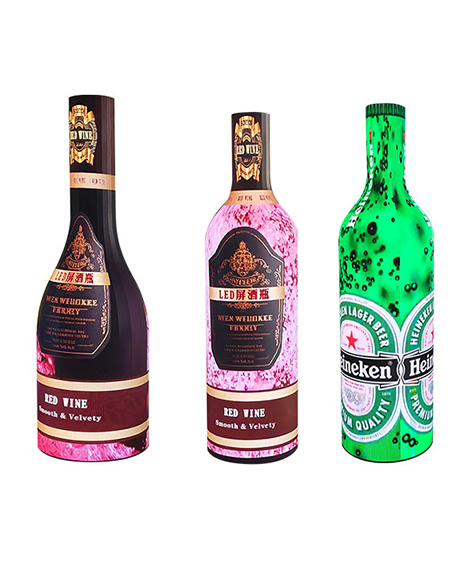
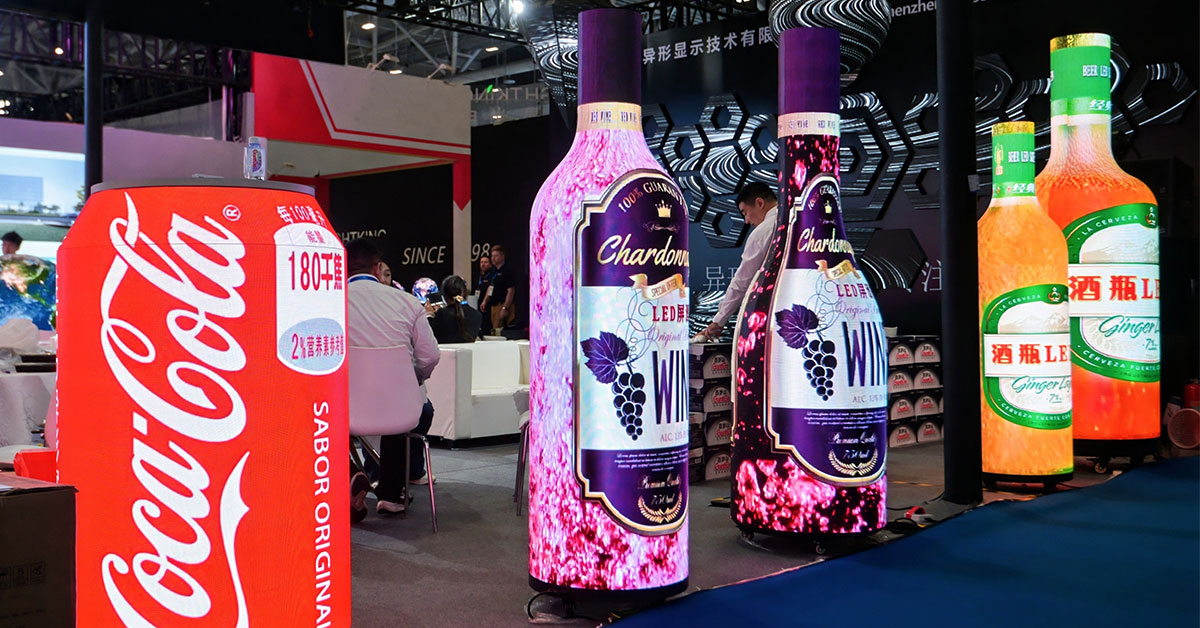
When people see a Can-Shaped LED Display for the first time, they often ask:
"How can an LED screen create a smooth curved surface like a real product?"
Unlike traditional flat LED screens, a can-shaped LED screen requires advanced engineering technology, including customized LED modules, precision structures, control systems, and LED pixel mapping.
A successful cylindrical LED display is not simply made by bending a normal LED screen. Every component must work together to ensure accurate images, smooth curves, and stable long-term operation.
In this article, we will explain how a custom-shaped LED display works, from LED modules and mechanical structures to image processing technology.
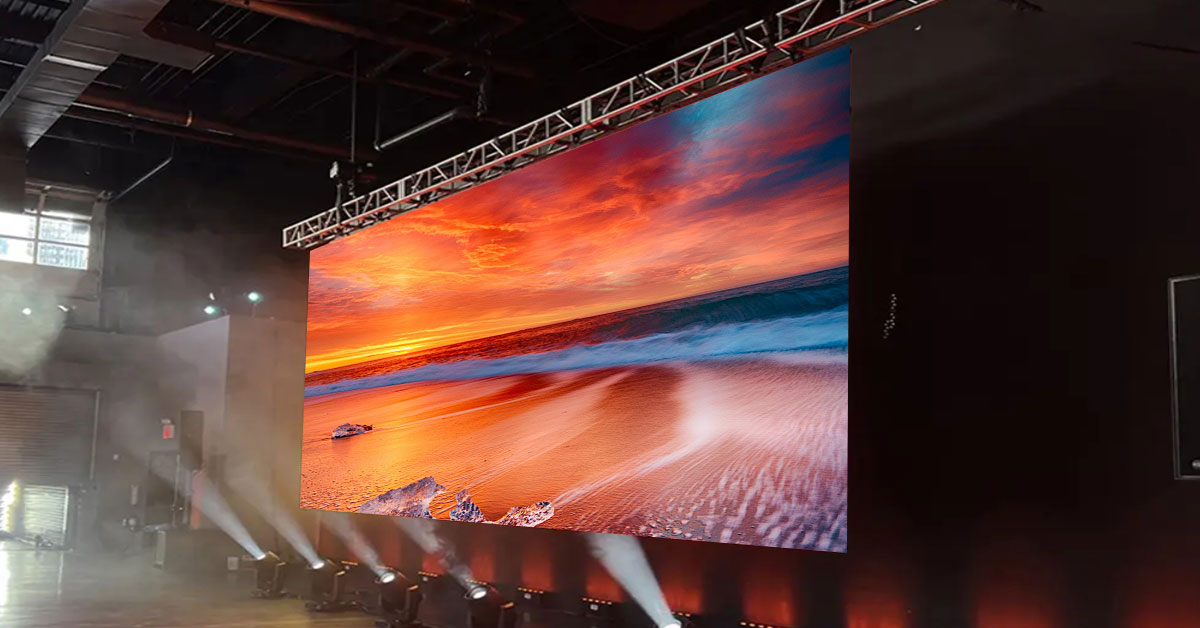
A traditional LED video wall normally uses a flat rectangular structure.
The pixel arrangement is simple:
Horizontal direction
Vertical direction
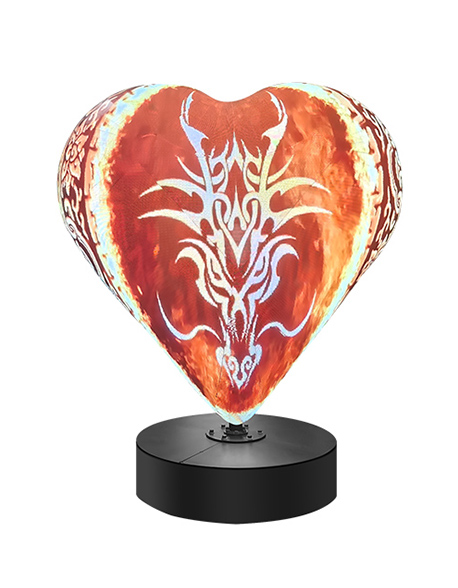
However, a Can-Shaped LED Display uses a three-dimensional curved structure.
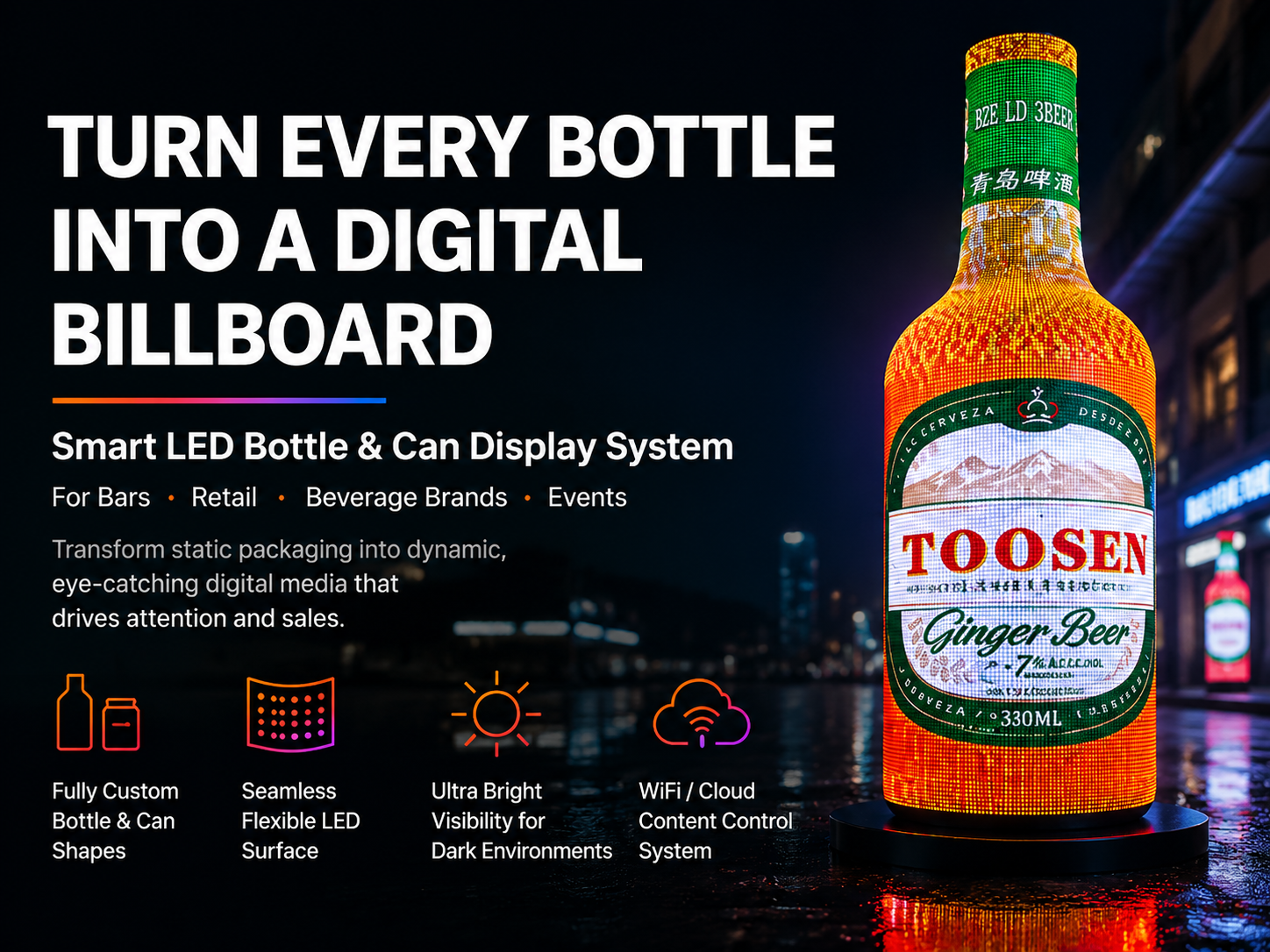
This creates several technical challenges:
LED modules must follow a curved surface
Images need special adjustment
Pixel positions are different from flat screens
Mechanical structures require higher precision
For this reason, a professional custom LED display manufacturer needs both hardware and software experience to create a reliable solution.
The LED module is the most important display unit.
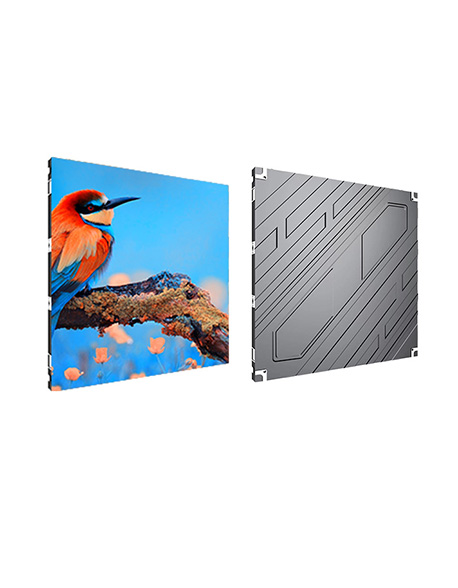
For a normal LED wall, standard modules can be installed in a flat cabinet.
However, a can-shaped LED display requires customized solutions, including:
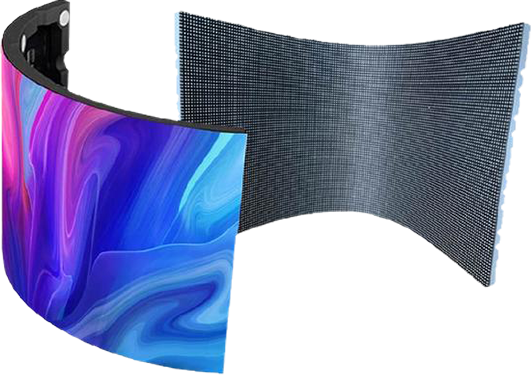
Flexible LED modules
Curved module design
Customized PCB structure
Precise module arrangement
A flexible LED display allows the screen surface to follow the cylindrical shape while maintaining consistent brightness and color.
For example:
A P1.5 can-shaped LED display is suitable for close-viewing environments because the smaller pixel pitch provides clearer images.
Typical applications include:
Retail stores
Exhibition spaces
Brand showrooms
Commercial installations
The quality of LED modules directly affects:
Image smoothness
Viewing experience
Display lifespan
Maintenance requirements
The LED modules need a strong and accurate supporting structure.
The structure usually includes:
Aluminum frame
Custom cabinet design
Internal support system
Heat dissipation solution
Unlike standard LED cabinets, a cylindrical LED display requires accurate control of:
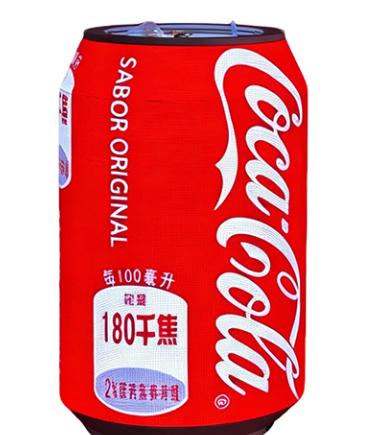
Curvature
Module connection
Structural strength
Even small errors can create:
Uneven gaps
Visible seams
Image distortion
Professional manufacturers also consider maintenance.
A good design allows technicians to:
Replace damaged modules easily
Access internal components
Reduce maintenance time
The control system works as the "brain" of a Can-Shaped LED Screen.
The complete signal process is:
Media Player
↓
Video Processor
↓
Sending Card
↓
Receiving Card
↓
LED Modules
The video processor converts the original video signal into suitable data for the display.
The receiving cards then control individual LED modules and ensure synchronized images.
For creative LED displays, the control system needs to support:
High refresh rate
Accurate grayscale
Stable transmission
Multiple module synchronization
A professional control system ensures:
No flickering
Smooth video playback
Consistent colors
One of the biggest differences between flat LED screens and curved screens is image processing.
A traditional LED wall uses a flat coordinate system.
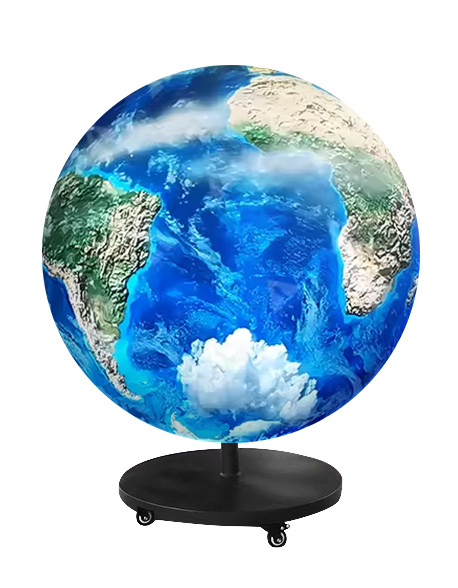
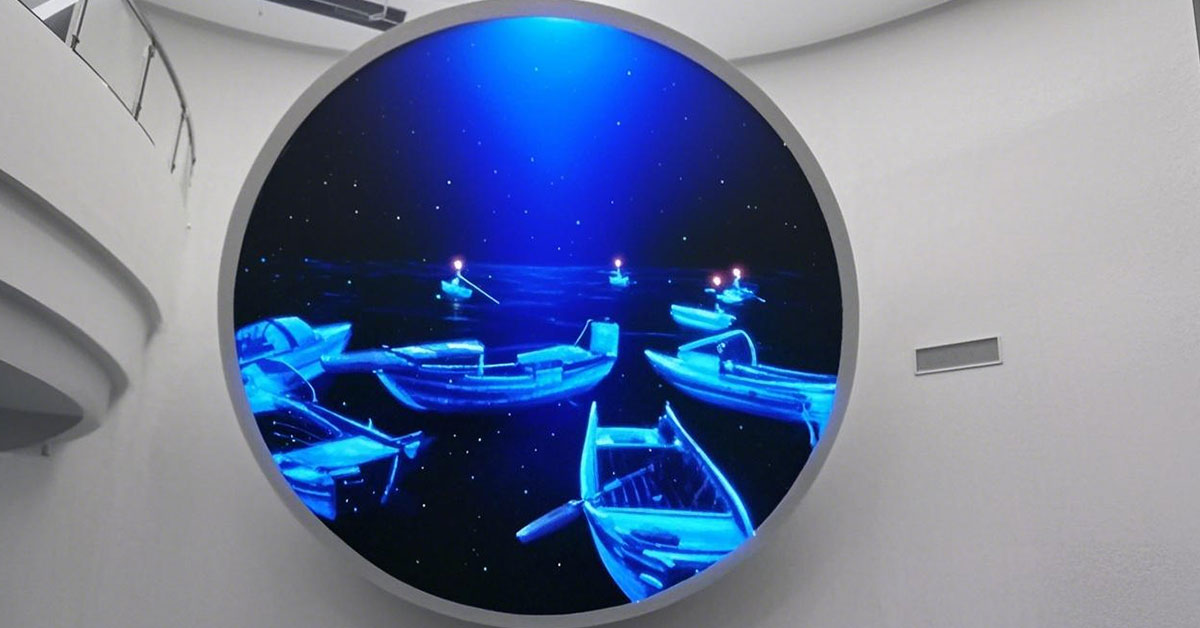
However, a 360 degree LED display uses a curved surface.
If normal video content is directly displayed, problems may appear:
Image stretching
Wrong positioning
Visual distortion
This is why LED pixel mapping is required.
The pixel mapping process includes:
Engineers create the exact screen structure.
Each LED module receives the correct coordinate.
The system compensates for curved surfaces.
With accurate pixel mapping, videos can appear natural from different viewing angles.
Hardware alone cannot create a perfect visual experience.
Content also needs to match the unique shape.
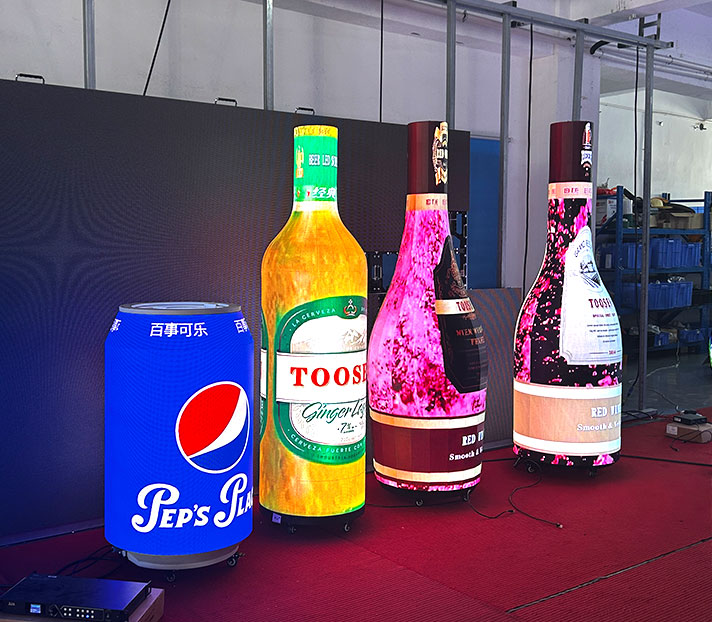
For a 360 degree LED display, designers consider:
Screen curvature
Viewing angle
Motion direction
3D visual effects
Compared with traditional LED walls, creative LED displays provide more possibilities for immersive content.
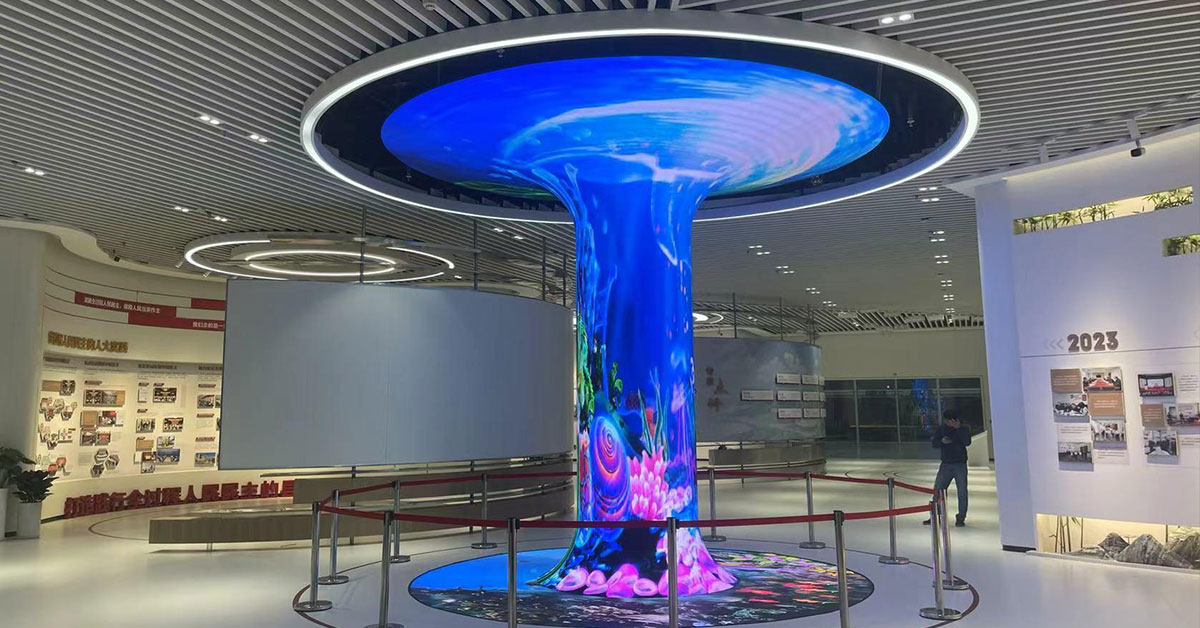
This is why shaped LED display solutions are increasingly used in:
Exhibition halls
Museums
Retail environments
Entertainment spaces
A professional custom cylindrical LED display solution usually includes:
Engineers design the structure according to:
Required diameter
Height
Installation environment
LED modules are installed according to the curved structure.
The display is tested for:
Brightness
Color consistency
Pixel accuracy
The complete system is installed and tested before operation.
Choosing an experienced custom LED display manufacturer helps ensure reliable performance and easier maintenance.
A Can-Shaped LED Display is not simply a curved LED screen.
It combines:
Customized LED modules
Precision mechanical structures
Advanced control systems
LED pixel mapping technology
Every component plays an important role in creating a seamless cylindrical display.
With professional engineering and manufacturing experience, a custom-shaped LED solution can achieve excellent visual performance for commercial and creative applications.
Looking for a customized Can-Shaped LED Display solution?
Contact TOOSEN to discuss your project requirements, including:
Screen size
Pixel pitch
Indoor or outdoor environment
Installation method
A Can-Shaped LED Display works by combining customized LED modules, curved structures, control systems, and pixel mapping technology to display images correctly on a cylindrical surface.
LED pixel mapping is a technology that adjusts image coordinates so videos can display correctly on curved or irregular LED screens.
A cylindrical LED display uses a curved three-dimensional structure, while traditional LED screens usually use flat rectangular panels.
 +86 18688923792
  andy@tosled.com