
Industry news

View: 525

Release time:2026-06-02
When discussing outdoor LED screens, one important engineering concept often overlooked is the sail effect. Unlike image quality, brightness, or pixel pitch, the sail effect relates directly to structural safety and wind resistance.
As outdoor LED displays continue to grow in size, understanding and mitigating the sail effect becomes critical for ensuring long-term stability and safe operation.
Understanding the Sail Effect
The sail effect occurs when a large LED display acts like a sail exposed to strong wind.
Because outdoor LED screens typically feature large, flat surfaces, wind cannot easily pass through them. As wind pressure builds against the face of the display, it generates significant horizontal force and overturning moments on the supporting structure.
The larger the screen, the greater the wind load. During severe weather conditions such as storms, hurricanes, or typhoons, these forces can increase dramatically.
If engineers fail to account for the sail effect during the design phase, the structure may experience:
Excessive vibration
Frame deformation
Bolt or connection failure
Structural instability
Screen collapse or detachment in extreme cases
For this reason, wind load calculations are a fundamental part of every outdoor LED display project.
Why the Sail Effect Matters
A large outdoor LED screen can present hundreds of square feet—or even thousands of square feet—of exposed surface area. Under high wind conditions, the resulting force can reach several tons.
In many cases, the supporting steel structure experiences greater stress from wind loads than from the weight of the LED screen itself.
As a result, engineers must evaluate not only the display's dead load but also the dynamic forces generated by wind pressure throughout the system's lifespan.
How Engineers Reduce the Sail Effect
To improve safety and reduce wind resistance, designers typically implement several structural solutions.
1. Ventilated Cabinet Design
One of the most effective methods involves allowing air to pass through the structure.
Manufacturers often incorporate:
Ventilation openings
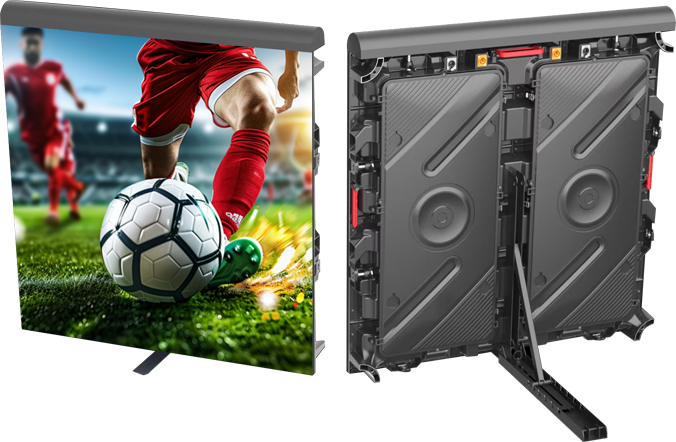
Perforated rear panels
Louvered cabinet designs
Mesh-style LED structures
These features reduce pressure differences between the front and rear sides of the display. Consequently, the screen experiences significantly lower wind loads during strong weather events.
2. Stronger Steel Structures
Engineers design outdoor LED support systems based on local environmental conditions and historical wind-speed data.
The structure may include:
Reinforced steel columns
Heavy-duty truss systems
Cross-bracing components
Deep concrete foundations
High-strength anchor bolts
By increasing structural rigidity, designers can ensure the display withstands both static loads and extreme wind forces.
3. Wind Load Analysis
Before installation, engineers perform detailed calculations to determine the maximum force the display may encounter.
The analysis typically considers:
Screen dimensions
Installation height
Local wind zones
Terrain conditions
Building exposure factors
Structural weight and center of gravity
Based on these calculations, designers may modify the screen size, support structure, or installation method to improve safety.
Operational Strategies During Severe Weather
Structural design alone cannot eliminate all risks. Therefore, operators should also implement emergency procedures for extreme weather conditions.
Monitor Weather Forecasts
Operators should continuously monitor local weather alerts, especially in coastal regions and areas prone to hurricanes or typhoons.
Reduce Electrical Load
During severe storms, many operators reduce screen brightness or shut down the display entirely. While this does not reduce wind pressure, it protects electrical components from potential damage.
Activate Emergency Plans
For temporary rental installations or event screens, crews may:
Remove LED panels
Lower suspended structures
Add temporary bracing
Reinforce support systems
These measures help minimize damage when high winds are expected.
The Importance of Wind-Resistant LED Screen Design
As outdoor LED displays become larger and more visually impressive, structural engineering becomes increasingly important.
The sail effect is one of the most critical factors affecting the safety of outdoor LED installations. By combining proper wind load analysis, ventilated cabinet designs, robust steel structures, and proactive weather-response procedures, operators can significantly reduce risk and ensure reliable long-term performance.
Ultimately, a successful outdoor LED display project depends not only on image quality and visual impact but also on the engineering principles that keep the structure safe under the most challenging environmental conditions.
 +86 18688923792
  andy@tosled.com